
What Are Flexible Plywood and Regular Plywood?
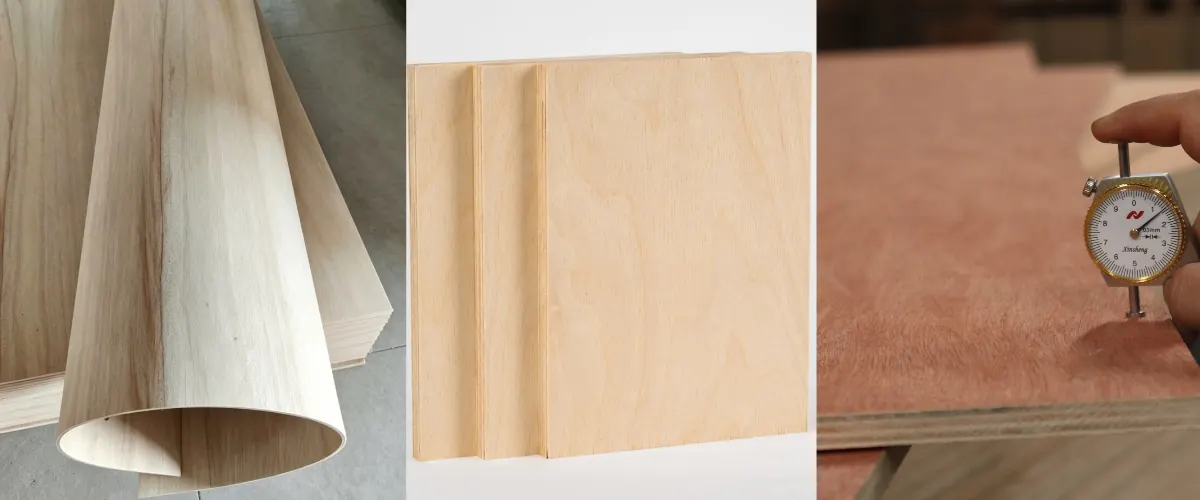
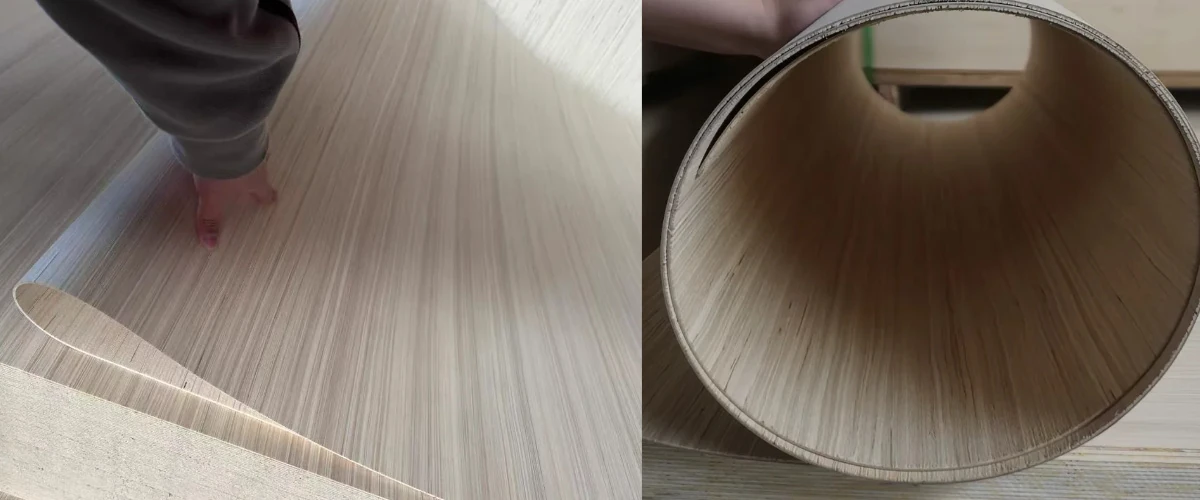
Flexible plywood, also called bendable plywood, is a specially engineered plywood panel made for curved, rounded, and contoured designs.
Unlike standard plywood, flexible plywood is still made from layers of wood veneer, but its construction is different. The panel is designed to bend in a specific direction under normal working conditions without cracking or breaking. This makes it much easier to create smooth curves and rounded surfaces.
Flexible plywood is generally made flexible in one of two ways:
Thin Veneer Lamination
This method uses very thin wood veneers, typically around 1–3 mm thick, which are laminated together to form the panel. Thinner veneer layers give the plywood greater flexibility, allowing it to follow tighter curves and smaller bending radii.
Back‑Side Grooving
Another method is to machine a series of closely spaced grooves into the back of a thicker plywood panel. These grooves can be made using mechanical milling or laser cutting and are sometimes referred to as flexible hinges.
When the panel is bent, the grooves provide room for the inner side of the board to compress. This allows the panel to curve along the direction of the grooves while the front surface remains intact and ready for finishing.
Quick tip: The biggest advantage of flexible plywood is that it lets you create curved surfaces without having to assemble lots of small pieces of rigid plywood.
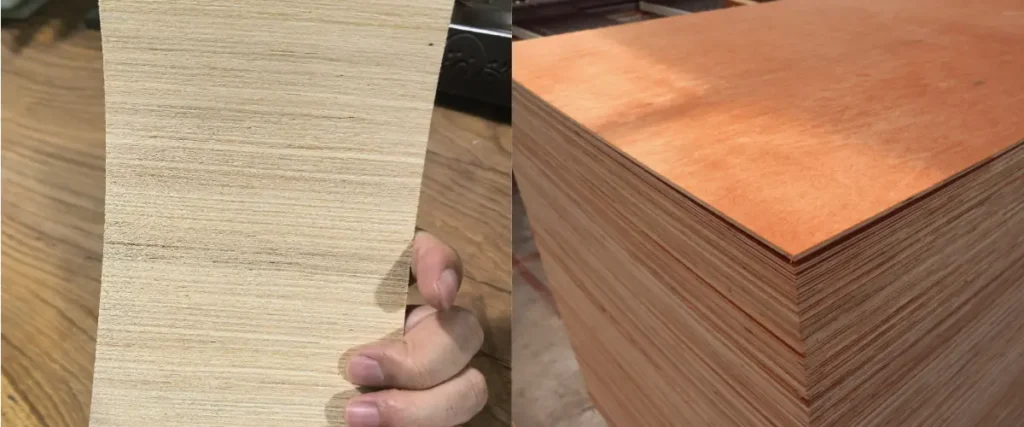
Regular plywood is a rigid wood panel made by bonding multiple layers of wood veneer together. The grain direction of each adjacent veneer is typically rotated to improve the panel’s strength, stiffness, and dimensional stability.
This cross‑laminated structure gives regular plywood good load‑bearing performance and helps it maintain its shape under normal use. That makes it a practical choice for furniture, cabinetry, construction, packaging, and many other applications where a stable and rigid panel is needed.
Quick tip: Regular plywood is designed primarily for strength and rigidity, so it is generally not the best choice for tight curves or highly contoured surfaces.
Flexible Plywood vs Regular Plywood: Key Differences
The biggest difference between flexible plywood and regular plywood is their intended performance.
| Feature | Flexible Plywood | Regular Plywood |
|---|---|---|
| Main purpose | Forming curved surfaces | Providing rigid panels |
| Flexibility | High | Low |
| Shape | Suitable for curves and contours | Mainly flat surfaces |
| Bending | Designed for controlled bending | Limited bending capability |
| Construction | Special veneer arrangement | Conventional cross‑laminated structure |
| Applications | Curved furniture, columns, walls | Furniture, construction, cabinets |
| Installation | Can be formed over curved frames | Usually installed on flat surfaces |
| Design flexibility | Excellent for curved designs | Better for straight designs |
| Structural use | Depends on product specification | Available in many structural grades |
| Best choice | Curved and decorative projects | Flat and structural applications |
1. Flexibility
The most obvious difference between the two products is flexibility.
Flexible plywood is specifically designed to bend, making it suitable for curved surfaces and complex shapes.
Regular plywood is comparatively rigid. Although thin plywood can sometimes be bent to a limited extent, it is not designed for repeated or tight‑radius bending.
For example, if you are building a cylindrical cabinet or curved reception desk, flexible plywood can make the process much easier.
2. Plywood Construction
Regular plywood is made by bonding multiple layers of solid wood veneer together, usually in an odd number of layers. The veneers are arranged with their grain directions running at alternating angles, then glued and hot‑pressed to form a dense, rigid panel. This cross‑layered structure gives regular plywood its characteristic strength, stiffness, and stability.
Flexible plywood, on the other hand, uses a different construction or processing method to make bending possible. Depending on the product, manufacturers may use very thin veneer layers, specially formulated adhesive systems, or closely spaced grooves on the back of the panel. These methods give the plywood enough flexibility to bend while still retaining a useful level of strength and structural integrity.
3. Strength and Rigidity
When a project calls for a strong and stable panel, regular plywood usually has the advantage.
Regular plywood is rigid, load‑bearing, and resistant to bending, impact, and deformation. Its cross‑laminated veneer structure gives the panel good strength and helps it maintain its shape under load.
Flexible plywood, by comparison, is designed with bendability as a priority rather than maximum stiffness. For this reason, it should not be treated as a direct replacement for structural plywood where high rigidity and load‑bearing performance are required.
That said, flexible plywood can still be combined with other materials or additional plywood layers when a curved structure needs more thickness or stiffness. This can help achieve the desired shape while improving the overall strength of the finished structure.
The actual performance of either type depends on several factors, including the plywood grade, thickness, adhesive, panel construction, and manufacturing quality.
4.Thickness Options
Regular plywood is commonly available in thicknesses such as 9 mm, 12 mm, 15 mm, and 18 mm. Flexible plywood is generally thinner to make bending easier, with common options including 2 mm, 3 mm, and 5 mm.
5. Surface Finishing
Both flexible plywood and regular plywood can be finished with different decorative materials depending on the product and application.
Flexible plywood is often used as a substrate for:
- Wood veneer
- Decorative laminates
- Paint
- Fabric
- PVC or other surface materials
Regular plywood also supports a wide range of finishes, including paint, veneer, laminate, and decorative films.
For curved furniture and interior applications, flexible plywood can provide a more practical base for applying decorative finishes to curved surfaces.
6. Is Flexible Plywood More Expensive?
Flexible plywood can cost more than standard plywood because it requires specialized veneer construction and manufacturing processes.
However, material price should not be the only factor when comparing the two.
For curved projects, flexible plywood may reduce:
- Cutting waste
- Assembly time
- Complex fabrication
- The number of individual components
- Labor required to create curved surfaces
As a result, the total project cost may sometimes be more important than the price per plywood sheet.
When comparing suppliers, buyers should evaluate the complete specification rather than comparing price alone.
Flexible Plywood vs Regular Plywood: Which One Should You Choose?
The easiest way to choose between flexible plywood and regular plywood is to start with the shape of your project.
Choose Flexible Plywood If:
- You need curved or rounded surfaces.
- The project includes cylindrical shapes.
- You are manufacturing curved furniture.
- You need a bendable wood panel.
- You are creating custom architectural interiors.
- You need a smooth substrate for curved decorative surfaces.
- Conventional plywood is difficult to bend into the required shape.
Choose Regular Plywood If:
- You need a rigid flat panel.
- The project requires structural strength.
- You are manufacturing standard cabinets or furniture.
- The application involves flat walls or floors.
- You need conventional plywood dimensions and grades.
- Bending is not an important requirement.
Can Regular Plywood Be Used Instead of Flexible Plywood?
In some applications, yes, but it depends on the required curve.
Thin regular plywood can sometimes be bent gradually, especially when the bending radius is relatively large. However, conventional plywood is not specifically designed for this purpose.
For tighter curves, flexible plywood is generally a more practical solution.
Trying to bend a standard plywood panel beyond its natural flexibility can cause:
- Cracks
- Veneer splitting
- Delamination
- Surface damage
- Permanent deformation
For this reason, buyers should select the panel according to the required bending radius rather than assuming that any thin plywood can replace flexible plywood.
Flexible Plywood vs Regular Plywood: Final Comparison
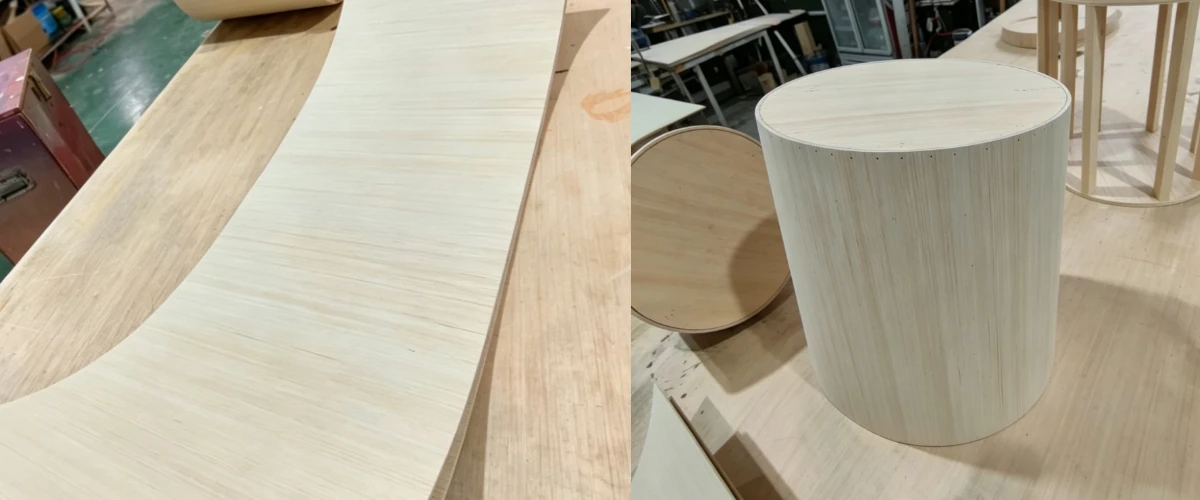
Flexible plywood and regular plywood are not competing products for exactly the same applications.
Flexible plywood is the better choice when flexibility and curved shapes are the priority. Regular plywood is generally better when rigidity, strength, and flat‑panel performance are required.
In simple terms:
Flexible plywood = designed to bend.
Regular plywood = designed to stay rigid.
Choosing the right material can improve manufacturing efficiency, reduce fabrication difficulties, and produce a better finished product.
If you are looking for flexible plywood for curved furniture, interior decoration, architectural projects, or custom manufacturing, selecting the right thickness, bending direction, veneer construction, and minimum bending radius is essential.
Frequently Asked Questions
Is flexible plywood the same as bendable plywood?
Yes. Flexible plywood is commonly called bendable plywood or bending plywood because it is specifically manufactured to bend into curved shapes.
Can flexible plywood be used for furniture?
Yes. Flexible plywood is widely suitable for curved furniture components, including curved cabinets, chairs, tables, counters, and decorative structures.
Can flexible plywood replace regular plywood?
Not in every application. Flexible plywood is designed primarily for bendability, while regular plywood is generally better suited to rigid and flat applications.
Which is better, flexible plywood or regular plywood?
Neither is universally better. Choose flexible plywood when you need curved surfaces and choose regular plywood when you need a rigid flat panel.
Conclusion
The difference between flexible plywood vs regular plywood mainly comes down to their intended function.
Flexible plywood is engineered for bending and is ideal for curved furniture, architectural interiors, decorative walls, columns, and custom designs. Regular plywood is designed to provide a rigid, stable panel for furniture, construction, cabinets, and other flat applications.
Before buying, consider the project’s required shape, bending radius, thickness, strength, moisture resistance, and surface finish.
For curved designs, flexible plywood can save fabrication time and make complex shapes much easier to achieve. For conventional flat‑panel applications, regular plywood remains a practical and versatile choice.
Looking for flexible plywood?
Contact Baitwood for quality flexible plywood, custom specifications, and professional support tailored to your needs.