
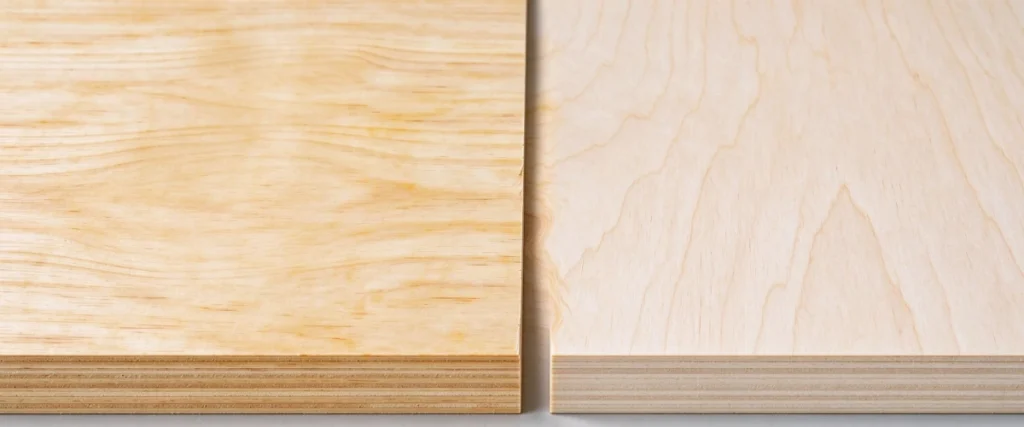
Radiata pine plywood is a practical choice for budget‑conscious projects. Birch plywood stands out for its smooth surface, dependable strength, and precise machining performance. Understanding these differences will help you choose the right plywood for your business or project.
What Is Radiata Pine Plywood?
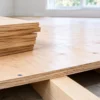
Radiata pine plywood is an engineered wood panel made by bonding multiple layers of radiata pine veneer with alternating grain directions. Manufacturers mainly source this wood from New Zealand, Chile, and Australia. It is lightweight, easy to work with, and affordable, making it a popular choice for many woodworking projects.
Advantages of Radiata Pine Plywood
- Cost‑Effective: Its affordable price makes it a good option for large projects.
- Easy to Work With: You can cut, sand, and nail it with ease. It also works well for DIY projects.
- Natural Appearance: Its light color and straight grain make it suitable for decorative backing and interior applications.
Disadvantages of Radiata Pine Plywood
- Softer Surface: It can dent and scratch more easily than denser plywood options.
- Limited Moisture Resistance: Standard grades are not suitable for prolonged exposure to damp conditions.
Common Uses: Radiata pine plywood works well for cabinet interiors, wardrobe shelves, furniture, wall linings, packaging crates, and DIY woodworking projects. Before buying, check the plywood grade, thickness, and bonding quality to make sure they suit your intended application.
What Is Birch Plywood?
Birch plywood is made by bonding multiple layers of birch veneer with alternating grain directions. It offers high strength, good dimensional stability, a smooth surface, and strong screw‑holding ability. These qualities make it a popular choice for furniture making and precision woodworking.
Advantages of Birch Plywood
- High Strength: It handles loads well, making it suitable for furniture and structural applications.
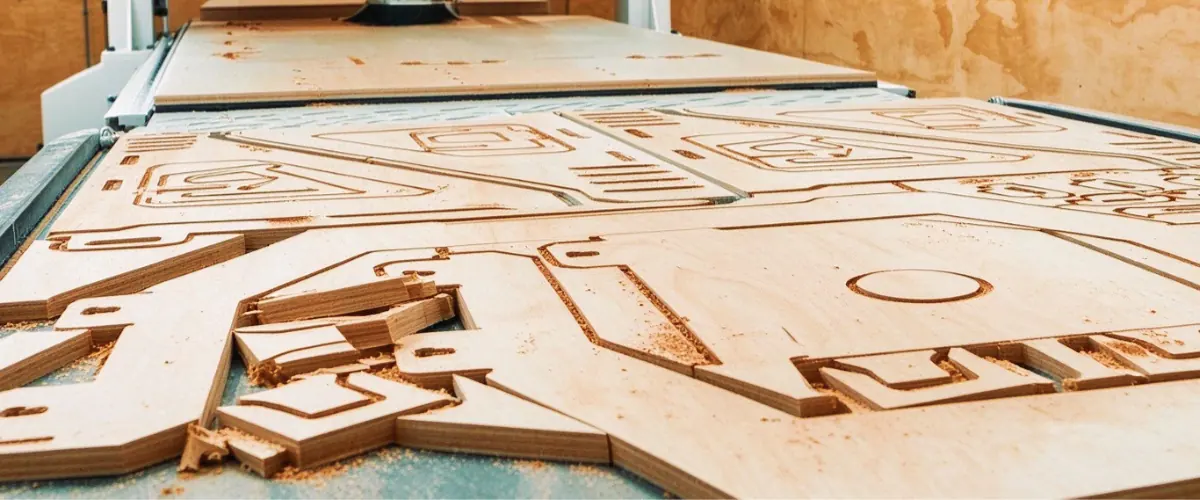
- Easy to Machine: Its smooth surface works well for CNC cutting, engraving, and detailed machining.
- Attractive Appearance: Its clean edges and visible veneer layers suit high‑quality furniture and decorative designs.
Disadvantages of Birch Plywood
- Higher Cost: Full birch plywood usually costs more than radiata pine plywood.
- Heavier Weight: It can be more difficult to handle and install.
- Needs Edge Protection: Prolonged exposure to moisture can still cause damage, so sealing the edges is important.
Common Uses: Birch plywood is widely used for cabinets, bookshelves, tables, chairs, premium furniture, RV interiors, and CNC‑machined components. Before purchasing, check the plywood grade and bonding quality to ensure they meet your project requirements.
Learn more: Birch Plywood Guide: What Makes It Unique?
Radiata Pine Plywood vs Birch Plywood: Key Differences
The main differences between radiata pine plywood and birch plywood relate to surface appearance, weight, strength, workability, and price.
| Comparison Factor | Radiata Pine Plywood | Birch Plywood |
|---|---|---|
| Wood type | Softwood | Hardwood |
| Surface appearance | More visible grain and possible knots | Generally finer, more uniform grain |
| Weight | Often lighter | Often heavier |
| Surface hardness | Generally softer | Generally harder |
| Screw holding | Depends on grade and core construction | Generally strong, especially with a full birch core |
| Machining | Easy to cut and process | Excellent for precision cutting and CNC work |
| Typical applications | Construction, panels, general woodworking | Furniture, cabinets, CNC components |
| Cost | Often more economical | Often more expensive |
These are general comparisons. Actual performance depends on veneer quality, core construction, panel thickness, adhesive, manufacturing standards, and product grade.
Which Has a Better Surface Finish?
Surface quality is another important difference between radiata pine plywood and birch plywood.
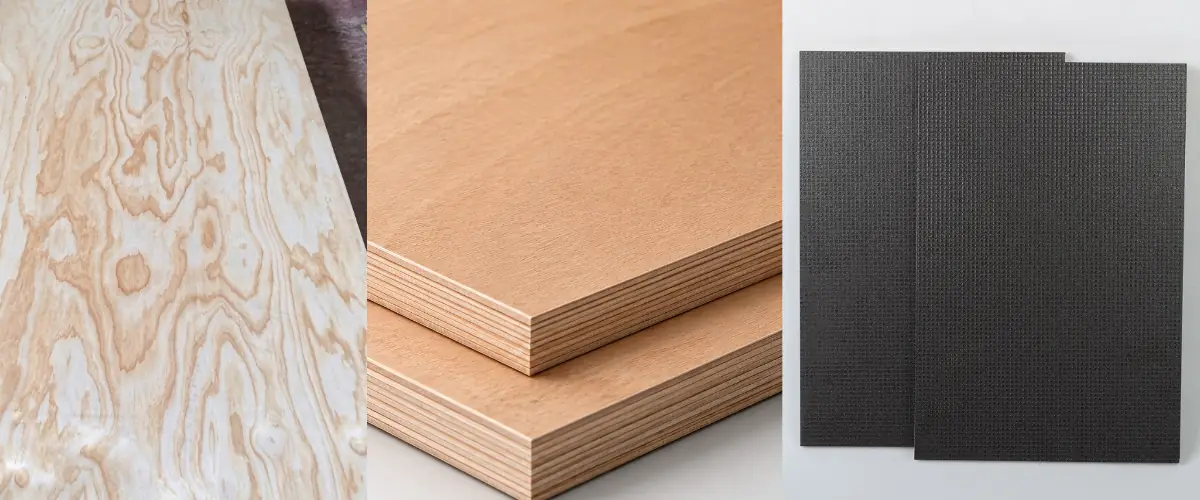
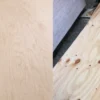
Radiata pine plywood typically has a more pronounced natural grain pattern. Knots and other natural characteristics may be visible, depending on the surface grade. This appearance works well for rustic interiors, utility panels, and projects where a natural wood texture is desirable.
Birch plywood generally has a finer, more uniform grain and a lighter appearance. Higher‑grade faces are suitable for painting, staining, laminating, and clear coating. Its attractive layered edges can also become a design feature in modern furniture.
Choose birch plywood when appearance and precise finishing are priorities. Choose radiata pine plywood when you prefer a natural softwood appearance or do not need a premium decorative surface.
Is Radiata Pine Plywood Cheaper Than Birch Plywood?
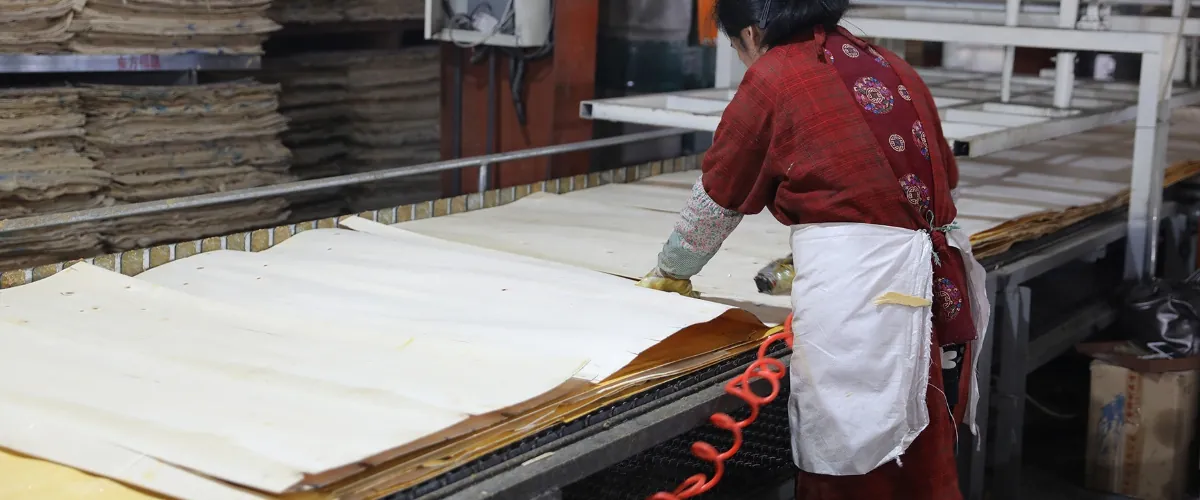
Yes, radiata pine plywood is usually cheaper than birch plywood of similar specifications. In many markets, the price difference comes down to the wood itself, its growth cycle, and its physical properties.
Why Do the Prices Differ?
- Wood Type and Growth Rate: Radiata pine is a fast‑growing softwood. It matures relatively quickly, which helps keep raw material costs down. Birch is a hardwood that generally takes longer to grow, so its raw material costs can be higher.
- Strength and Applications: Birch plywood has a higher density, a harder surface, and good screw‑holding strength. It is often used for heavy‑duty furniture, marine plywood applications, and premium cabinet doors. Radiata pine is softer and less resistant to dents and wear, making it a practical option for standard cabinets, packaging crates, and temporary construction projects.
However, the actual price depends on several factors, including the supplier, thickness, grade, adhesive type, order volume, and delivery destination.
For importers and manufacturers, the purchase price is only part of the equation. You should also consider material waste, processing time, shipping weight, finishing requirements, and expected service life when comparing total costs.
Looking for the right balance between performance and price? Explore our guide to Birch Plywood Core Types Compared to learn how different core constructions affect plywood performance.
Which Plywood Should You Choose for Your Project?
The best plywood depends on how the panels will be used.
Choose Radiata Pine Plywood if:
- You need an economical material for general construction.
- A natural softwood grain suits your design.
- Lightweight panels are important.
- Your project does not require a premium hardwood face.
Choose Birch Plywood if:
- You manufacture cabinets, desks, or high‑quality furniture.
- You need a smooth surface for painting or decorative finishing.
- Your project involves CNC cutting or detailed machining.
- Strong screw holding and a refined appearance are important.
For either material, confirm the required thickness, surface grade, core composition, moisture content, and adhesive performance before placing a bulk order.
Buy Quality Plywood from Baitwood
Selecting the right plywood can improve product quality, control production costs, and support consistent manufacturing results. Buyers should work with a supplier that understands their technical requirements and can provide clear product specifications.
Baitwood supplies plywood products for furniture, construction, interior decoration, and other industrial applications. Our team can help buyers evaluate suitable plywood options based on application, thickness, core construction, and target‑market requirements.
Whether you are sourcing plywood for furniture production or general construction, choosing the right material starts with understanding your project needs.
Contact Baitwood today to discuss your plywood requirements, request a quotation, and explore suitable products for your next order.
Frequently Asked Questions
Is radiata pine plywood good for furniture?
Yes. Radiata pine plywood can be suitable for furniture, shelving, and interior projects, especially when cost and weight are important. Select the appropriate grade and thickness for the intended load and finish.
Is birch plywood stronger than pine plywood?
Birch plywood generally offers higher surface hardness and strong screw‑holding performance, particularly with a full birch core. However, overall panel strength depends on its construction and specifications.
Which plywood is better for cabinets?
Birch plywood is often preferred for high‑quality cabinets because of its smooth surface and machining performance. Radiata pine plywood may be suitable for budget‑conscious cabinet projects when its specifications meet the design requirements.
Can radiata pine plywood be used outdoors?
Only select products with suitable exterior‑rated bonding and durability for the intended exposure. Protect the panel edges and surfaces as required. Standard plywood should not be assumed to be waterproof.
Final Verdict
Radiata pine plywood is often the better choice for economical construction and general‑purpose applications, while birch plywood is often better for premium furniture, cabinetry, and precision woodworking. Compare the actual specifications, price, and intended use before making your final decision
Choose Baitwood for Quality Plywood
Looking for reliable radiata pine plywood or birch plywood? Contact Baitwood today for competitive prices, customized solutions, and a quotation tailored to your needs!