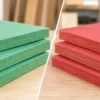

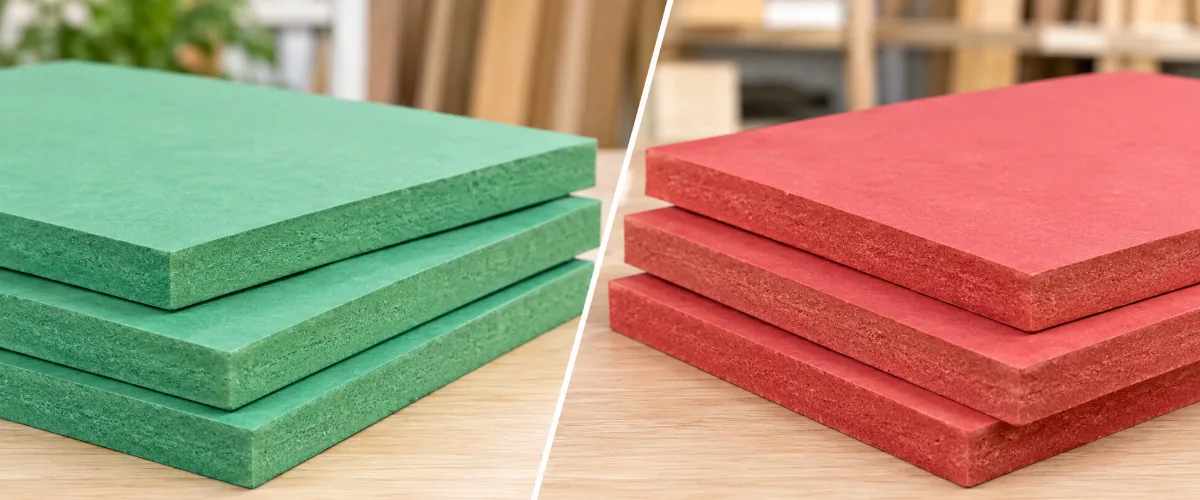
Medium Density Fiberboard (MDF), also known as medium-density fiberboard, usually has a light cream color. However, MDF is available in more than just one color. Manufacturers also produce special types of MDF with different properties to meet specific needs. Two common examples are green MDF and red MDF.
So, what is the difference between green MDF and red MDF?
In most cases, green MDF refers to moisture-resistant MDF (MR MDF), while red MDF usually refers to fire-retardant MDF (FR MDF). Both are engineered wood products, but they serve different purposes. They offer different levels of protection and work best in different environments.
In this guide, we’ll compare green MDF and red MDF in terms of their key properties, common uses, suitable environments, and buying considerations. Whether you’re a buyer, importer, or distributor, this guide will help you understand how these two MDF types differ and choose the right one for your project.
What Is Green MDF (Moisture-Resistant MDF)?
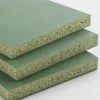
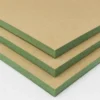
Green MDF, also known as moisture-resistant MDF (MR MDF), is an engineered wood panel that handles moisture better than standard MDF.
- Features: Manufacturers add moisture-resistant additives, such as wax, to the wood fibers. These additives help reduce water absorption and swelling. They also often add green pigment to the core to identify its moisture-resistant properties.
- Uses: Green MDF works well in damp areas or places exposed to moisture. Common applications include kitchen sink cabinets, bathroom vanities, laundry room cabinets, balcony storage, and cabinets near windows.
- Things to Know: Moisture-resistant MDF is not waterproof. It can still absorb water and swell if left in standing water for too long. Always seal the edges properly to help protect the board.
What Is Red MDF (Fire-Retardant MDF)?
Red MDF, commonly known as fire-retardant MDF (FR MDF), is specially made to improve the fire performance of standard MDF.
- Features: Manufacturers add fire-retardant chemicals during production. These additives help slow flame spread and improve fire resistance. Red pigment often gives the board core its distinctive color. FR MDF can help delay the spread of fire, but its actual performance depends on its tested fire rating.
- Uses: Red MDF is commonly used in buildings where fire safety is a priority. Typical applications include public interiors, ceiling panels, partition walls, commercial cabinets, and other areas with specific fire safety requirements.
- Things to Know: FR MDF usually costs more than standard MDF and moisture-resistant MDF. Its fire performance must meet the relevant standards for the intended application. Always check the product’s test reports and certification before buying.
Green MDF vs Red MDF: Key Differences
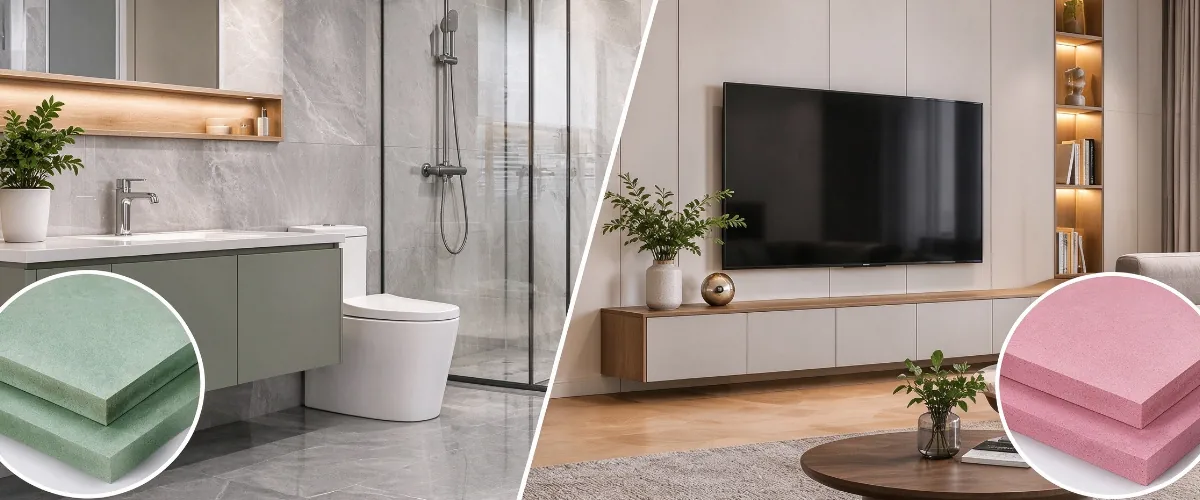
Although Green MDF and Red MDF may look similar in terms of surface appearance and manufacturing structure, their main differences lie in their intended performance.
Here is a quick comparison of Green MDF vs Red MDF:
| Comparison | Green MDF | Red MDF |
|---|---|---|
| Full Name | Moisture Resistant MDF | Fire Retardant MDF |
| Main Function | Improved moisture resistance | Improved fire performance |
| Core Color | Green | Red or pink |
| Main Treatment | Moisture-resistant additives and resin system | Fire-retardant chemicals |
| Moisture Performance | Better than standard MDF | Depends on its specific grade |
| Fire Performance | Standard MDF fire performance unless separately rated | Improved fire performance |
| Surface | Smooth and uniform | Smooth and uniform |
| Common Uses | Kitchen cabinets, bathroom furniture | Commercial interiors, public buildings |
The most important difference is that Green MDF is designed to handle humid conditions, while Red MDF is designed to meet specific fire-performance requirements.
Neither board is automatically suitable for every environment. Buyers should check the manufacturer’s technical specifications before selecting a product.
Green MDF vs Red MDF: Which Offers Better Moisture Resistance?
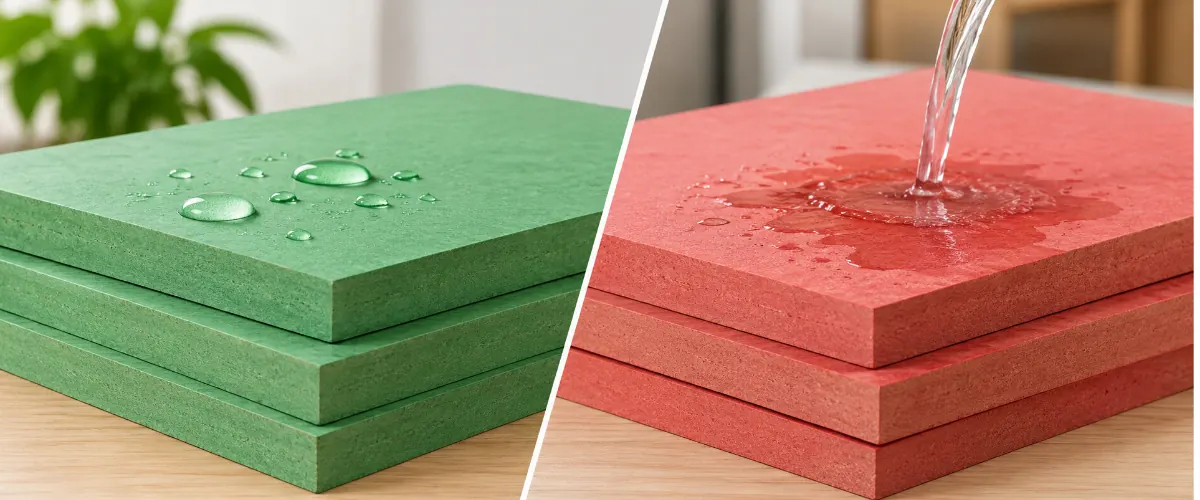
If moisture resistance is your main concern, green MDF is usually the better choice. Unlike standard MDF and fire-retardant MDF, manufacturers specially treat moisture-resistant MDF to help it handle damp conditions and reduce water absorption.
Why Is Green MDF More Moisture Resistant?
- Moisture-Resistant Treatment: Manufacturers add moisture-resistant resins and additives during production. These help reduce water absorption, limit swelling, and improve dimensional stability. The green color usually comes from pigment added to the core. It serves as a visual identifier, not a measure of moisture resistance.
- Common Industry Name: In North America, Europe, and Australia, buyers commonly refer to this product as Moisture-Resistant MDF (MR MDF). Always check the product specifications and moisture-resistance ratings to confirm its performance.
- Other Moisture-Resistant Options: Besides MR MDF, buyers can also consider marine plywood and OSB3 or OSB4 for kitchens, bathrooms, and other damp environments. Each material offers different levels of moisture resistance, structural strength, and load-bearing capacity. Choose based on the installation environment and project requirements.
Baitwood offers a range of panel products, including moisture-resistant MDF, marine plywood, and OSB. We help buyers find suitable materials for different applications and project needs.
Green MDF vs Red MDF: Which Has Better Fire Resistance?
Red MDF is generally the better option when fire performance is the priority.
Fire-retardant MDF contains specially formulated additives that help reduce the spread of flames and improve its reaction-to-fire characteristics.
This makes it useful for commercial buildings, hotels, offices, exhibition spaces, and public interiors where fire regulations may require specific building materials.
Green MDF is mainly developed for moisture resistance. It should not be considered fire-retardant unless the manufacturer provides separate fire-performance certification.
When purchasing Red MDF, pay attention to the following:
- EN 13501-1 fire classification, where applicable.
- ASTM E84 results, when required by the project.
- Test reports for the exact product and thickness.
- Whether the classification applies to the finished panel or the complete installation.
For example, some FR MDF products achieve a B-s1,d0 classification under EN 13501-1. However, fire ratings vary according to the manufacturer, product thickness, and test conditions.
Always confirm the required fire classification with the project specification.
Buying Tips: What Should You Look Out For?
- Check the Test Reports: Don’t rely on a supplier’s claim that a board is fire-retardant. Ask for a third-party test report from an accredited testing laboratory. Check the fire rating and make sure it meets your project requirements.
- Choose the Right Board for Your Needs: If your project has specific fire safety requirements, such as shopping mall displays, hotel partitions, or commercial feature walls, choose certified fire-retardant MDF (FR MDF). Check the test reports before placing an order. For moisture-prone areas, such as bathrooms and basements, moisture-resistant MDF (MR MDF) is a better option. However, moisture resistance does not mean fire resistance.
- Watch Out for Color Tricks: Some suppliers may simply dye standard MDF red or green without adding the required fire-retardant or moisture-resistant additives. Don’t judge a board by its color alone. Always verify its performance through reliable test reports and product specifications.
Conclusion: Green MDF vs Red MDF – Which One Should You Choose?
Green MDF and red MDF are designed for different performance needs. The right choice depends on where and how you plan to use the board.
Green MDF is a good choice for furniture and interior projects that need better moisture resistance. Common applications include kitchen cabinets, bathroom furniture, and other moisture-prone indoor areas.
Red MDF is better suited to commercial interiors, public buildings, and furniture components where fire performance is important.
In short, green MDF helps resist moisture, while red MDF helps slow the spread of fire. Always consider the installation environment and project requirements before choosing. Never use one as a substitute for the other.
Product Recommendations
Find the Right Products for Your Needs
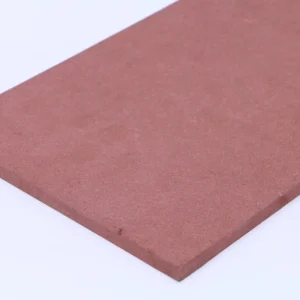 Baitwood ProductFire Resistant MDFFire Resistant MDF Board (FR MDF) is a high-quality engineered wood panel treated with…View Product
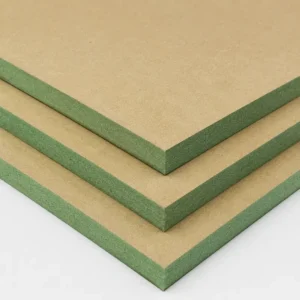 Baitwood ProductMoisture Resistant MDFMoisture Resistant MDF is a high-performance engineered wood panel designed to offer better moisture…View Product
 Baitwood ProductRaw MDFRAW MDF panels provide a smooth, even surface that is ideal for cabinetry, furniture,…View Product
Related Articles
Explore more helpful articles, product guides, and expert tips.
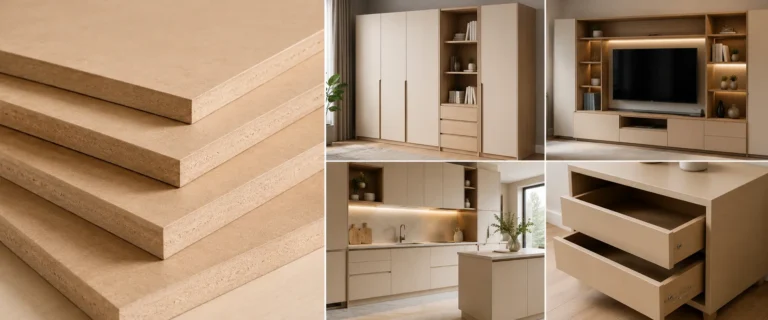 Blog ArticleCommon Uses of MDF in Furniture ManufacturingMedium Density Fiberboard (MDF) is one of the most widely used engineered wood products in…Read Article
 Blog ArticleIs MDF Really Banned in the USA? The Truth RevealedWhat Is MDF? Medium Density Fiberboard (MDF) is a widely used engineered wood product made…Read Article
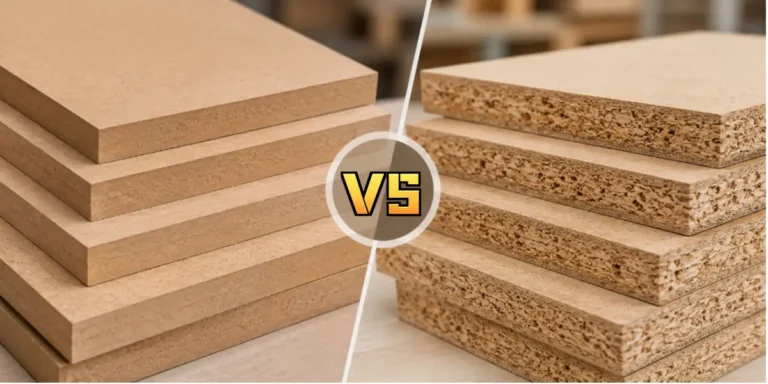 Blog ArticleMDF vs Chipboard: Which Material Is More Reliable?At first glance, MDF and chipboard (particle board) may look almost identical. Both are flat…Read Article