
What Is MDF?
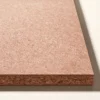
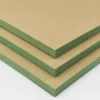
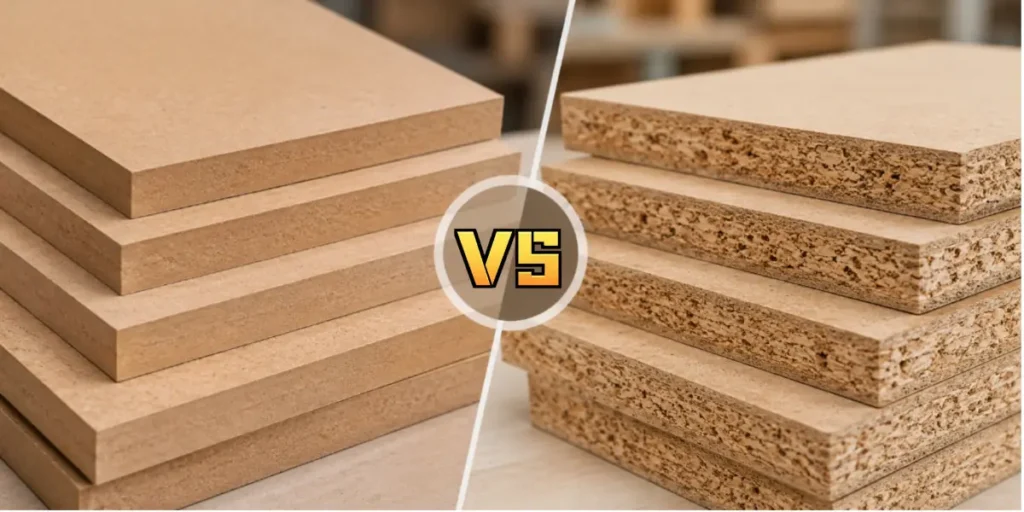
Medium Density Fiberboard (MDF) is an engineered wood product manufactured by breaking hardwood or softwood into fine wood fibers. These fibers are mixed with wax and resin, then compressed under high temperature and pressure into dense, smooth panels.
Key Characteristics
- Smooth, uniform surface
- High density
- Excellent for painting
- Easy to machine and cut
- No visible wood grain or knots
Because of its consistent structure, MDF is widely used for painted furniture, cabinet doors, shelving, moldings, and decorative interior panels.
Learn More About MDF →What Is MDF Board? Composition, Manufacturing, and Uses
What Is Chipboard (Particle Board)?
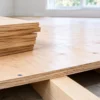
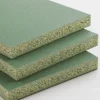
Particle board, also known as chipboard in the UK and many European countries, is an engineered wood panel made from wood chips, sawdust, and resin that are compressed under heat and pressure.
Compared with MDF, chipboard uses larger wood particles instead of fine fibers, making it lighter and less dense.
Key Characteristics
- Low manufacturing cost
- Lightweight
- Economical
- Flat and stable
- Usually laminated with melamine or veneer
Chipboard is commonly used for ready-to-assemble furniture, wardrobes, desks, shelving, countertops, and kitchen cabinets.
Learn More: What Is Chipboard? →What Is Chipboard? A Complete Guide for Beginners
MDF vs Chipboard at a Glance
| Feature | MDF | Chipboard (Particle Board) |
|---|---|---|
| Raw Material | Fine wood fibers | Wood chips & sawdust |
| Density | High | Medium to low |
| Surface Finish | Very smooth | Slightly rough |
| Strength | Higher | Moderate |
| Weight | Heavy | Lightweight |
| Moisture Resistance | Moderate (MR MDF available) | Poor unless moisture-resistant grade |
| Screw Holding | Good | Fair |
| Machining | Excellent | Good |
| Paint Finish | Excellent | Requires laminate or veneer |
| Cost | Medium | Lower |
Which Material Is Stronger?
When discussing reliability, strength is usually the first concern.
MDF Strength
Because MDF consists of fine wood fibers compressed into a dense panel, it provides:
- Better bending strength
- More uniform density
- Better edge integrity
- Improved impact resistance
MDF performs well for cabinet doors, shelves, decorative panels, and furniture that requires a smooth finish.
Chipboard Strength
Chipboard has lower internal density because it contains larger wood particles.
As a result:
- Lower bending strength
- More likely to sag under heavy loads
- Easier to chip on edges
- Less resistant to impacts
Winner: MDF
Which Lasts Longer?
Durability depends on usage conditions.
MDF
With proper sealing and indoor use, MDF can last many years.
Advantages include:
- Stable dimensions
- Smooth finish remains attractive
- Better resistance to daily wear
However, ordinary MDF can swell if exposed to water.
Chipboard
Chipboard generally has a shorter lifespan because:
- Moisture causes rapid swelling
- Corners chip easily
- Screw holes loosen after repeated assembly
High-quality laminated chipboard performs much better than raw particle board.
Winner: MDF
Moisture Resistance Comparison
Neither standard MDF nor standard chipboard is waterproof.
However, moisture-resistant versions are available.
| Moisture Performance | MDF | Chipboard |
|---|---|---|
| Standard Board | Fair | Poor |
| Moisture Resistant Grade | Good | Moderate |
| Outdoor Use | Not Recommended | Not Recommended |
For kitchens, bathrooms, or humid environments, always choose moisture-resistant grades and properly seal exposed edges.
Which Holds Screws Better?
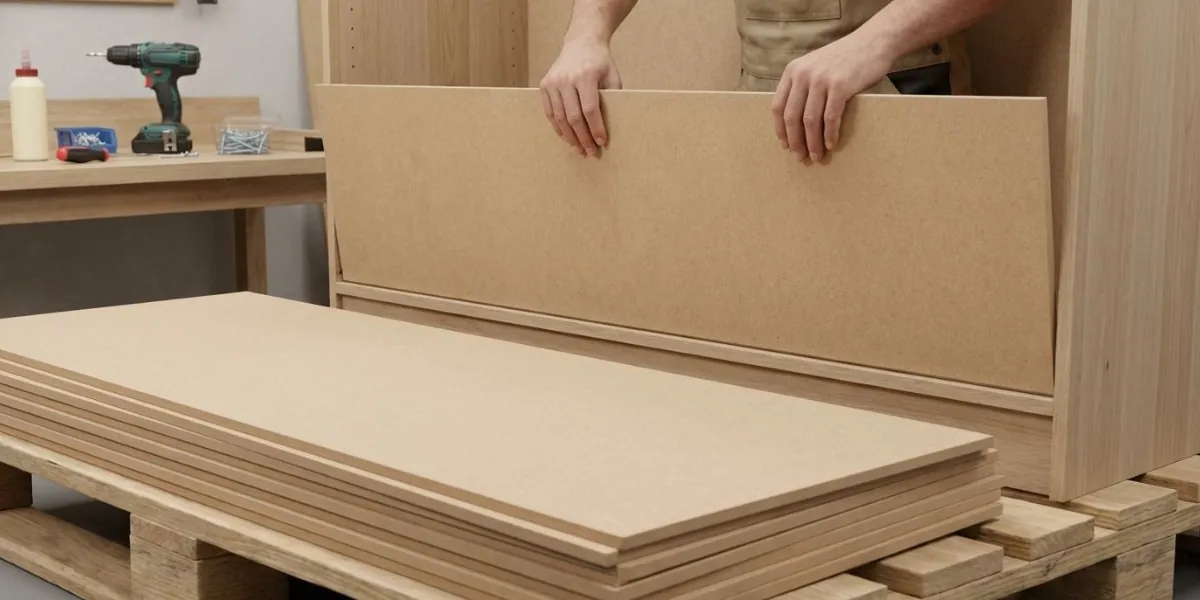
Fastener performance greatly affects furniture reliability.
MDF
- Better screw holding on surfaces
- More consistent density
- Stronger fastening performance
However, screws near the edge should be pre-drilled.
Chipboard
Chipboard is more likely to:
- Split near edges
- Lose holding power
- Strip screw holes after repeated removal
Special particle board screws can improve performance.
Winner: MDF
Surface Finish Comparison
One of MDF’s biggest advantages is its exceptionally smooth surface.
MDF
Perfect for:
- Painting
- CNC carving
- Decorative molding
- Premium furniture
Chipboard
Usually covered with:
- Melamine paper
- Wood veneer
- HPL laminate
Raw chipboard has a rough appearance and is rarely painted directly.
Winner: MDF
Cost Comparison
Chipboard is generally the least expensive engineered wood panel.
Typical pricing:
| Material | Relative Cost |
|---|---|
| Chipboard | $ |
| MDF | $$ |
| Plywood | $$$ |
If budget is your highest priority, chipboard offers excellent value.
Common Applications
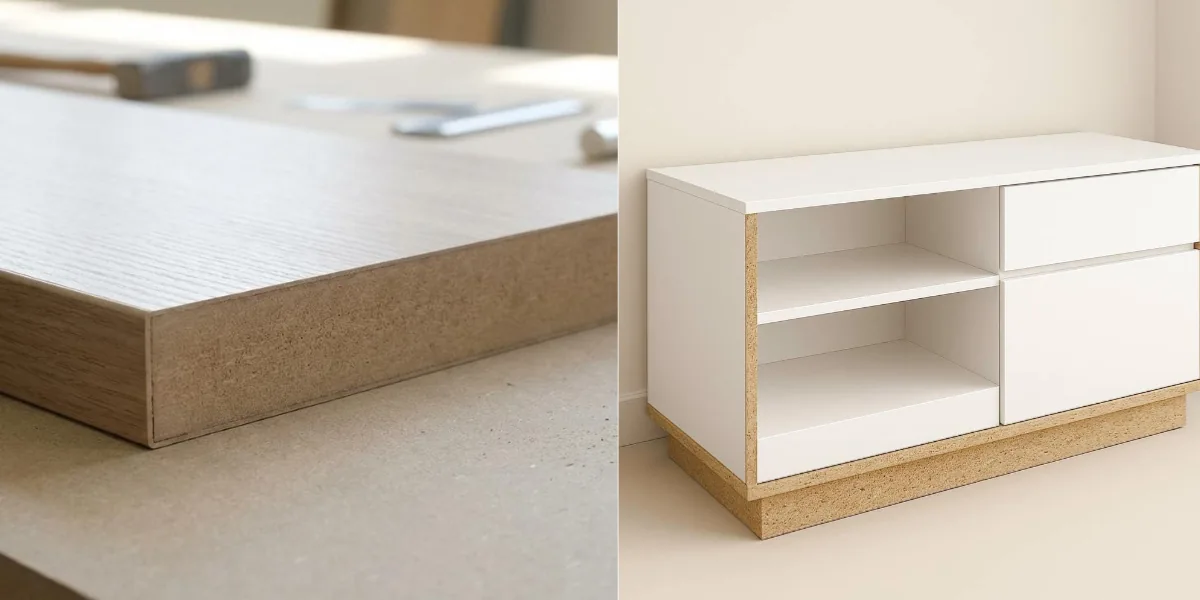
Best Uses for MDF
- Painted furniture
- Cabinet doors
- Interior wall panels
- Decorative moldings
- Display cabinets
- Speaker boxes
- Shelving
Best Uses for Chipboard
- Flat-pack furniture
- Wardrobes
- Office desks
- Kitchen cabinet carcasses
- Bookshelves
- Countertops (laminated)
- Budget furniture
Advantages and Disadvantages
MDF Pros
- Smooth surface
- Better strength
- Excellent paint finish
- Easy machining
- Better screw holding
MDF Cons
- Heavier
- Slightly more expensive
- Can swell if not sealed
Chipboard Pros
- Lowest cost
- Lightweight
- Good dimensional stability
- Ideal for laminated furniture
Chipboard Cons
- Lower strength
- Poor moisture resistance
- Easier to chip
- Weaker screw holding
Which Material Is More Reliable?
If reliability means long-term durability, strength, and performance, MDF is generally the better choice.
Choose MDF if you need:
- Stronger furniture
- Painted surfaces
- Better machining
- Longer service life
- Higher-quality appearance
Choose Chipboard (Particle Board) if you need:
- Lower cost
- Lightweight panels
- Mass-produced furniture
- Laminated finishes
- Budget interior projects
For applications requiring high structural strength, heavy loads, or frequent exposure to moisture, plywood is often a better option than either MDF or chipboard.
Final Thoughts
Both MDF and chipboard are versatile engineered wood panels, but they serve different purposes. MDF offers superior strength, smoother finishes, and greater durability, making it the preferred choice for premium furniture and painted applications. Chipboard, on the other hand, provides an affordable and lightweight solution for laminated furniture and cost-sensitive projects.
When selecting between the two, consider factors such as load-bearing requirements, moisture exposure, surface finish, and budget. Choosing the right material for the right application will ensure better performance and longer-lasting results.
Ready to Source High-Quality MDF or Chipboard?
At BAITWOOD, we supply premium engineered wood panels, including MDF, Particle Board (Chipboard), Plywood, Melamine Boards, and Veneered Panels, for furniture manufacturing, interior decoration, and construction projects worldwide.
Whether you need standard sizes or customized specifications, our experienced team can help you find the right panel for your application.
Contact BAITWOOD today to request a free quote, product samples, or expert advice for your next project.