
Chipboard is one of the most widely used engineered wood materials in the furniture and construction industries. Thanks to its affordability and versatility, it has become a popular choice for manufacturers and DIY enthusiasts alike.
But what exactly is this engineered wood panel, and is it suitable for furniture? In this guide, we’ll explore everything you need to know about chipboard and its applications.
What Is Chipboard?
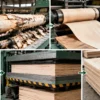
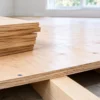
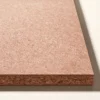
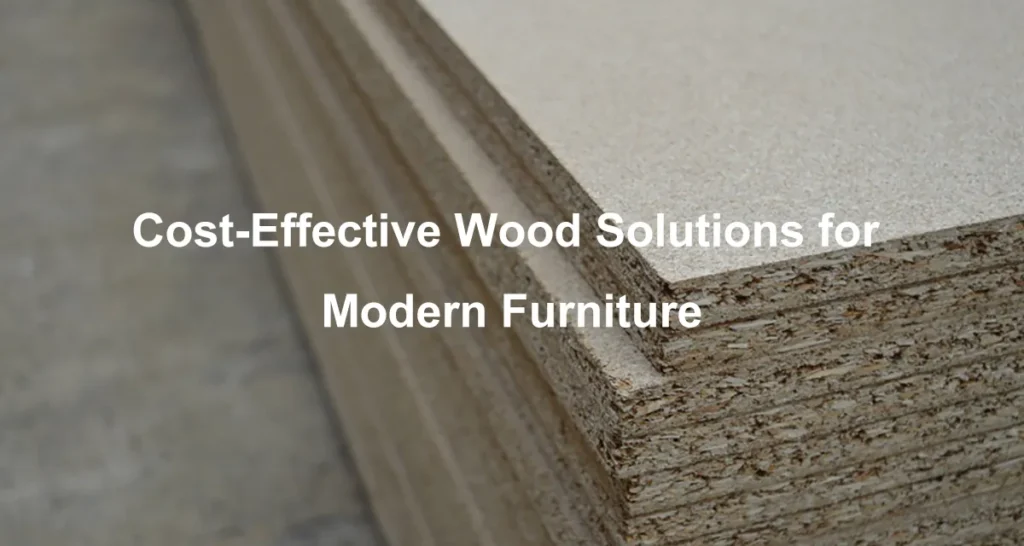
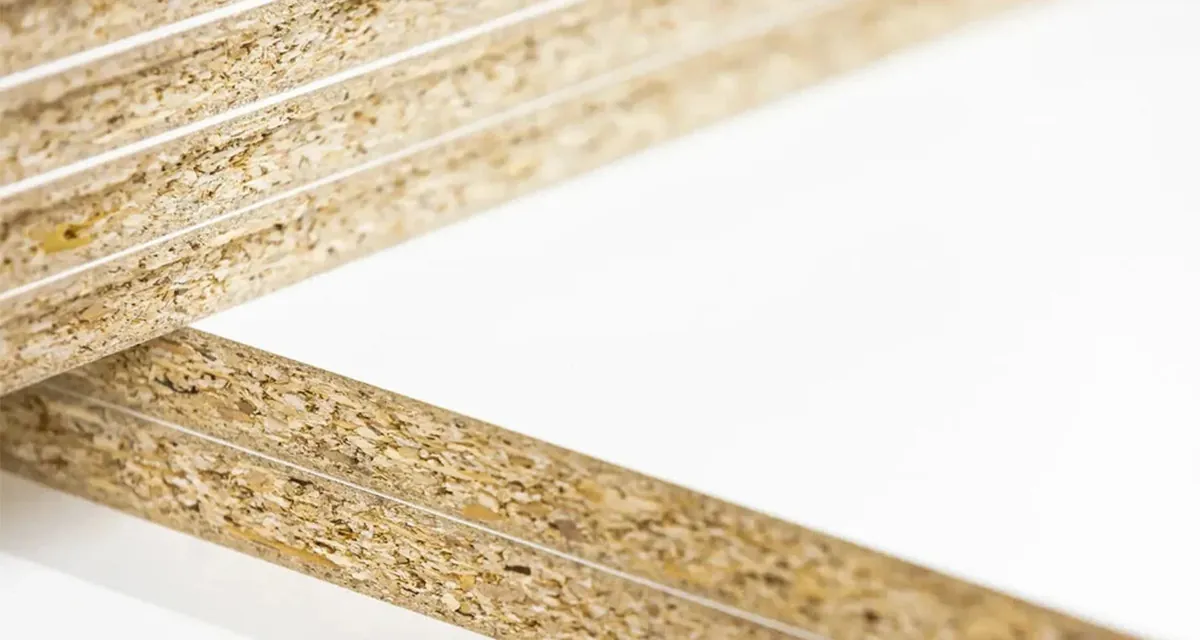
Chipboard, also known as Particle board, is a common type of engineered wood panel. It is manufactured from wood or lignocellulosic fragments such as wood shavings, sawdust and logging residues. After mixing with adhesive, these raw materials are hot‑pressed under heat and pressure to form finished boards.
It is widely used as a cost‑effective alternative to solid wood.
Types of particle board
There are several types of chipboard depending on its application:
- Standard – General-purpose use
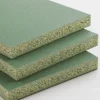
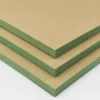
- Moisture – Suitable for humid environments like kitchens
- Melamine chipboard – Laminated surface for decorative purposes
- High-Density – Stronger and more durable
Key Features
- Smooth and flat surface
- Lightweight and easy to handle
- Cost-effective material
- Easy to cut and shape
- Suitable for lamination and veneering
Advantages and Disadvantages
Advantages
Cost‑effective: Compared with solid wood, Chipboard mostly uses wood scraps and fast‑growing timber as raw materials. Abundant supply keeps its price relatively affordable.
Stable structure: Its inner cross‑random particle structure delivers nearly consistent performance in all directions. It offers good lateral load‑bearing capacity and resists cracking and warping.
Eco‑friendly & sound‑insulating: It requires relatively less adhesive during production, and features satisfactory sound absorption, noise reduction and heat insulation performance.
Disadvantages
Vulnerable to moisture: Without special treatment, Chipboard easily swells, deforms and even disintegrates when exposed to water or long‑term humid conditions.
Moderate screw‑holding power: Despite good lateral load capacity, its granular inner structure cannot grip screws firmly. Screws tend to loosen after repeated disassembly and reassembly.
Limited shaping capability: Its particle‑based core prevents intricate work such as precise milling and carving, which are achievable with solid wood or MDF.
Edge‑banding is mandatory: Cut edges are rough and porous. Proper tight edge‑banding is required; otherwise, aesthetics suffer, alongside risks of formaldehyde emission and moisture ingress.
What can particle board be used for?
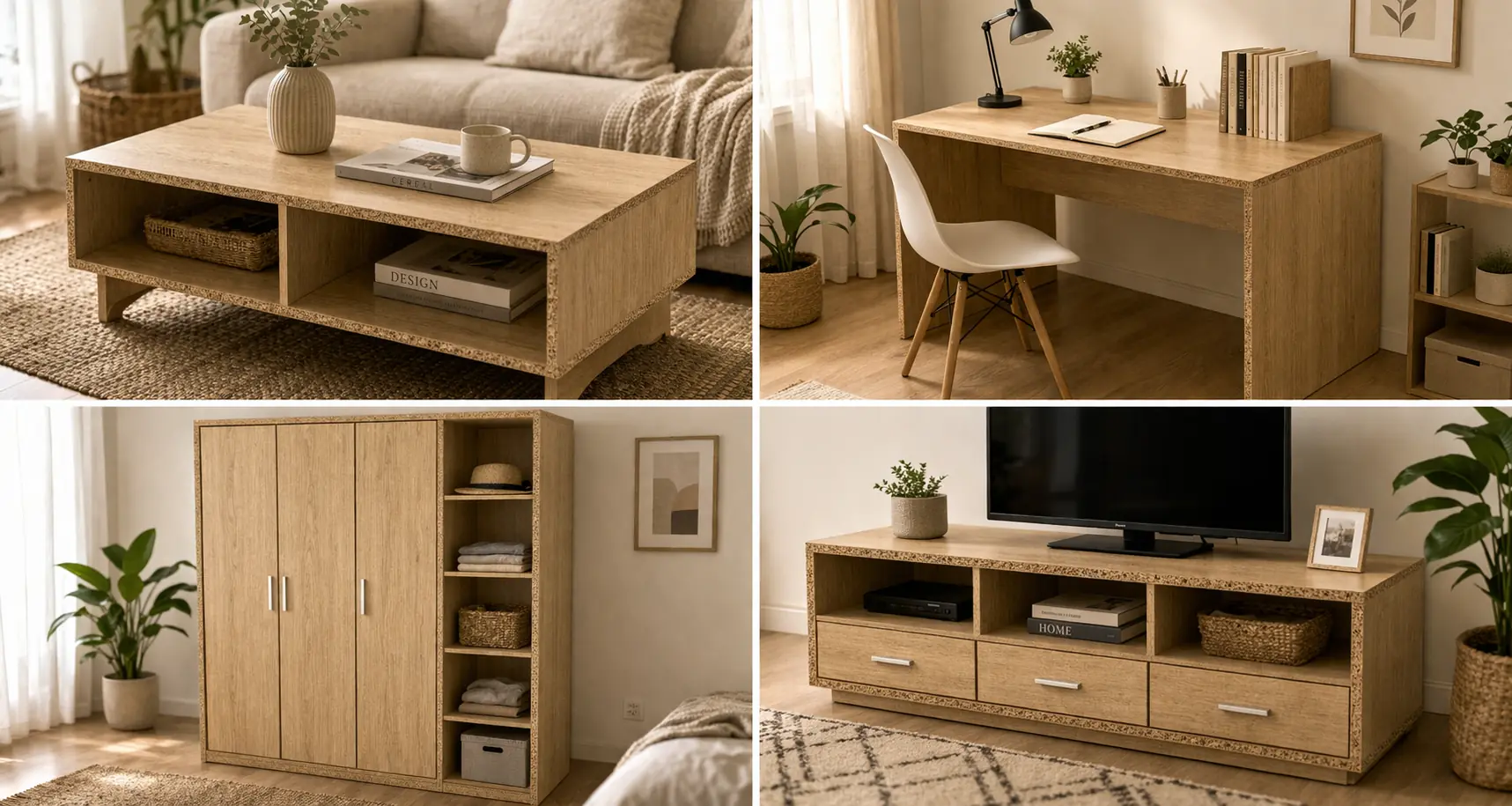
Cabinet bodies and doors: This is the most common application for particle board. It is widely used for wardrobes, bookcases, shoe cabinets, TV cabinets and more. Thanks to its stable structure and resistance to warping, it is well‑suited for floor‑to‑ceiling full‑height wardrobes.
Office furniture: It is extensively applied in office desks, filing cabinets, conference tables and office partitions. It holds up well under regular daily office use. Various decorative foils can be applied to its surface to match diverse interior styles.
Interior renovation and decoration: It can serve as wall decorative panels, ceiling substrates, stair treads and raised‑floor underlayment. Finished with clear varnish or stain, it creates distinctive spatial textures such as wabi‑sabi style.
Packaging and transportation: Due to its low cost, particle board is frequently made into crates for large‑scale equipment, pallets and transport base boards.
Differences between Particle Board, Chipboard and OSB
Many people get confused by these terms, and there are close connections among them:
Particle Board vs Chipboard: Strictly speaking, chipboard is an upgraded and improved version of particle board. Conventional particle board uses small wood chips with a relatively loose inner structure.
Chipboard features larger wood flakes processed with higher precision, delivering a denser structure, greater density, higher strength and better environmental performance. In the market, furniture‑grade particle boards are generally referred to as chipboard.
Particle Board vs OSB: OSB is the enhanced version of particle board. It adopts large wood strands laid in an oriented pattern (surface layers aligned lengthwise, core layers cross‑oriented), and MDI adhesive (formaldehyde‑free) is widely used. OSB greatly outperforms standard particle board in physical properties, structural stability and screw‑holding capacity, yet it comes at a higher price.
Learn More About Particle Board and OSB: Read More → OSB vs Chipboard: Which Is Better for Your Project?
Is This Board Suitable for Furniture Use?
Yes, chipboard can be used for furniture, especially in low-cost or lightweight applications. It is commonly used in ready-to-assemble furniture.
However, for heavy-duty or long-lasting furniture, plywood is usually a better choice.
How to Choose Chipboard
When we choose this board, consider the following:
- Density and thickness
- Surface smoothness
- Moisture resistance
- Certification and standards
- Supplier reliability
Note: You may check by weight during selection. For panels of identical dimensions, heavier boards have higher density and better sturdiness. You can also smell the material. It should give off only a faint natural wood scent, with no pungent odors.
Conclusion
Chipboard is an affordable and versatile material suitable for a wide range of applications. While it may not be as strong as plywood, it offers excellent value for budget-conscious projects.
If you are looking for a cost-effective solution for furniture or interior use, This board material is definitely worth considering.
Ready to Start Your Project?
Contact us today to get high-quality chipboard for your furniture or interior needs. Our team is here to provide expert advice and fast service.