
What Is MDF Board?
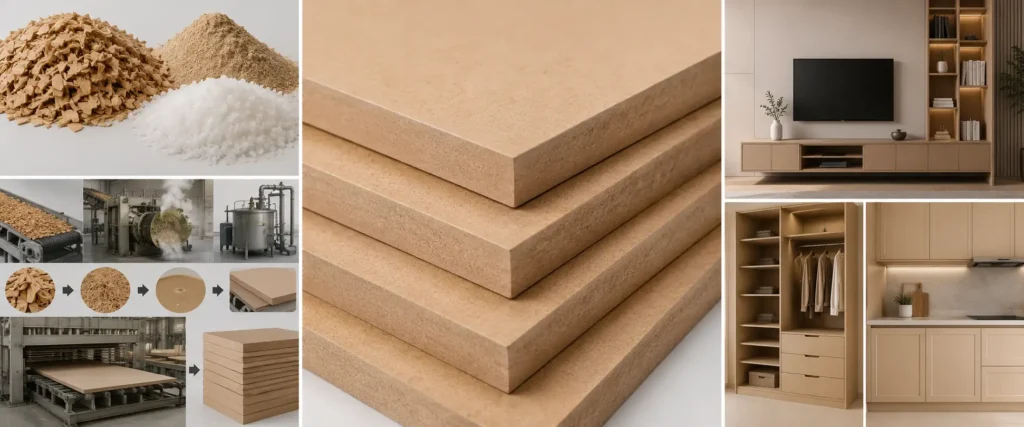
MDF (Medium Density Fiberboard) is an engineered wood product made by breaking down wood fibers and bonding them with resin under high temperature and pressure.
Unlike natural wood, MDF has:
- No knots or grain patterns
- No internal voids
- Uniform density throughout the board
- A very smooth surface ideal for finishing
This makes MDF especially suitable for painted furniture and precision cutting applications.
What Is MDF Made Of?
1. Wood Fibers (Core Material)
Wood fibers are derived from softwood and hardwood residues. These fibers form the structural base of MDF and determine its strength and surface uniformity.
High-quality MDF uses refined fibers with minimal impurities to ensure better density consistency.
2. Resin Binder System
Resin acts as the adhesive that bonds fibers together during hot pressing.
Common resin systems include:
- Urea-formaldehyde (UF) for standard MDF
- Modified resins for low-emission or moisture-resistant grades
The resin type directly affects durability, bonding strength, and emission performance.
3. Functional Additives
Small amounts of waxes and chemical additives are used to improve performance characteristics such as:
- Moisture resistance
- Dimensional stability
- Surface hardness
- Durability in humid environments
How Is MDF Manufactured?
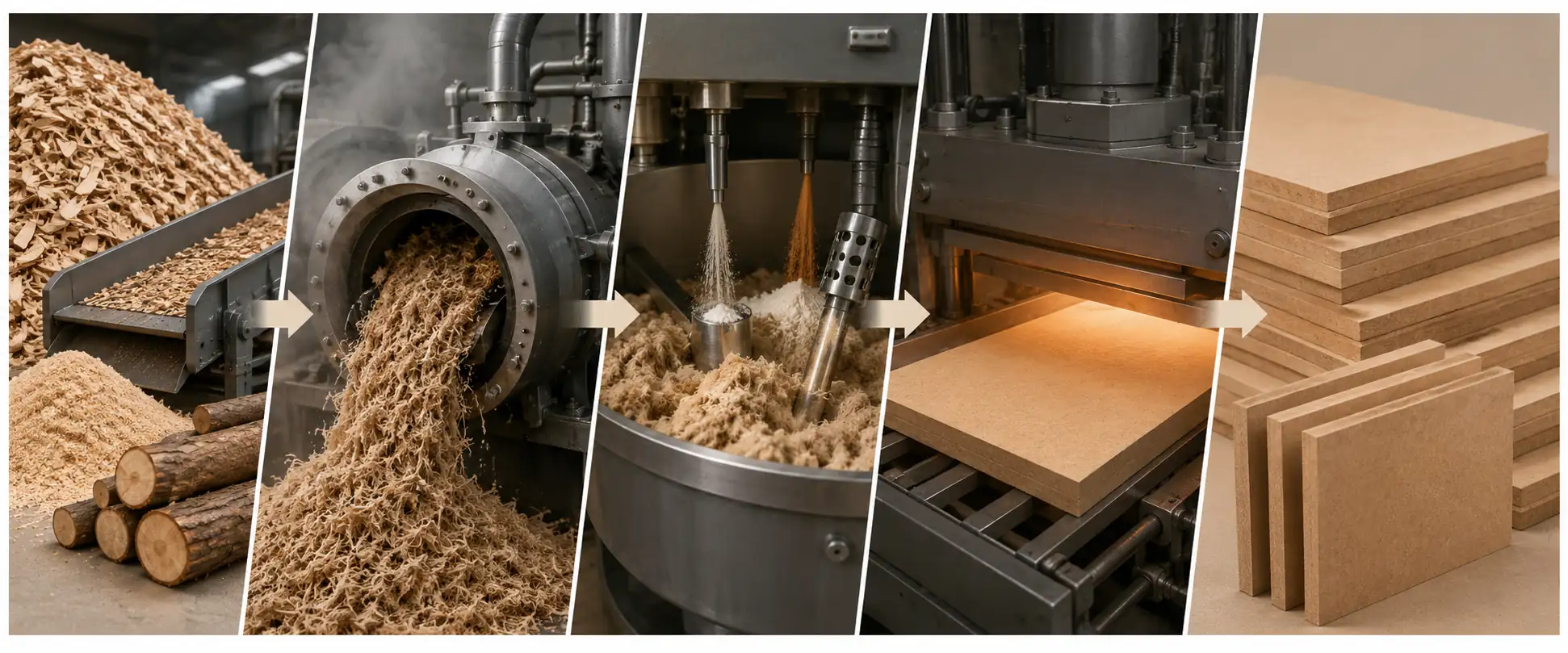
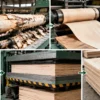
MDF is produced by converting wood residues such as chips, shavings, and sawdust into fine fibers, which are then combined with resin and wax under high temperature and pressure.
1. Raw Material Preparation
Wood chips and other wood by-products are cleaned and screened to remove impurities before processing.
2. Fiber Production
The wood is steamed and refined into individual fibers using specialized equipment called a defibrator.
3. Resin Blending and Drying
The fibers are mixed with resin, wax, and additives to improve strength, moisture resistance, or fire performance. The treated fibers are then dried to the required moisture level.
4. Mat Formation and Hot Pressing
The dried fibers are formed into a thick mat and compressed under temperatures of around 200°C and high pressure. This process bonds the fibers together to create a dense, uniform board.
5. Sanding and Finishing
After cooling, the boards are sanded for a smooth surface and cut into standard sizes and thicknesses, such as 9mm, 12mm, 18mm, and 25mm.
The result is a strong, smooth, and consistent panel with no knots, grain patterns, or internal voids, making MDF ideal for furniture and interior applications.
Types of MDF Boards and Their Applications
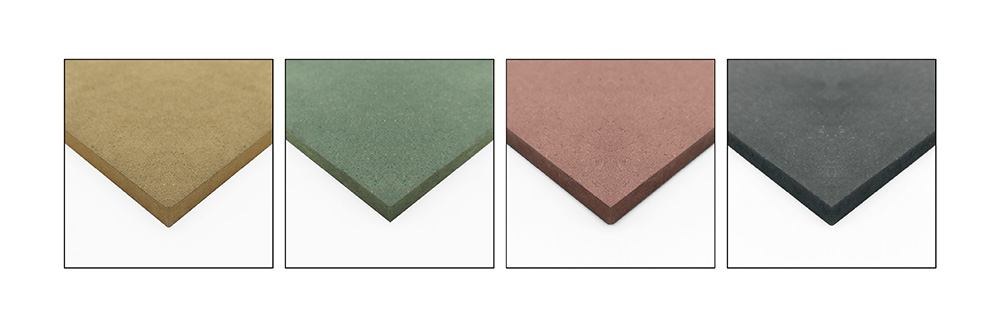
Different MDF boards are designed for different applications. Here are the most common types:
Standard MDF
A versatile and cost-effective option for general indoor use.
Applications: Furniture, cabinets, shelving, and decorative panels.
Moisture-Resistant MDF (MR MDF)
Designed to withstand humid environments better than standard MDF.
Applications: Kitchens, bathrooms, and laundry rooms.
Fire-Retardant MDF (FR MDF)
Contains fire-resistant additives to improve safety.
Applications: Commercial buildings, offices, hotels, and public spaces.
Veneered MDF
Features a natural wood veneer surface for an attractive wood appearance.
Applications: Premium furniture, cabinet doors, and interior decoration.
Melamine-Faced MDF
Comes with a durable decorative surface that is ready to use.
Applications: Wardrobes, office furniture, and kitchen cabinets.
Choosing the right MDF type helps ensure better performance, durability, and value for your project.
Key Advantages of MDF Board
MDF offers several benefits that make it widely used in furniture manufacturing:
- Smooth surface ideal for painting and lamination
- Easy machining for CNC cutting and shaping
- Consistent density without knots or defects
- Cost-effective alternative to solid wood
- Suitable for complex interior designs
Common Uses of MDF Board
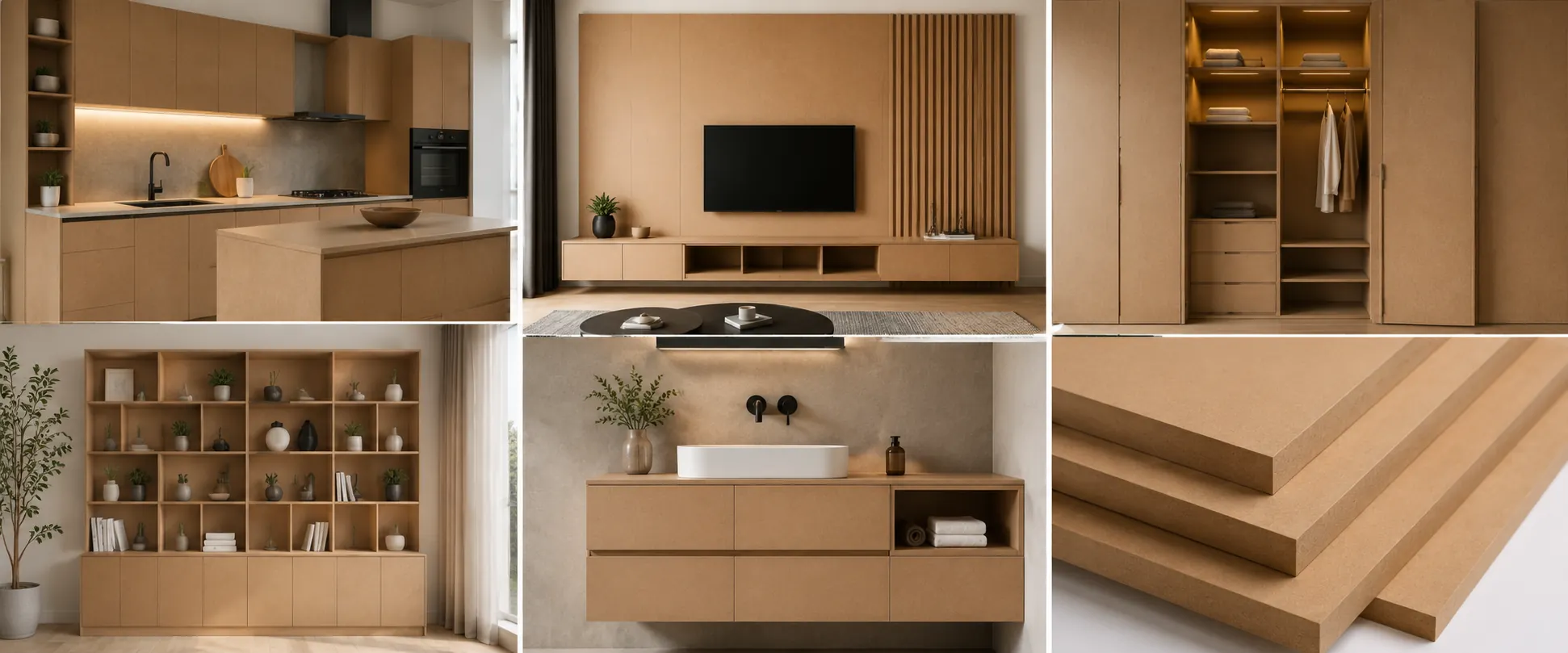
Furniture Manufacturing
MDF is commonly used for cabinets, wardrobes, shelves, tables, and office furniture.
Interior Decoration
It is widely used for wall panels, decorative moldings, partitions, and ceiling designs.
Cabinet Doors
Its smooth surface makes MDF an excellent choice for painted cabinet doors and kitchen furniture.
Retail Fixtures
Display units, exhibition stands, and store fittings often utilize MDF panels.
DIY Projects
Many DIY enthusiasts choose MDF for home improvement and crafting projects due to its workability.
MDF vs. Plywood
While both MDF and plywood are engineered wood products, they offer different advantages:
| Feature | MDF | Plywood |
|---|---|---|
| Surface Smoothness | Excellent | Good |
| Strength | Moderate | High |
| Screw Holding | Fair | Excellent |
| Moisture Resistance | Limited | Better |
| Cost | Lower | Higher |
| Paint Finish | Excellent | Good |
For painted furniture and decorative applications, MDF is often preferred. For structural projects or moisture-prone environments, plywood is usually the better choice.
Is MDF Board Waterproof?
Standard MDF is not waterproof and can swell when exposed to excessive moisture. However, moisture-resistant MDF (MR MDF) is available for humid environments such as kitchens and bathrooms.
For outdoor applications, specialized exterior-grade panels or plywood are generally recommended.
Conclusion
MDF board is a versatile, affordable, and highly workable engineered wood product made from wood fibers, resin, and wax. Its smooth surface and consistent structure make it a preferred material for furniture manufacturing, cabinetry, interior decoration, and many other applications.
Understanding MDF’s composition, manufacturing process, and performance characteristics can help you choose the right material for your next project.
Looking for reliable MDF board solutions?
BAITWOOD offers high-quality MDF panels in various sizes and specifications to meet furniture, construction, and interior design requirements worldwide. Contact us today to learn more about our MDF products.