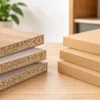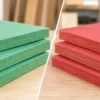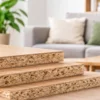

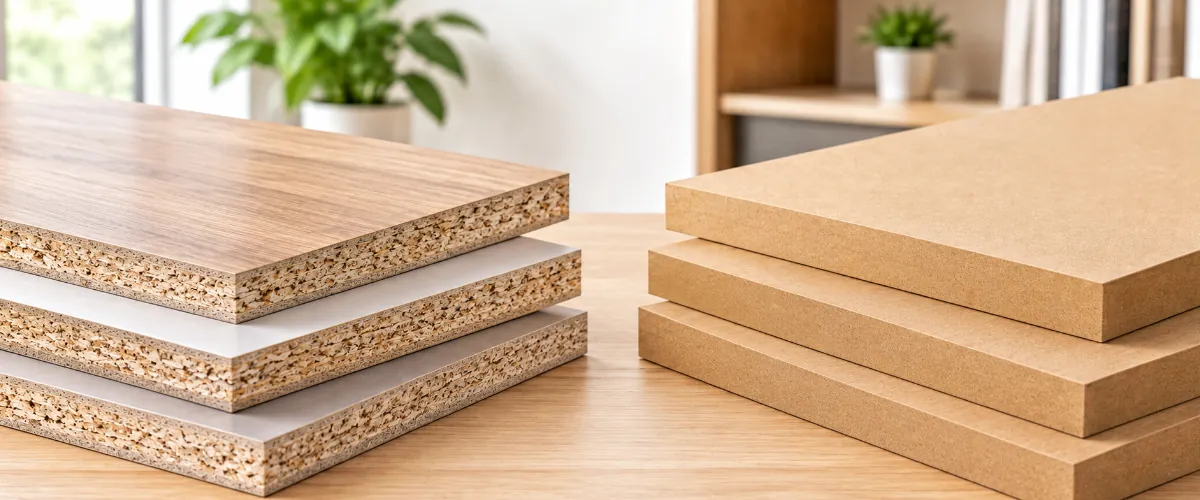
If you’re shopping for furniture, you’ll likely come across two popular materials: melamine faced chipboard (also known as particle board or prefinished board) and medium density fiberboard (MDF).
Both materials are widely used in furniture manufacturing. At first glance, they may seem quite similar, and it’s not always easy to tell which one is better. However, they differ in several important ways, including raw materials, manufacturing processes, surface finish, load-bearing capacity, and common uses.
Before choosing between them, it’s worth understanding these differences. This will help you find the right material for your furniture based on its intended use, budget, and performance requirements.
What Are Melamine Faced Chipboard and MDF?
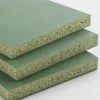
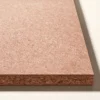
Melamine faced chipboard (MFC) is a popular decorative wood-based panel. Manufacturers make it by mixing wood particles with resin adhesives and pressing the mixture under high temperature and pressure. They then cover the board with decorative paper impregnated with melamine resin. This creates a durable, attractive surface.
MFC offers both practicality and a good appearance. Buyers can choose from a wide range of colors, woodgrain patterns, and surface textures to match different furniture designs. That’s why manufacturers often use it for wardrobes, kitchen cabinets, desks, and other furniture.
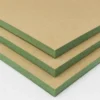
Medium density fiberboard (MDF) is another widely used engineered wood panel. Manufacturers produce it by mixing wood fibers with resin adhesives and other additives, then pressing the mixture under high temperature and pressure.
Unlike chipboard, which uses larger wood particles, MDF uses much finer wood fibers. This gives the board a more compact and uniform structure, with a smooth, even surface.
MDF is also easy to cut, carve, and shape. Its smooth surface works well with paint, veneer, laminates, and other finishes. For these reasons, manufacturers commonly use MDF for custom furniture, cabinet doors, decorative moldings, and interior design projects.
Melamine Faced Chipboard vs MDF: Key Differences
Although both materials are widely used in furniture production, their manufacturing processes and performance are different.
If you want to understand how particleboard is made and the different types available, read Baitwood’s guide to what chipboard is and how it is used.
Here is a quick comparison of the main characteristics.
| Comparison | Melamine Faced Chipboard | Standard MDF |
|---|---|---|
| Raw material | Wood particles | Fine wood fibers |
| Surface | Melamine decorative finish | Smooth unfinished surface |
| Surface treatment | Usually ready to use | Usually needs finishing |
| Density | Depends on particle structure and grade | Generally more uniform |
| Weight | Often lighter at comparable specifications | Often heavier at comparable specifications |
| Scratch resistance | Good, depending on melamine finish | Depends on the applied coating |
| Moisture resistance | Standard grades have limited resistance | Standard grades have limited resistance |
| Machining | Suitable for straight cuts and drilling | Suitable for cutting, routing, and shaping |
| Painting | Not suitable without special preparation | Suitable after proper preparation |
| Cost | Often more economical as a finished panel | Additional finishing may increase total cost |
The most important difference is that melamine faced chipboard combines a structural core with a decorative surface, while standard MDF is mainly a core material that usually needs further surface treatment.
It is also worth noting that MDF can have a melamine finish. In that case, it is called melamine faced MDF. Therefore, this comparison focuses on conventional melamine faced particleboard and standard MDF.
What Does Melamine Facing Do?
Melamine facing (also called double-sided melamine finish) is a decorative surface material, not a core board. Think of it as a protective layer applied to the surface of chipboard or MDF.
- Key benefits: It offers good resistance to scratches, wear, heat, and common chemicals. It also provides a finished surface without the need for additional painting.
- Common uses: Melamine faced chipboard is widely used in ready-to-assemble furniture and custom wardrobes. It gives the board a realistic woodgrain or solid-color finish while keeping the production process simple and cost-effective.
Which Is Better for Furniture? 5 Important Factors
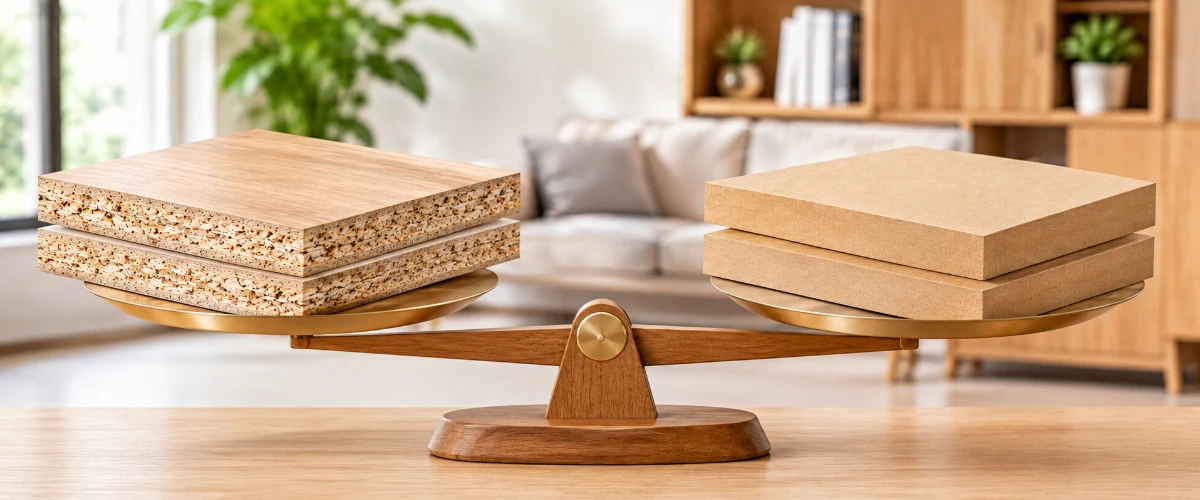
There is no single winner for every furniture project. Let’s compare the two materials based on the factors that matter most to manufacturers and buyers.
a.Surface Finish and Appearance
If you need furniture panels with a finished decorative surface, melamine faced chipboard is usually the more convenient option.
Its melamine surface comes in many designs, including:
- Solid colors such as white, black, gray, and beige
- Natural woodgrain patterns
- Oak, walnut, and other wood-look finishes
- Matte, glossy, and textured surfaces
These options make it easy to match different furniture styles without applying additional decorative materials.
MDF, on the other hand, has a naturally smooth surface. It is a better choice when furniture components need painting, decorative coatings, or custom surface treatments.
b.Strength and Load-Bearing Performance
Strength is another important factor when choosing furniture materials.
Melamine faced chipboard provides sufficient strength for many everyday furniture applications, including wardrobes, cabinets, desks, and bookshelves.
However, its performance depends on particle size, board density, thickness, and internal bonding quality.
MDF has a more uniform fiber structure. It performs well in applications that require consistent machining and a smooth, solid surface.
Neither material is automatically suitable for every heavy-load application. Furniture manufacturers should consider panel thickness, support spacing, fastener selection, and expected loads.
c.Scratch Resistance and Daily Wear
Furniture surfaces face regular contact with objects, cleaning materials, and everyday use.
Melamine faced chipboard has an advantage because its decorative paper is treated with melamine resin. This creates a durable surface with good resistance to scratches, stains, and everyday wear.
Standard unfinished MDF does not offer the same surface protection. It needs paint, laminate, veneer, or another suitable finish to improve its resistance to daily use.
For more details about its popularity in modern furniture, see Baitwood’s article on why melamine faced chipboard is so popular.
d.Moisture Resistance
Moisture resistance is an important consideration for kitchen cabinets, bathroom furniture, and other indoor applications.
Standard melamine faced chipboard and standard MDF are both sensitive to prolonged moisture exposure.
If water enters through exposed edges or damaged surfaces, the core may swell and lose some of its original properties.
The melamine surface helps protect the panel face from everyday splashes, but it does not make the entire board waterproof.
For applications with higher humidity, buyers should consider moisture-resistant grades, properly sealed edges, and suitable installation conditions.
e.Processing and Manufacturing Efficiency
Chipboard contains larger wood particles, so its edges can chip or break during machining. It is not suitable for milling, carving, or other detailed shaping. Manufacturers mainly use it for flat furniture panels.
MDF has a finer, more uniform structure. It handles CNC machining well and is less likely to chip along the edges. This makes it a better choice for shaped panels, decorative carvings, and raised or recessed designs.
However, MDF usually needs additional surface finishing, which adds extra steps to the production process.
Common Furniture Applications: Melamine Faced Chipboard vs MDF
Both materials have a wide range of applications, but they are not always used for the same furniture components.
Here are some common examples.
| Furniture Application | Recommended Material | Main Reason |
|---|---|---|
| Kitchen cabinet carcasses | Melamine faced chipboard | Ready-to-use decorative surface |
| Wardrobe panels | Melamine faced chipboard | Cost efficiency and design options |
| Office desks | Melamine faced chipboard | Easy maintenance and practical surface |
| Bookshelves | Melamine faced chipboard | Suitable for flat panel construction |
| Painted cabinet doors | MDF | Smooth surface for painting |
| Decorative furniture panels | MDF | Easy routing and shaping |
| Curved furniture components | MDF | Suitable for machining and profiling |
| Flat-pack furniture | Melamine faced chipboard | Efficient mass production |
For many furniture factories, these two materials are not competitors in every situation. They can work together in the same furniture project.
For example, a wardrobe may use melamine faced chipboard for its side panels, shelves, and internal structure, while MDF is used for painted decorative doors.
This combination helps manufacturers balance production costs, appearance, and processing requirements.
Final Verdict: Melamine Faced Chipboard or MDF?
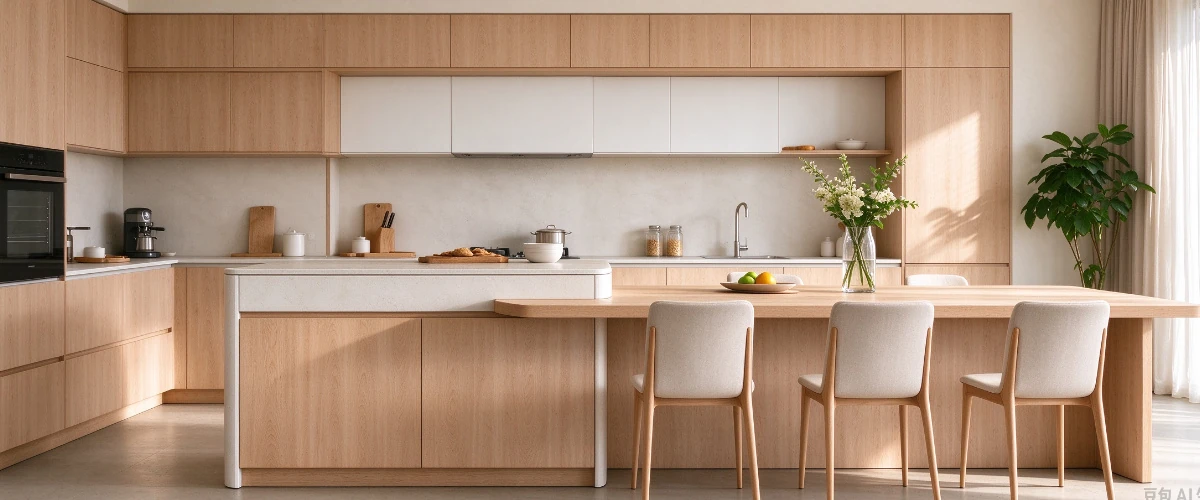
So, which is better for furniture: melamine faced chipboard or MDF?
The best choice depends on your production needs.
Choose melamine faced chipboard if you need:
- Ready-to-use decorative furniture panels
- Cost-effective cabinet and wardrobe materials
- Scratch-resistant and easy-to-clean surfaces
- Efficient production for flat-pack furniture
- A wide selection of colors and woodgrain patterns
Choose MDF if you need:
- Smooth surfaces for painting
- Decorative routing and engraving
- Curved or shaped furniture components
- Custom surface treatments
- Consistent material for detailed machining
For furniture manufacturers, the two materials can complement each other rather than replace one another. Selecting the right panel for each component helps control costs while maintaining the required appearance and performance.
At Baitwood, we understand that different furniture projects require different panel specifications. Whether you are sourcing melamine faced chipboard, MDF, or other engineered wood panels, choosing a reliable manufacturer is essential for maintaining consistent quality and supply.
Contact Baitwood to discuss your furniture panel requirements, including board thickness, dimensions, surface finishes, and bulk order specifications.
Product Recommendations
Find the Right Products for Your Needs
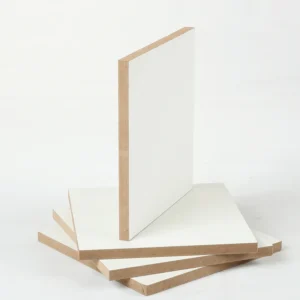 Baitwood ProductMelamine MDFMDF (Medium Density Fiberboard) is an engineered wood panel made from refined wood fibers…View Product
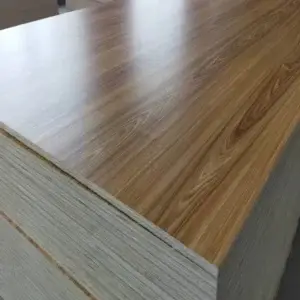 Baitwood ProductGlossy Melamine PlywoodGlossy Melamine Plywood is a premium decorative panel made with a durable plywood core…View Product
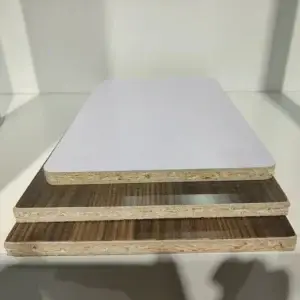 Baitwood ProductMelamine ChipboardMelamine Chipboard is an engineered wood panel made from compressed wood particles bonded with…View Product
Related Articles
Explore more helpful articles, product guides, and expert tips.
 Blog ArticleBlack or White Melamine Board: Which Color Should You ChooseChoosing between black and white melamine board may seem like a simple design decision, but…Read Article
 Blog ArticleMelamine vs Plywood: Key Differences You Must Know Before BuyingWhen selecting materials for furniture, cabinets, or interior design projects, one common question is melamine…Read Article
 Blog ArticleWhat Is Melamine Plywood? How It’s Made, Benefits, and UsesMelamine plywood is a widely used engineered wood for interior renovation and custom whole‑home furniture.…Read Article