
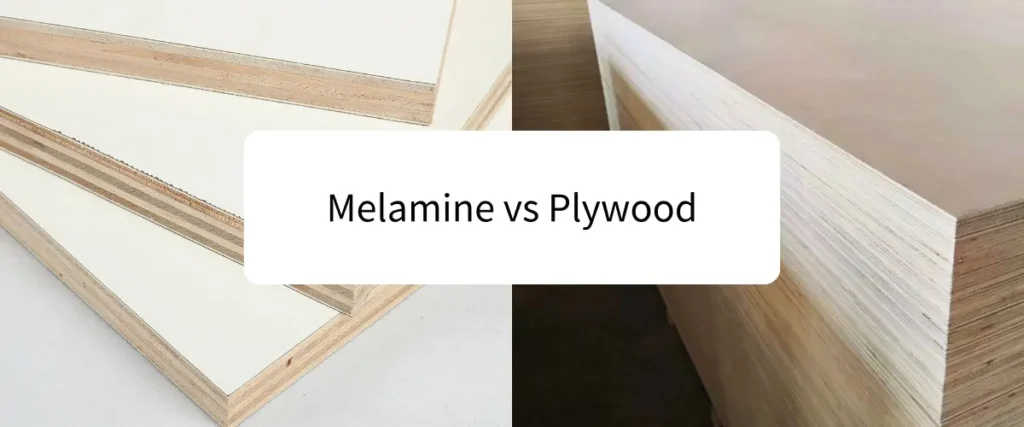
When selecting materials for furniture, cabinets, or interior design projects, one common question is melamine vs plywood. Although they are often used in similar applications, they are actually very different in structure, performance, and purpose.
Understanding the difference between melamine and plywood is important if you want to choose the right material for durability, appearance, and cost efficiency. In this guide, we will clearly compare both materials to help you make the right decision for your project.
1. What Is Plywood?
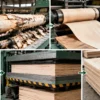
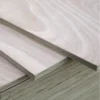
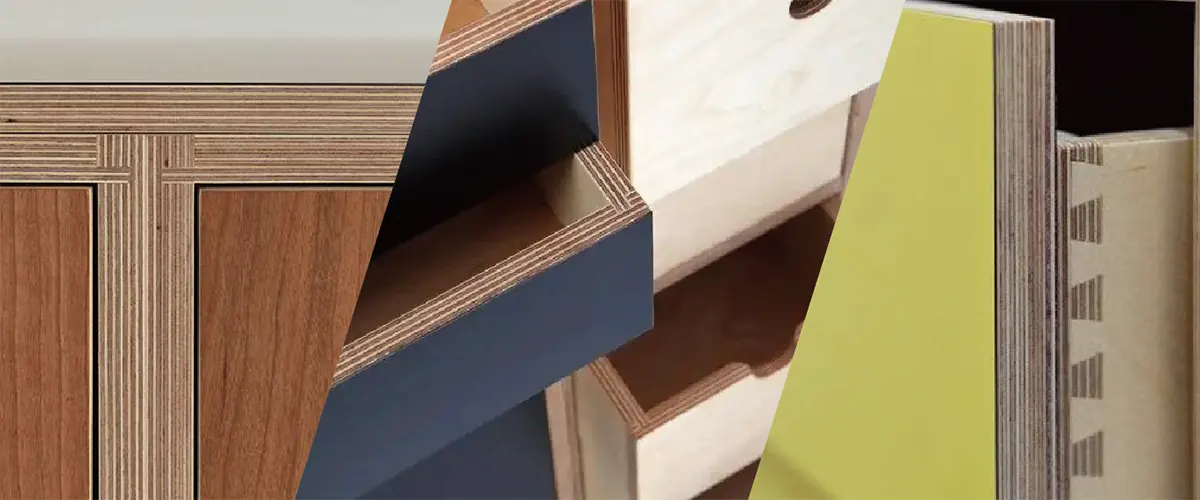
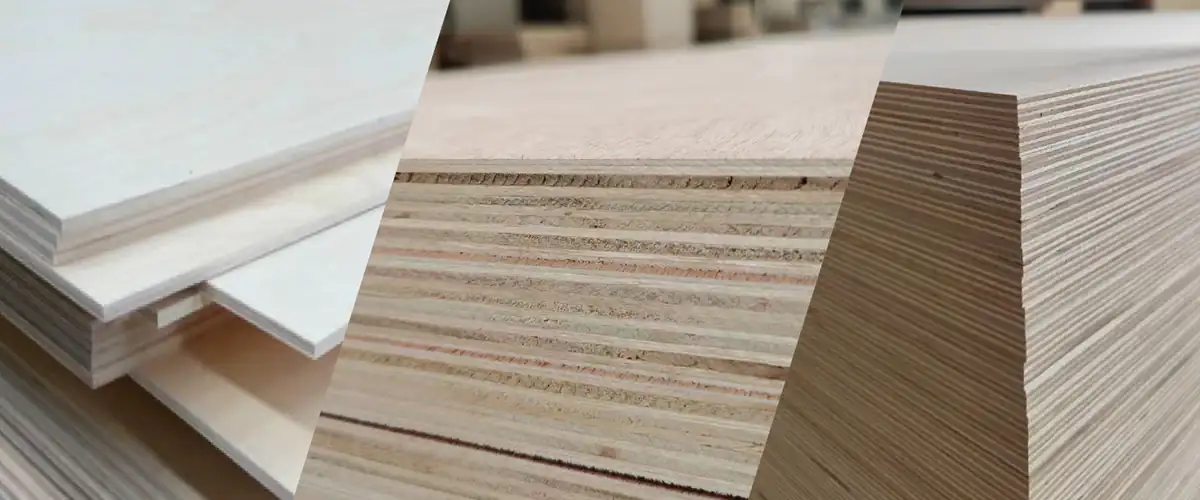
Plywood, also known as multi-ply board or laminated board, is one of the three major types of engineered wood panels. It is made by bonding multiple layers of thin wood veneers together, with each layer’s grain direction placed perpendicular to the adjacent one.
This cross-grain structure greatly enhances the strength and stability of the board.
Because of this structural advantage, plywood is widely used in furniture manufacturing, construction engineering, flooring, and interior decoration.
2. Advantages of Plywood
Plywood is widely used because it offers many advantages:
Main benefits
- High strength and strong load-bearing capacity
- Stable structure, not easy to warp or crack
- Available in different grades (commercial, structural, marine grade)
- Suitable for both furniture and construction applications
- Long service life
Plywood also has excellent workability. It can be cut, drilled, sanded, painted, and laminated. It can be used as a base material for decoration or directly for furniture production. It also supports curved designs, making it highly valuable for modern architectural shapes and bent furniture manufacturing.
In addition, plywood makes efficient use of small-diameter logs and fast-growing wood, reducing waste. High-quality products can meet ENF environmental standards, making them suitable for eco-friendly interior applications.
These advantages make plywood ideal for applications requiring structural strength.
3. Disadvantages of Plywood
Although plywood has many strengths, it also has some limitations:
First, plywood is more expensive compared to materials like melamine board (especially those based on particleboard). Its manufacturing process is more complex, which increases production cost and market price.
Second, the surface finish is not always perfect. Natural wood veneer may contain grain patterns, knots, and irregularities. If a smooth surface is required, additional sanding, painting, or finishing is needed.
Third, environmental concerns may exist in low-quality products. Some cheap plywood uses inferior urea-formaldehyde adhesives, which may release excessive formaldehyde and pose health risks. Therefore, careful selection is necessary.
In addition, plywood has limited moisture resistance. Although better than particleboard, prolonged exposure to extreme humidity or direct water contact may still cause delamination or deformation.
Finally, manufacturing quality control is critical. Improper drying or insufficient pressing pressure may result in bubbling, delamination, or warping, which is difficult to repair.
4. What Is Melamine Board?
Melamine board is not a natural wood material but a surface decorative panel.
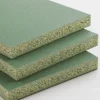
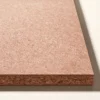
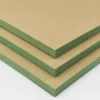
It is made by pressing melamine-impregnated decorative paper onto a substrate such as particleboard or MDF under high temperature and pressure.
Its main function is to provide a decorative surface rather than structural strength.
5. Advantages of Melamine Board
Melamine board is widely used in modern furniture due to the following benefits:
Main advantages
- Rich variety of finishes (wood grain, solid colors, modern designs)
- Smooth surface, ready to use
- Scratch-resistant, stain-resistant, and easy to clean
- Low cost and high cost-performance ratio
- Suitable for mass furniture production
Therefore, it is commonly used in wardrobes, kitchen cabinets, and office furniture.
6. Disadvantages of Melamine Board
First, its load-bearing capacity is limited. Most melamine boards use particleboard or MDF as the core material, which has lower strength compared to plywood. Long-term load may lead to deformation or sagging. It is not suitable for structural components, and repeated disassembly may loosen screws.
Second, its moisture resistance is poor. Although the surface layer has some protection, the core material is highly absorbent. If edge banding is damaged, moisture can easily enter, causing swelling, warping, or mold growth. It is not recommended for humid environments such as bathrooms or kitchens.
Third, core material quality varies greatly. Low-cost products may use poor-quality substrates with internal voids or impurities, affecting strength and increasing the risk of formaldehyde emission. It is also difficult for non-professionals to identify quality differences.
In addition, melamine board has limited processing flexibility. It cannot be carved or shaped easily and is mainly used for simple cutting and edge banding. Once damaged, it is difficult to repair and usually requires full replacement.
7. Plywood vs Melamine Board: Which Is Better?
The choice between plywood and melamine board depends on your specific needs.
Choose plywood if you need:
- Higher structural strength
- Strong load-bearing performance
- Long service life
- Construction or structural applications
Choose melamine board if you need:
- Attractive surface finishes
- Furniture like wardrobes or cabinets
- Lower cost and higher affordability
Summary:
- Plywood = strength & structure
- Melamine board = appearance & decoration
In actual production, many furniture manufacturers combine both materials:
- Plywood for internal structure
- Melamine board for surface finishing
This combination provides strength, aesthetics, and cost efficiency at the same time.
Conclusion
Understanding the differences between plywood and melamine board helps you make better decisions for different projects. If you prioritize strength and durability, plywood is the better choice. If you focus more on appearance and cost control, melamine board is more suitable.
In many real-world applications, combining both materials is often the most optimal solution.
Contact Us for High-Quality Plywood & Melamine Board
If you are looking for high-quality plywood or melamine board, contact us for the latest catalog, pricing, and samples. We offer customized solutions and reliable supply to support your project needs.