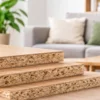

Standard MDF is made from wood fibers, so it can catch fire under certain conditions. Raw MDF offers a smooth surface and is easy to cut, shape, and work with. However, it has limited fire resistance.
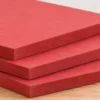
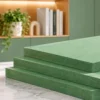
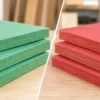
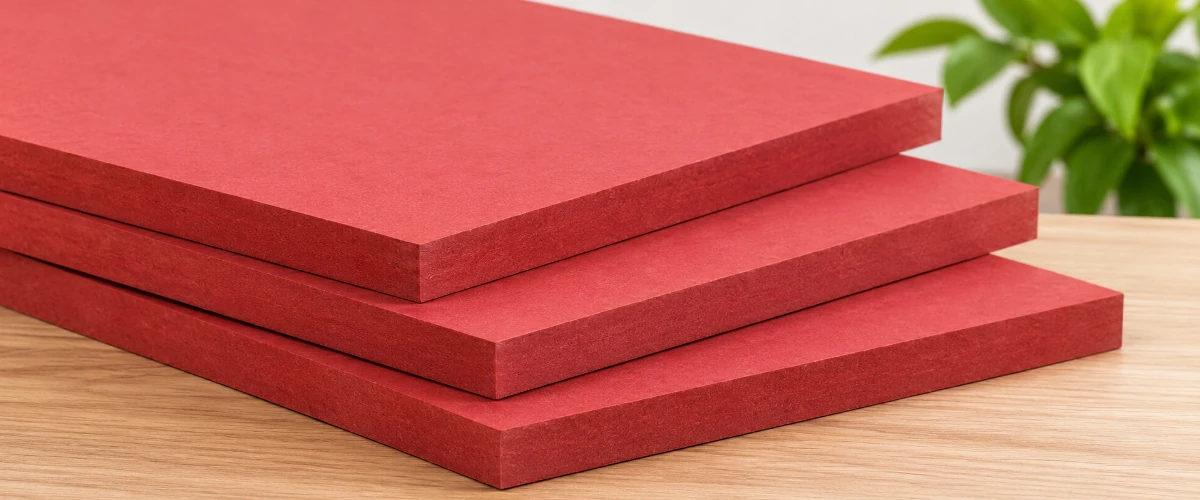
To improve fire safety, manufacturers developed fire-retardant MDF. During production, they add special ingredients, including fire-retardant chemicals, to help slow down combustion and reduce the risk of fire. These additives often give the board a red appearance, which is why fire-retardant MDF is also commonly known as Red MDF. For a better understanding of how red and green MDF differ in their properties and applications, read our guide to green MDF vs red MDF.
In this guide, we’ll take a closer look at the main features, common uses, and benefits of Red MDF. You’ll also learn what makes it different from standard MDF and how to choose the right board for your project.
Red MDF vs. Regular MDF: What Is the Difference?
Red MDF and regular MDF share a similar basic manufacturing process. However, they differ in appearance and potential design applications.
| Comparison | Red MDF | Regular MDF |
|---|---|---|
| Appearance | Red-colored appearance | Usually natural brown |
| Main Material | Wood fibers and resin | Wood fibers and resin |
| Surface | Generally smooth | Generally smooth |
| Processing | Cutting, drilling, routing | Cutting, drilling, routing |
| Main Applications | Decorative panels and customized furniture | Furniture, cabinets, and interior panels |
| Design Style | Bold and colorful | Neutral and versatile |
The biggest difference is usually the color rather than the basic board structure.
However, the exact performance of each product depends on its density, adhesive system, additives, and manufacturing process.
Why Is Fire-Retardant MDF Red?
Fire-retardant MDF is usually red because manufacturers add fire-retardant chemicals during production. These additives mix with the wood fibers and can give the board a reddish color. Some manufacturers also add pigments to make the color more noticeable.
The red color can serve as a quick visual clue that the board has received fire-retardant treatment. However, it does not tell you how well the board performs in a fire.
How Does Fire Retardancy Work?
Fire-retardant MDF is not completely fireproof. Instead, it slows the spread of flames and helps reduce smoke release, giving people more time to evacuate.
Manufacturers mainly rely on three mechanisms to improve fire resistance:
- Gas-phase flame retardancy: When heated, fire-retardant additives release non-combustible gases such as nitrogen and CO₂. These gases dilute flammable gases and help slow combustion.
- Condensed-phase flame retardancy (char formation): The additives help form a dense char layer on the board’s surface. This layer acts as a barrier, limiting the transfer of heat and oxygen to the material underneath.
- Cooling effect: Ingredients such as aluminum hydroxide and magnesium hydroxide absorb heat as they break down under high temperatures. They also release water vapor, which helps cool the material and slow combustion.
Today, phosphorus-nitrogen-based intumescent flame retardants are widely used in fire-retardant materials. They offer a good balance between fire-retardant performance and environmental considerations.
Fire-retardant additives are just one part of MDF manufacturing. To learn more about the materials, production process, and different board types, check out our guide to different types of MDF boards.
Does Red MDF Mean Better Fire Resistance?
Not necessarily.
The red color itself does not make MDF fire-resistant. You also cannot determine its fire rating just by looking at the board.
Several factors actually affect the fire performance of MDF:
- Type and amount of fire-retardant additives: Different chemicals and mixing ratios can produce different results.
- Manufacturing process: Production methods can affect how evenly the additives spread through the board.
- Fire test results: Test results show how the board performs under specific fire conditions.
- Compliance with fire safety standards: Relevant certifications and test reports help verify whether the product meets the required standards.
Tip: Red does not automatically mean fire-retardant, and a darker color does not mean better fire resistance. Fire-retardant boards can technically come in any color, but manufacturers commonly use red as the industry standard.
Don’t judge a board by its color alone. Always check its fire performance test report to confirm its actual fire-retardant rating.
Key Features of Fire-Retardant MDF
Fire Resistance
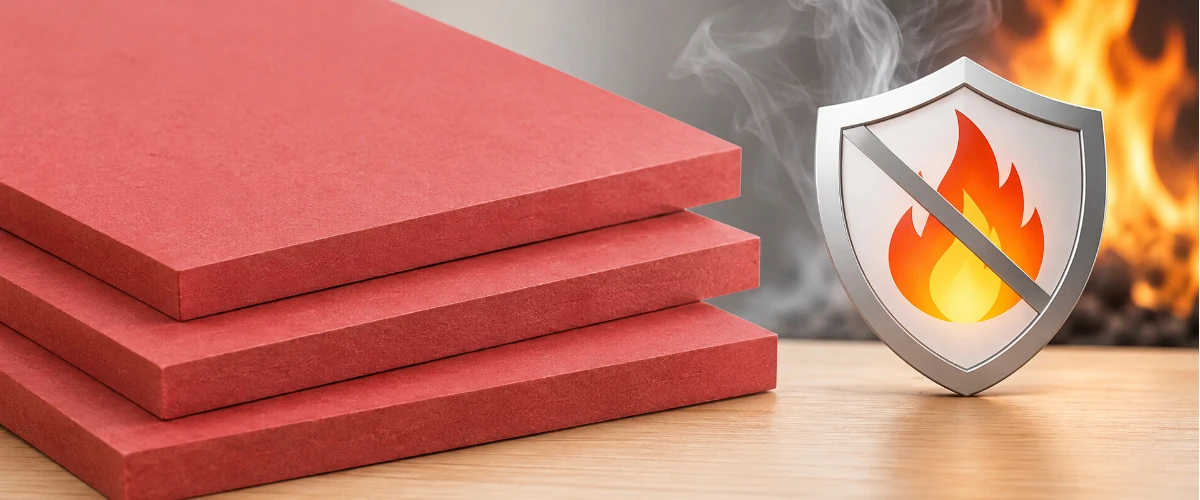
Fire-retardant MDF can meet the Class B1 fire-retardant standard. When exposed to fire, it slows down burning and helps prevent flames from spreading quickly. Its surface may char and form a protective layer, which can slow further combustion and give people more time to evacuate.
This is the biggest difference between fire-retardant MDF and standard MDF.
Easy to Process
Fire-retardant MDF offers much the same workability as regular MDF. Its smooth, even surface makes it easy to cut, carve, route, and shape. You can also apply veneer, laminate, or paint to create different finishes.
Among fire-retardant wood-based panels, MDF stands out for its flat, smooth surface. It works especially well for furniture, decorative panels, and projects that require detailed shapes.
Environmental Performance
Some fire-retardant MDF products meet E1 or stricter ENF formaldehyde emission requirements, depending on the adhesive system and manufacturing process.
However, emission levels vary between manufacturers. Always check the product’s test report and make sure it meets the requirements for your intended indoor application.
Limitations of Fire-Retardant MDF
Fire-retardant MDF also has a few drawbacks to consider:
- Limited moisture resistance: It does not handle moisture well. Fire-retardant plywood is usually a better choice for damp environments.
- Lower screw-holding strength: MDF does not hold screws as firmly as plywood, so it may not be the best option for load-bearing or structural applications.
- Higher cost: Fire-retardant MDF costs more than standard MDF because manufacturers use additional fire-retardant additives and need to meet extra testing and certification requirements.
Common Uses of Red MDF
Fire-retardant MDF is commonly used in commercial buildings, public spaces, furniture manufacturing, and interior decoration. Its smooth surface and flexible processing options make it suitable for many decorative applications where fire performance is also important.
Furniture Manufacturing
Manufacturers use fire-retardant MDF to produce cabinet doors, furniture panels, room dividers, and customized furniture components.
Its uniform structure makes cutting and routing easier, while its smooth surface supports painting, laminating, and veneering.
Interior Decoration
Fire-retardant MDF works well for decorative wall panels, ceiling panels, moldings, columns, and shaped cabinet fronts.
Designers can use it to create different patterns and decorative details while selecting a board that meets the project’s fire safety requirements.
Commercial and Public Spaces
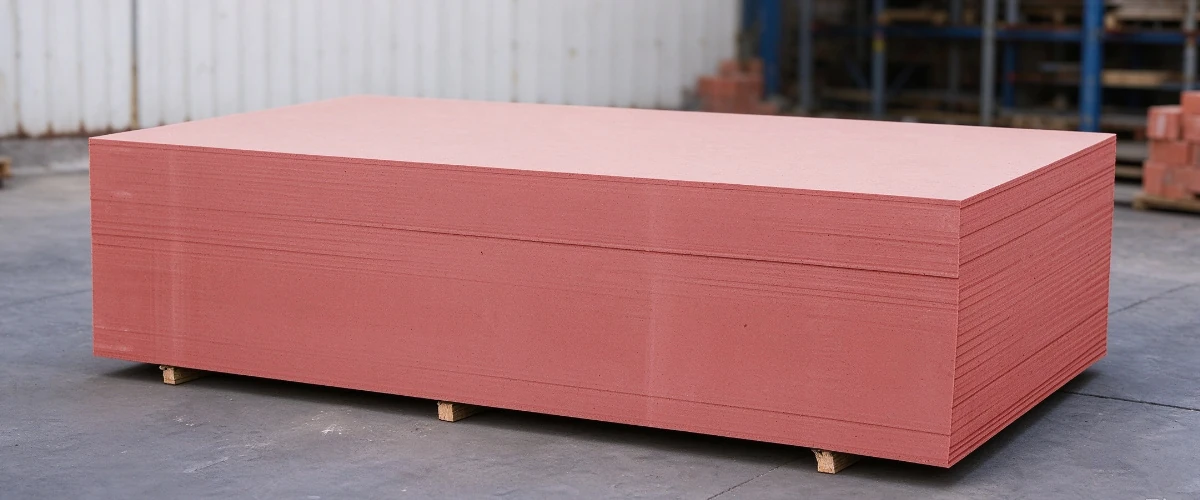
Fire-retardant MDF may be used in hotels, offices, shopping malls, hospitals, schools, and retail spaces.
Common applications include wall cladding, partitions, ceiling decorations, reception areas, and retail displays. The selected board must meet the applicable fire safety regulations for the building and installation.
MDF is widely used in modern furniture production because of its smooth surface and easy processing. Explore more MDF applications in furniture manufacturing to learn about its common uses in cabinets, wardrobes, shelves, and other furniture components.
Tip: If you use fire-retardant MDF as a core material, make sure the edge banding and adhesive are also fire-retardant. Otherwise, flames can enter through exposed edges or gaps and reach the core, reducing the board’s overall fire resistance.
Frequently Asked Questions About Red MDF
Is red MDF different from regular MDF?
Yes. The main visible difference is its red color. Both products generally use wood fibers and resin as their main materials. Their actual performance depends on their production specifications.
Is red MDF waterproof?
No. Red MDF is not automatically waterproof. Standard MDF can absorb moisture and swell when exposed to water. Choose a suitable moisture-resistant panel for applications that require better moisture performance.
Is red MDF fire-resistant?
Not necessarily. Red color does not indicate fire resistance. If you need fire-retardant MDF, check the manufacturer’s technical documentation and relevant test reports.
Can you paint red MDF?
Yes, in many cases. Red MDF can be painted if its surface is suitable for the selected coating system. Proper surface preparation and primer application can help achieve a more uniform finish.
What is red MDF used for?
Common applications include furniture components, decorative wall panels, retail displays, cabinets, exhibition stands, and DIY projects.
Conclusion
Red MDF is a versatile colored fiberboard that offers a distinctive appearance, a smooth surface, and flexible processing options.
It is suitable for furniture manufacturing, interior decoration, retail displays, and customized woodworking projects. Its main advantage is the ability to combine the familiar processing characteristics of MDF with a distinctive decorative color.
However, color alone does not determine board performance. Always check the technical specifications before choosing red MDF for a specific application.
If you are looking for reliable MDF products for your next project, BAITWOOD can help you explore suitable board options, customized specifications, and solutions for different application requirements.
Product Recommendations
Find the Right Products for Your Needs
 Baitwood ProductFire Resistant MDFFire Resistant MDF Board (FR MDF) is a high-quality engineered wood panel treated with…View Product
 Baitwood ProductMoisture Resistant MDFMoisture Resistant MDF is a high-performance engineered wood panel designed to offer better moisture…View Product
 Baitwood ProductRaw MDFRAW MDF panels provide a smooth, even surface that is ideal for cabinetry, furniture,…View Product
Related Articles
Explore more helpful articles, product guides, and expert tips.
 Blog ArticleWhat Is Black MDF? Uses, Benefits & Buying Guide for 2026In recent years, Black-colored MDF panels are a popular choice in furniture design, interior decoration,…Read Article
 Blog ArticleMDF vs Chipboard: Which Material Is More Reliable?At first glance, MDF and chipboard (particle board) may look almost identical. Both are flat…Read Article
 Blog ArticleWhat Is Green MDF? Uses, Features, and Benefits ExplainedIf you walk into a BAITWOOD panel factory, you'll see stacks of MDF boards in…Read Article