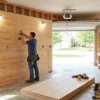

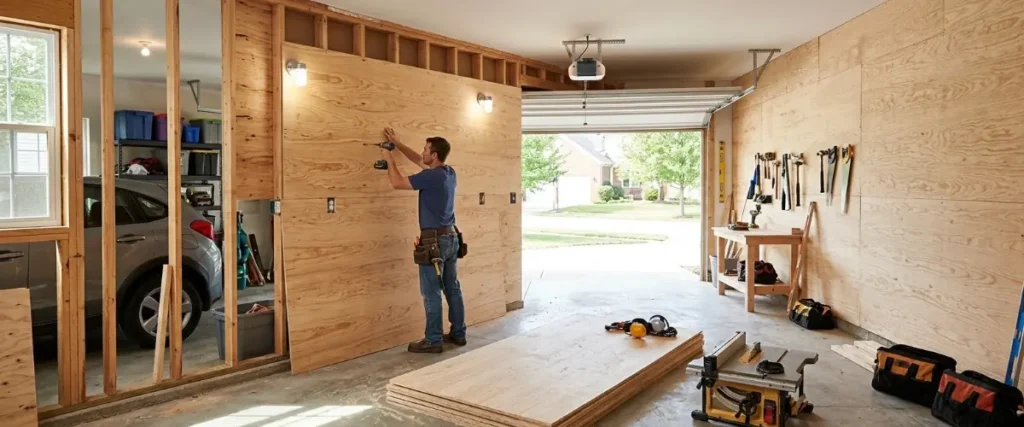
If you want to make your garage more practical, durable, and easier to organize, upgrading the walls is worth considering. Whether you plan to install shelves, cabinets, hooks, or pegboards, a strong wall surface can help you use your garage space better. At this point, you may wonder: Can you use plywood for garage walls?
The answer is yes. Plywood is a practical material for garage walls. It offers good strength and durability. It is also easy to cut and install. In addition, it provides a convenient surface for mounting shelves, cabinets, hooks, and storage systems.
Compared with unfinished drywall, plywood garage walls can provide a more durable surface. This makes them suitable for everyday garage use. However, choosing the right plywood type and thickness is important. Proper installation is also essential for long-term performance.
Is Plywood Good for Garage Walls?
Yes, plywood is an excellent option for garage walls. Plywood is made by bonding multiple layers of wood veneer together. The grain directions are alternated between layers. This construction gives plywood good stability and strength. It also makes the panels easy to secure with screws.
A garage is often used as a workspace. The walls may come into contact with tools, bicycles, equipment, and other items. Plywood generally offers better impact resistance than drywall. It is less likely to be damaged by minor bumps and dents.
Another advantage of plywood for garage walls is easy installation. You can install tool racks, storage cabinets, bicycle hooks, and workbenches directly on the plywood. This makes better use of vertical wall space. It also helps keep the garage organized.
Plywood surfaces can also be painted, stained, or finished in different ways. This allows you to match the wall with your garage style. Panels can also be cut around electrical outlets, windows, doors, and pipes. You can modify the wall as your storage needs change.
What Thickness of Plywood Is Best for Garage Walls?
The right plywood thickness for garage walls depends on how the garage will be used. It also depends on the weight of the items you plan to install. 3/8″ to 1/2″ plywood is one of the most commonly used thickness ranges.
Recommended Thickness for Different Applications
For general wall sheathing, 1/2-inch-thick plywood is usually a practical choice. It offers a good balance of strength, weight, cost, and ease of installation.
If you plan to install heavy cabinets, workbenches, or shelving systems, 3/4-inch plywood can provide more strength. It also offers greater rigidity for heavier applications.
Thinner plywood, such as 1/4-inch or 3/8-inch plywood, may be suitable for decorative applications. It can also work in areas that do not need to support heavy loads. However, thinner panels may provide less support for screws and wall-mounted equipment.
Before choosing the plywood thickness, consider the wall framing, stud spacing, expected load, local building requirements, and storage system. These factors can affect the best thickness for your project.
What Is the Best Plywood for Garage Walls?
There is no single plywood grade that is best for every garage. The right choice depends on moisture conditions, appearance, budget, and intended use.
For a typical dry garage, standard structural plywood can be a practical choice. If the garage has higher humidity, choose plywood with better moisture resistance. This can provide additional protection.
Common plywood options include:
Sanded Plywood
Sanded plywood is plywood that has been sanded after hot pressing. This process removes surface burrs and uneven areas. It also helps remove excess glue. The result is a smoother and more even surface.
For garage walls, sanded plywood offers good strength and durability. It is suitable for shelves, tool racks, storage cabinets, and hooks. Its smooth surface is also suitable for painting, staining, or other finishing treatments.
Depending on your needs, you can choose single-sided sanded plywood (S1S) or double-sided sanded plywood (S2S). Both options can provide a good balance of function and appearance.
CDX Plywood
CDX plywood is a common type of structural plywood. It uses C-grade and D-grade face veneers. It also uses exterior-grade waterproof adhesive. This construction provides good strength, screw-holding ability, and moisture resistance.
For garage walls, CDX plywood makes it easy to install shelves, tool racks, storage cabinets, and hooks. It can help maximize wall space. However, C-grade and D-grade surfaces are relatively rough. Painting or other finishing treatments may be needed for a cleaner appearance.
Birch Plywood
Birch plywood is made by bonding multiple layers of birch veneers. The grain directions are alternated between layers. It offers good strength, stability, and durability. Its surface is also smooth and fine.For more information, see our guide to high-quality birch plywood.
Birch plywood usually costs more than standard plywood. However, it provides a cleaner and more attractive appearance. For garage walls, it is suitable for shelves, tool racks, storage cabinets, and hooks.
If appearance and surface quality are important, birch plywood is worth considering. When selecting plywood, also check the core construction and bonding quality. Thickness tolerance, surface quality, and moisture resistance are also important.
Garage Wall Finishing: Common Mistakes to Avoid
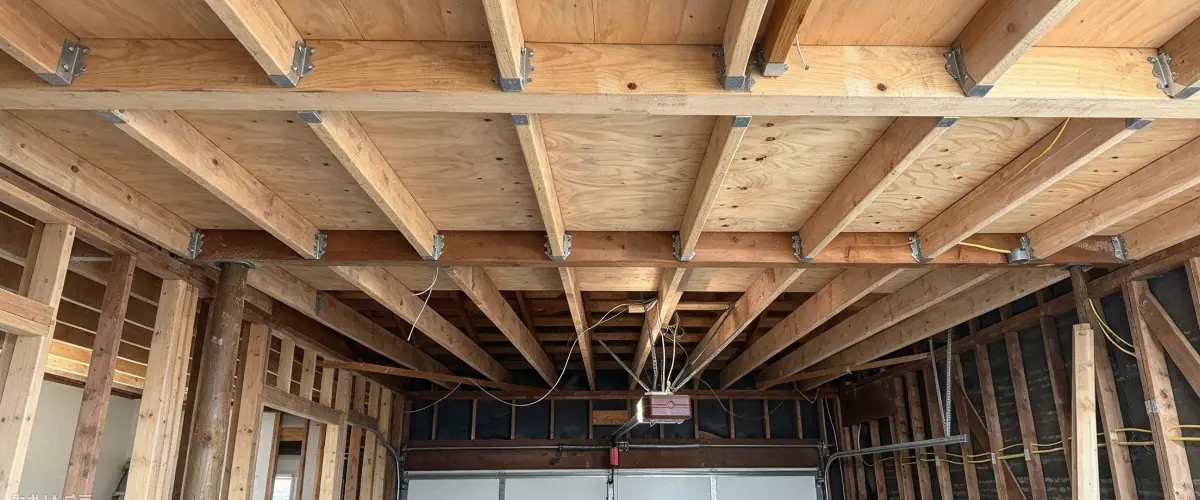
Fire safety comes first: Garages are often used to store vehicles. A fire can therefore have serious consequences. All wall materials should meet applicable local building and fire-safety requirements. Avoid panels with ordinary plastic cores or highly flammable MDF where they are not permitted.
Leave expansion gaps: Temperature changes can cause garage wall panels to expand and contract. Avoid tightly butting panels together over large areas. Leave appropriate expansion gaps during installation. Seal the gaps with weather-resistant sealant to help prevent buckling and deformation.
Consider impact protection and corner guards: Vehicles, tools, and equipment can damage garage walls. For the lower wall section, consider using thicker panels. You can also install stainless-steel or rubber impact guards. A height of approximately 1–1.2 meters (3.3–3.9 feet) above the floor can help protect common impact areas.
Avoid excessive glare: Garage lighting should be evenly distributed. Light-colored panels, such as light gray or white, can make the space feel brighter. However, highly reflective surfaces can create glare from vehicle headlights. Brushed or matte finishes are generally a more practical choice.
Tip: Regardless of the material you choose, protect the wall against moisture before installation. Proper waterproofing can help prevent moisture-related damage. This is important even when using high-quality panels.
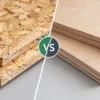
Plywood vs. OSB for Garage Walls
Both plywood and oriented strand board (OSB) can be used for garage walls. Each material has its own advantages. Plywood has a smoother surface and good screw-holding ability. This makes it suitable for shelves, cabinets, and hooks. OSB offers good structural stability and a lower cost. It is a practical option for covering large wall areas.
If you prioritize appearance, ease of processing, and durability, plywood is a good option. If cost and practicality are more important, OSB can also work well. However, OSB has a relatively rough surface. It can collect dust and cobwebs when left exposed. Its appearance may also deteriorate over time.
For this reason, painting or covering OSB with another material can be considered. Plywood has a smoother surface. It also makes it easier to install and hang various items. This can be useful in garages where storage systems are frequently changed.
However, plywood is generally more expensive than OSB. The final choice should consider the garage’s humidity, storage needs, wall structure, appearance requirements, and budget.
Final Thoughts
So, can you line your garage in plywood? Yes. Plywood can be a durable and versatile choice for garage walls. It is especially useful when you want to install storage systems or use the garage as a workshop.
For many projects, 1/2-inch plywood provides a practical balance of strength and cost. 3/4-inch plywood may be more suitable for heavier-duty applications. The best choice depends on your garage conditions, wall structure, storage requirements, and budget.
If you are looking for plywood for garage walls, workshops, storage areas, or other construction applications, Baitwood can provide plywood solutions in different sizes, thicknesses, core materials, and specifications. These options can meet different project requirements.