
Standard Film Faced Plywood Thicknesses
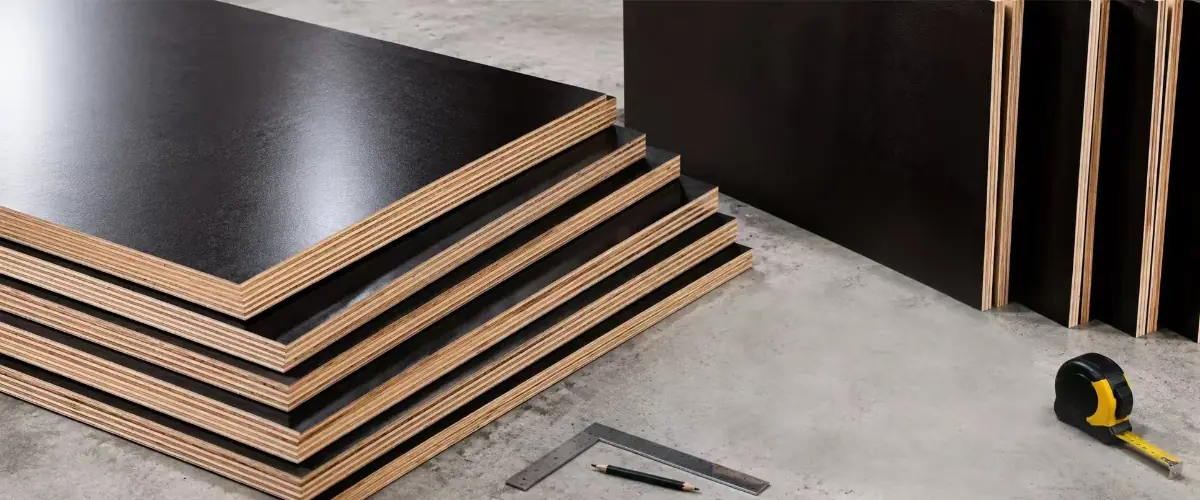
Film faced plywood is manufactured in several standard thicknesses to meet different construction and industrial requirements.
| Thickness | Common Applications |
|---|---|
| 9mm | Lightweight formwork, temporary structures, decorative projects |
| 12mm | Wall formwork, small concrete pours, interior construction |
| 15mm | Residential building formwork, general-purpose construction |
| 18mm | Heavy-duty concrete formwork, commercial buildings, scaffolding |
| 21mm | Bridge construction, large infrastructure projects, truck flooring |
| 24mm+ | Heavy industrial flooring, special engineering applications |
Among these options, 18mm film faced plywood is the industry’s most popular choice because it offers an excellent balance between strength, durability, and cost.
Why Thickness Matters
Choosing the correct thickness directly affects project performance.
1. Load-Bearing Capacity
Thicker plywood can support heavier concrete loads with less deflection.
For example:
- 12mm panels are suitable for lighter wall formwork.
- 18mm panels are ideal for slabs and beams.
- 21mm panels perform better in heavy-duty infrastructure projects.
2. Reusability
One of the biggest advantages of high-quality film faced plywood is that it can be reused many times.
Generally speaking:
- Thin panels wear faster.
- Thick panels resist bending and impact better.
- Proper maintenance significantly extends service life.
Premium plywood with high-quality phenolic film and waterproof glue may achieve dozens of reuse cycles under proper handling.
3. Construction Efficiency
Selecting the correct thickness helps reduce:
- Surface deformation
- Concrete leakage
- Repair costs
- Material waste
The right panel also provides a smoother concrete finish.
Choosing the Right Thickness for Different Applications
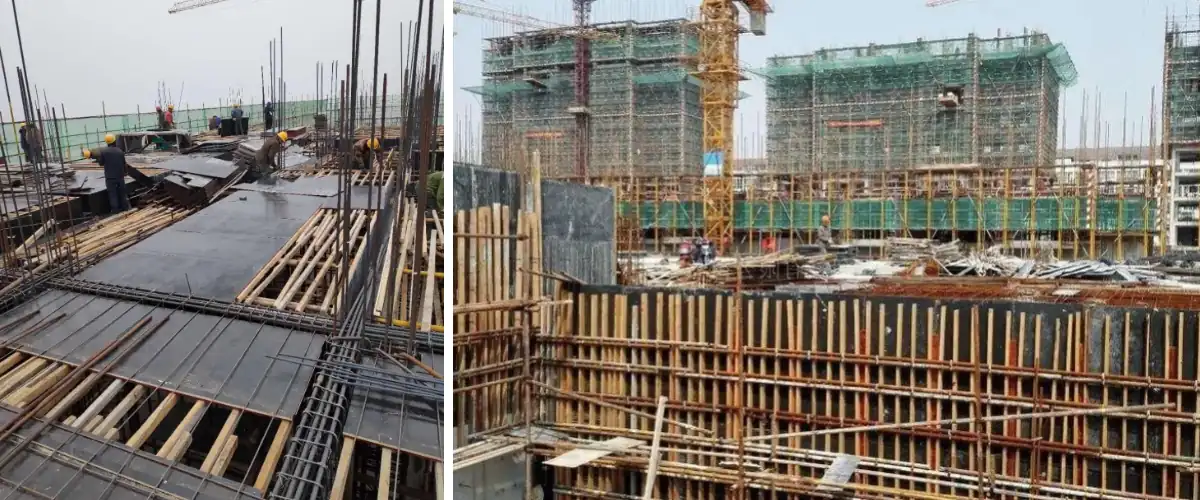
Residential Construction
Recommended Thickness:
- 15mm–18mm
Suitable for:
- House foundations
- Columns
- Beams
- Floor slabs
These sizes provide sufficient strength while keeping costs under control.
Commercial Buildings
Recommended Thickness:
- 18mm
Ideal for:
- High-rise buildings
- Large concrete slabs
- Repeated formwork use
Because commercial projects usually require multiple reuse cycles, thicker panels provide better long-term value.
Bridge & Infrastructure Projects
Recommended Thickness:
- 21mm or thicker
Suitable for:
- Bridges
- Tunnels
- Large retaining walls
- Infrastructure construction
These demanding environments require maximum structural stability.
Truck Flooring
Recommended Thickness:
- 18mm–21mm
Truck flooring requires plywood with:
- High wear resistance
- Excellent impact resistance
- Strong screw-holding capability
- Anti-slip surface (optional)
Thickness vs. Weight
As thickness increases, panel weight also increases.
Approximate weight for a standard 1220 × 2440 mm panel:
| Thickness | Approximate Weight |
|---|---|
| 12mm | 22–25 kg |
| 15mm | 27–30 kg |
| 18mm | 32–36 kg |
| 21mm | 38–42 kg |
Actual weight varies depending on the wood species, core structure, moisture content, and glue used.
Other Factors Besides Thickness
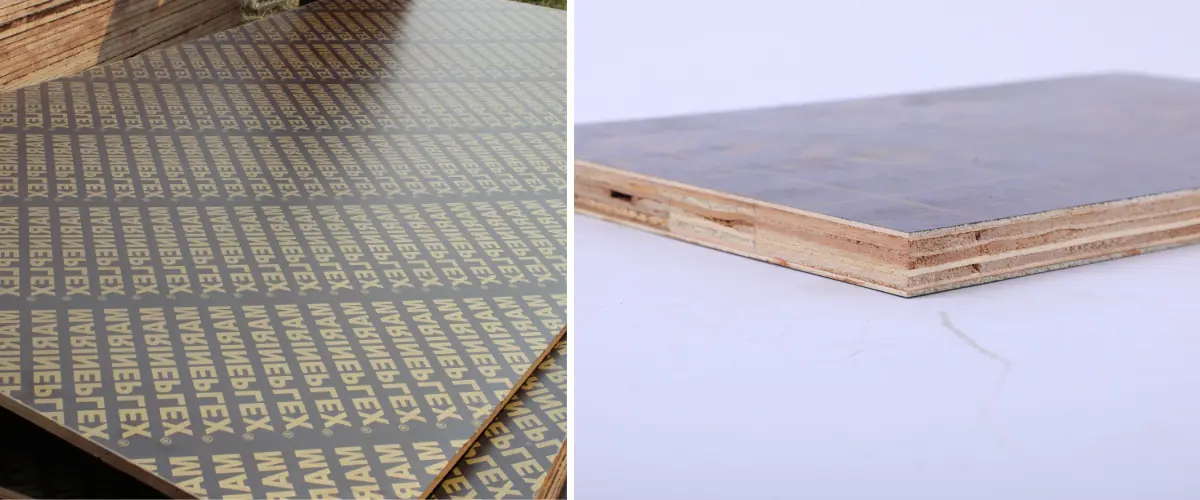
Thickness is only one factor when choosing film faced plywood.
You should also consider:
Core Material
Film faced plywood is available with different core materials to meet various strength, durability, and budget requirements.
- Birch Core – Offers excellent strength, high density, outstanding screw-holding performance, and superior durability. It is ideal for high-end concrete formwork and projects requiring multiple reuse cycles.
- Poplar Core – Lightweight, cost-effective, and easy to handle. It is commonly used for residential construction and general formwork applications.
- Eucalyptus Core – Known for its high density and excellent load-bearing capacity. It provides greater strength and durability, making it suitable for heavy-duty construction and demanding environments.
- Finger Joint Core – Manufactured from finger-jointed wood strips, this core offers an economical solution
Glue Type
Exterior construction typically requires waterproof adhesives such as:
- WBP Glue
- Phenolic Glue
- Melamine Glue
High-quality waterproof glue improves durability and extends the panel’s service life.
Film Quality
The film surface affects:
- Water resistance
- Wear resistance
- Concrete finish quality
- Reusability
Premium phenolic film generally delivers better performance than standard film.
Density
Higher-density plywood typically offers:
- Better screw holding
- Greater bending strength
- Longer service life
Tips for Selecting the Best Film Faced Plywood
Before placing an order, consider the following:
- Match the thickness to your project’s load requirements.
- Choose waterproof WBP glue for outdoor use.
- Select high-quality phenolic film for more reuse cycles.
- Consider panel weight for easier transportation and handling.
- Purchase from a reliable manufacturer with consistent quality control.
Choosing the correct combination of thickness, core material, glue, and film quality will improve construction efficiency and reduce overall project costs.
Frequently Asked Questions
Is 18mm film faced plywood the best choice?
For most construction projects, yes. It provides an excellent balance of strength, durability, weight, and cost, making it the most commonly used thickness worldwide.
Can I use 12mm film faced plywood for concrete formwork?
Yes, but it is generally recommended only for lighter wall formwork or small-scale projects. Heavy concrete loads usually require thicker panels.
Does thicker plywood last longer?
In most cases, yes. Thicker plywood is more resistant to bending, impact, and repeated use, especially when combined with high-quality film and waterproof glue.
Can film faced plywood be customized?
Yes. Many manufacturers offer customized thicknesses, panel sizes, film colors, edge sealing, logos, and core materials to meet specific project requirements.
Conclusion
Selecting the right film faced plywood thickness is essential for achieving safe, efficient, and cost-effective construction. While 18mm remains the most versatile option for general concrete formwork, thinner panels are suitable for lightweight applications, and thicker panels provide superior performance for heavy-duty infrastructure and industrial projects.
When making your decision, consider not only the thickness but also the core material, glue quality, film type, and expected number of reuse cycles. Investing in high-quality film faced plywood can improve construction efficiency, reduce maintenance costs, and deliver better long-term value.
Choose Baitwood for Quality Film Faced Plywood
Baitwood supplies high-quality Birch Poplar, Eucalyptus, and Finger Joint film faced plywood for construction projects worldwide. We offer reliable quality, customized specifications, and competitive factory pricing.
Contact Baitwood today for a free quote or to discuss your project requirements.