
What Is Commercial Plywood?
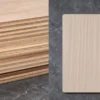
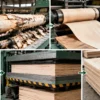
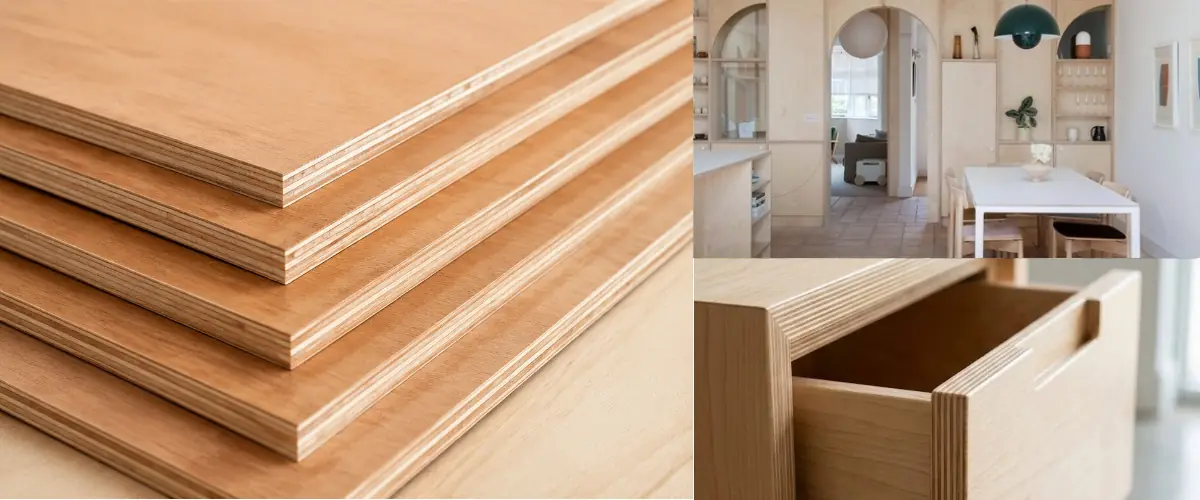
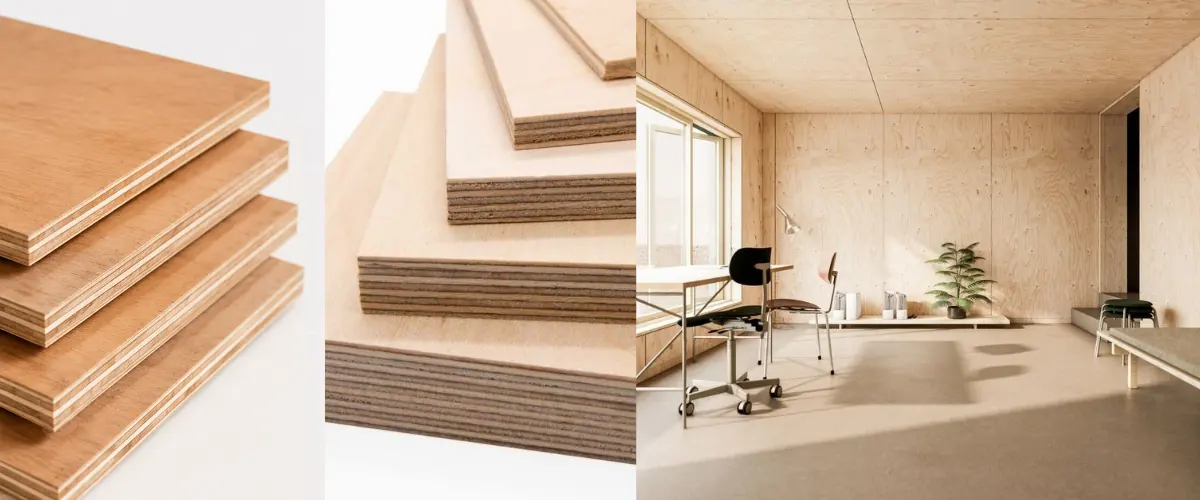
Commercial plywood is an engineered wood panel made by bonding multiple thin layers of wood veneer together with adhesive under high pressure and temperature. The grain direction of adjacent veneer layers is placed perpendicular to each other, creating excellent dimensional stability and strength.
Unlike solid wood, this sheet is less likely to warp, crack, or shrink.
Typical features include:
- Smooth surface
- Good screw-holding ability
- High strength-to-weight ratio
- Easy machining and cutting
- Cost-effective compared with premium plywood
This interior panel is commonly manufactured in thicknesses ranging from 3 mm to 25 mm, with popular sizes including 1220 × 2440 mm (4 × 8 ft).
What Is Commercial Plywood Made Of?
Standard interior plywood generally consists of three parts:
Face Veneer
The surface layer determines the appearance and finish quality. Common species include:
- Okoume
- Birch
- Poplar
- Bintangor
- Pine
These veneers provide a smooth surface suitable for painting, laminating, or veneering.
Core Veneer
The inner layers provide structural strength.
Popular core materials include:
- Poplar
- Hardwood
- Eucalyptus
- Mixed hardwood
High-quality sheets use full-core veneers with minimal gaps.
Adhesive
The glue largely determines the panel’s moisture resistance.
Common adhesive types include:
| Adhesive Resin | Water Resistance | Typical Use |
|---|---|---|
| UF (Urea Formaldehyde) | Low | Interior commercial plywood |
| MUF (Melamine Urea Formaldehyde) | Medium | Moisture-resistant interior applications |
| PF (Phenol Formaldehyde) | Excellent | Exterior and marine plywood |
Most interior plywood sheets are bonded with UF (Urea Formaldehyde) adhesive, making them primarily suitable for indoor applications.
Advantages of Commercial Plywood
Affordable
Commercial plywood offers excellent value compared with hardwood plywood or marine plywood while still providing reliable performance.
Good Strength
Its cross-laminated construction improves load-bearing capacity and reduces warping.
Easy to Process
This wood panel can be:
- Cut
- Drilled
- Nailed
- Screwed
- Routed
- Laminated
- Painted
without significant splitting.
Attractive Surface
With decorative face veneers or laminates, the sheet delivers a clean and attractive appearance for furniture and interior decoration.
Widely Available
It is available in numerous grades, sizes, veneer species, and thicknesses to suit different project requirements.
Common Applications
Commercial plywood is widely used in interior projects such as:
- Kitchen cabinets
- Wardrobes
- Office furniture
- Bookshelves
- TV cabinets
- Interior wall panels
- Ceiling panels
- Partitions
- Shop fittings
- Packaging boxes
Its versatility makes it one of the most commonly specified plywood products worldwide.
Can Commercial Plywood Be Used Outdoors?
The answer is yes—but only under certain conditions.
This panel is primarily designed for interior use and is not intended for prolonged exposure to rain, direct sunlight, or harsh weather conditions. Most variants are bonded with UF (Urea Formaldehyde) adhesive, which offers limited moisture resistance and may deteriorate after long-term exposure to water.
It may be suitable for temporary or protected outdoor applications, such as:
- Covered balconies
- Roofed patios
- Temporary site structures
- Outdoor exhibitions
- Construction hoarding with a protective coating
However, it should not be used in areas that are continuously exposed to moisture or standing water. For fully exposed outdoor projects, WBP plywood or marine plywood is a more suitable choice.
What Happens If Commercial Plywood Gets Wet?
Repeated moisture exposure can cause several issues:
- Swelling
- Delamination
- Surface blistering
- Mold growth
- Reduced structural strength
- Shortened service life
These problems become more severe if the sheet edges are left unsealed.
How to Improve Outdoor Performance
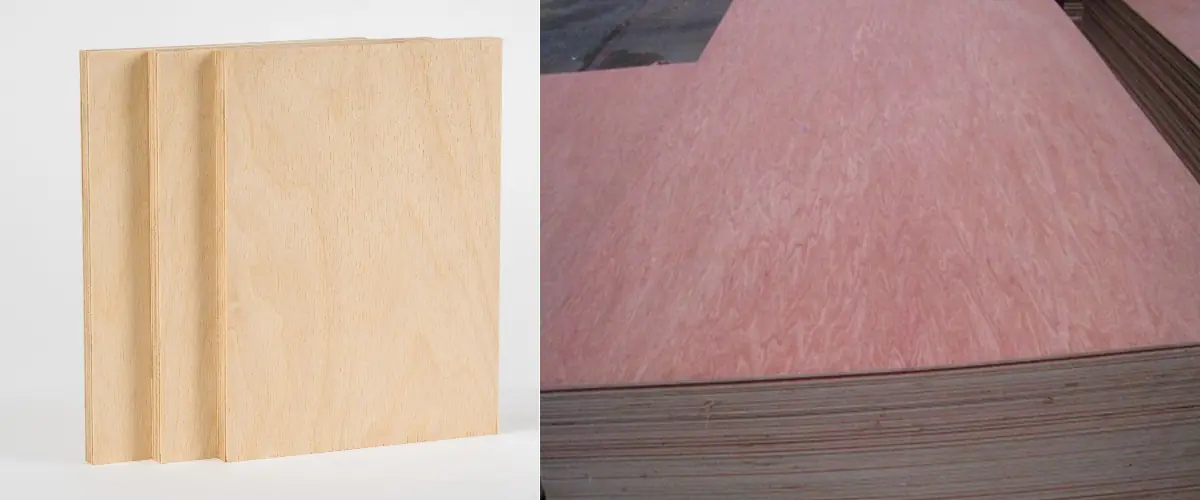
If you must use commercial plywood outdoors, proper protection is essential.
Seal All Edges
The edges absorb moisture much faster than the surface. Applying edge sealant significantly reduces water penetration.
Apply Waterproof Paint
Exterior-grade paint, varnish, or polyurethane creates a protective barrier against rain and humidity.
Avoid Ground Contact
Keep the panel elevated above the ground to prevent prolonged moisture absorption.
Provide Shelter
Use this wood sheet only in covered outdoor spaces where it is protected from direct rainfall.
Perform Regular Maintenance
Inspect the protective coating periodically and repair any damaged areas promptly.
Better Alternatives for Outdoor Projects
For projects exposed to weather, consider these plywood types instead:
WBP Plywood
Manufactured with waterproof phenolic adhesive, WBP plywood offers excellent resistance to moisture and weather.
Suitable for:
- Exterior furniture
- Outdoor construction
- Roofing
- Formwork
Marine Plywood
Marine plywood features premium hardwood veneers, waterproof glue, and minimal core voids.
Ideal for:
- Boats
- Docks
- Marine construction
- High-humidity environments
Film Faced Plywood
Coated with waterproof phenolic film, this plywood is designed for repeated concrete formwork and demanding construction conditions.
How to Choose the Right Plywood
Ask yourself these questions before purchasing:
Will the plywood be exposed to rain?
- Yes → Choose WBP or marine plywood.
- No → Standard interior plywood is usually sufficient.
Is appearance important?
- Decorative furniture → Commercial plywood.
- Structural outdoor use → Exterior-grade plywood.
Is cost the primary concern?
- Indoor projects → Commercial plywood offers the best value.
- Outdoor durability → Invest in waterproof plywood for a longer service life.
Conclusion
Commercial plywood is a reliable, economical, and versatile material for a wide range of indoor furniture and interior construction projects. It provides excellent workability, strength, and a smooth finish at an affordable price.
While it can be used in certain protected outdoor applications, it is not intended for long-term exposure to rain or harsh weather. If your project will face continuous moisture, choosing WBP plywood, marine plywood, or other exterior-grade plywood is the better long-term investment.
By selecting the right plywood for the environment, you can improve durability, reduce maintenance costs, and ensure your project performs well for years to come.