
Why Does the Core Material Matter?
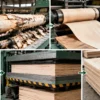
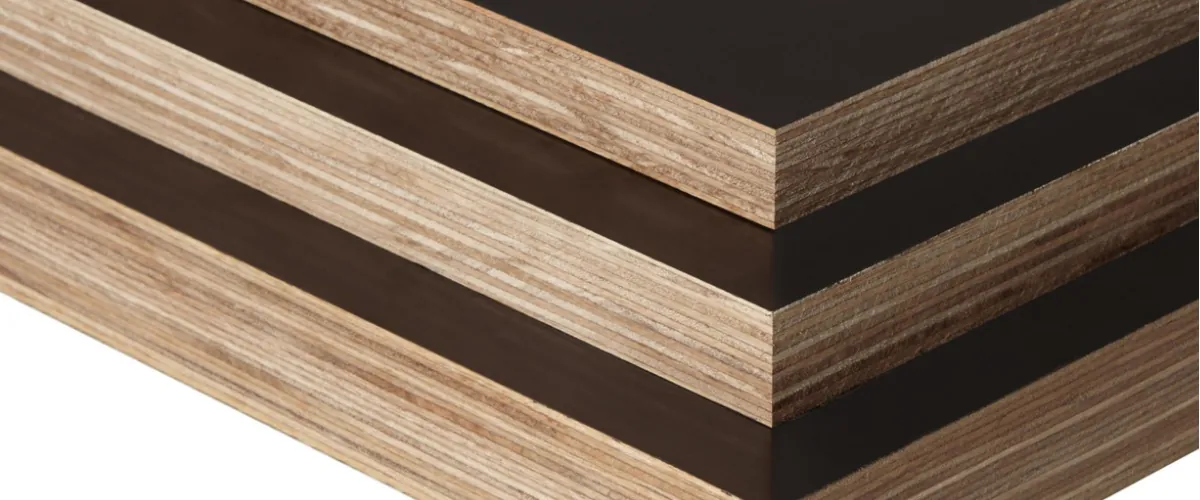
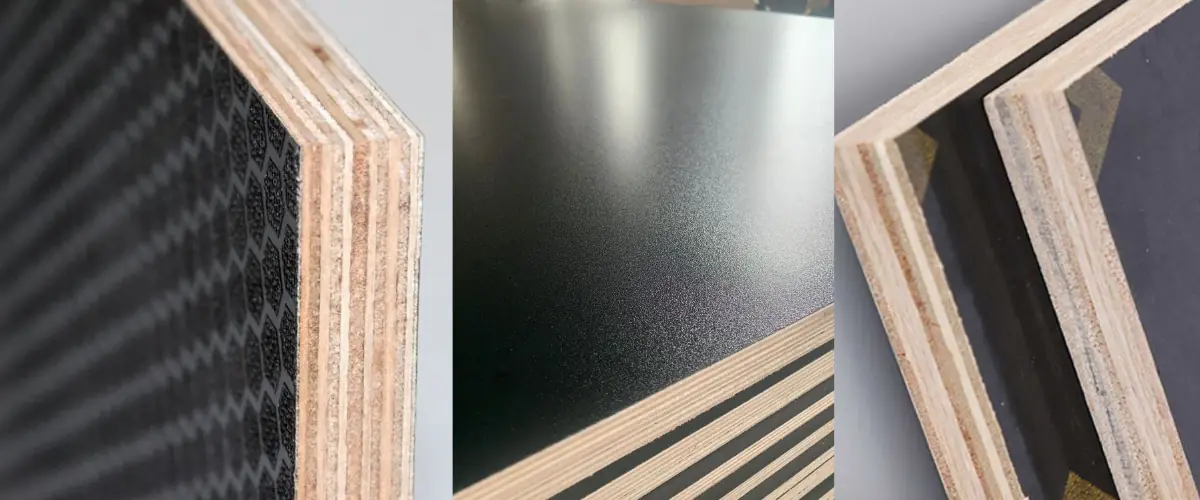
Film faced plywood consists of multiple layers:
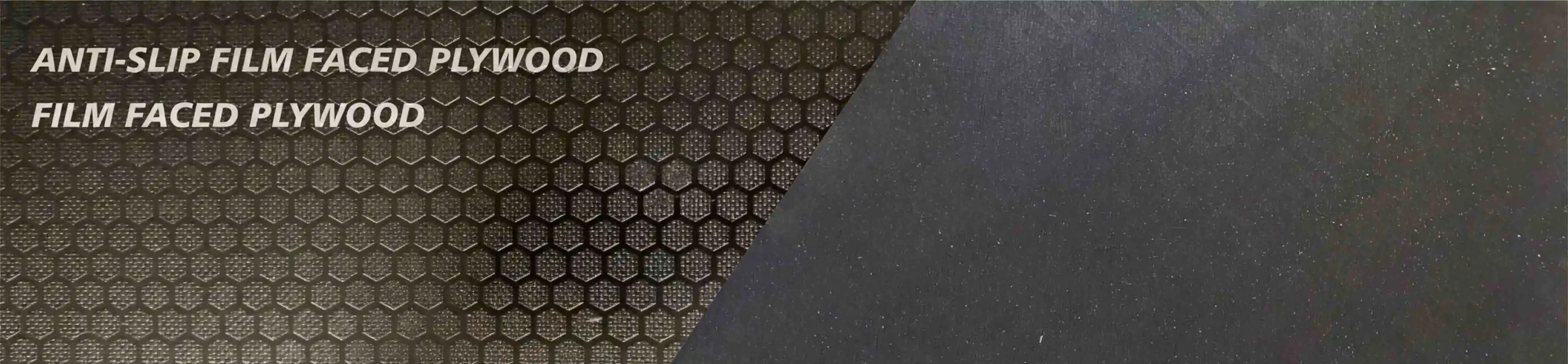
- Phenolic film
- Hardwood veneers
- Multiple core veneers
- Waterproof adhesive (typically WBP phenolic glue)
The film protects the surface, while the core material defines the structural performance of the plywood.
The core accounts for more than 90% of the total structural volume of film faced plywood. Unlike the waterproof phenolic film, which only serves as a surface barrier, the core bears the full pressure of concrete pouring, bending stress, and on-site abrasion. A high-quality core underpins the key performance attributes of film faced plywood.
Common Film Faced Plywood Core Materials
1. Birch Core
Birch is widely considered the highest-quality core material for film faced plywood.
Advantages
- Extremely high density
- Excellent mechanical strength
- Outstanding dimensional stability
- Minimal core gaps
- Superior load-bearing capacity
- Longest reuse life
Best Applications
- High-rise buildings
- Bridges
- Infrastructure projects
- Heavy concrete formwork
- Premium construction
Pros
- ✓ Maximum durability
- ✓ Excellent surface flatness
- ✓ Highest reuse cycles
- ✓ Very stable under heavy loads
Cons
- Higher cost
- Heavier than other core types
2. Eucalyptus Core
Eucalyptus has become one of the most popular choices worldwide because it offers an excellent balance between performance and cost.
Advantages
- High density
- Strong internal bonding
- Good water resistance
- Excellent strength
- Stable performance
Best Applications
- Commercial buildings
- Residential construction
- Industrial projects
- Reusable formwork
Pros
- ✓ Strong and durable
- ✓ Cost-effective
- ✓ Longer service life than poplar
- ✓ Good impact resistance
Cons
- Slightly heavier than poplar
3. Poplar Core
Poplar is widely used because it is lightweight and economical.
Advantages
- Light weight
- Easy handling
- Lower price
- Good workability
Best Applications
- Small construction projects
- One-time or limited-use formwork
- Low-rise buildings
- Budget projects
Pros
- ✓ Affordable
- ✓ Easy transportation
- ✓ Easy cutting
Cons
- Lower density
- Fewer reuse cycles
- Less resistant to heavy loads
4. Combi Core (Poplar + Eucalyptus)
Combi core combines the advantages of both eucalyptus and poplar.
Typically:
- Poplar reduces weight.
- Eucalyptus improves strength.
This balanced construction has become one of the most popular choices for international buyers.
Advantages
- Balanced strength
- Moderate weight
- Competitive pricing
- Better durability than pure poplar
Best Applications
- General construction
- Building contractors
- Export markets
- Medium-scale projects
Pros
- ✓ Good value for money
- ✓ Balanced performance
- ✓ Suitable for repeated use
Cons
- Performance depends on the veneer ratio and manufacturing quality
5. Finger-Joint Core
Finger-joint core is manufactured by joining small wood pieces into larger sections before lamination.
Advantages
- Low manufacturing cost
- Efficient use of raw materials
Best Applications
- Temporary formwork
- Budget construction
- Low-frequency use
Pros
- ✓ Lowest price
- ✓ Economical option
Cons
- Lower strength
- More glue joints
- Shorter service life
- Fewer reuse cycles
Comparison of Film Faced Plywood Core Materials
| Core Material | Strength | Weight | Reuse Cycles | Cost | Recommended For |
|---|---|---|---|---|---|
| Birch | ★★★★★ | Heavy | Excellent | High | Premium infrastructure |
| Eucalyptus | ★★★★☆ | Medium-Heavy | Very Good | Medium | Commercial construction |
| Combi | ★★★★☆ | Medium | Good | Medium | General construction |
| Poplar | ★★★☆☆ | Light | Moderate | Low | Budget projects |
| Finger Joint | ★★☆☆☆ | Medium | Limited | Lowest | Temporary applications |
Which Core Material Lasts the Longest?
If your priority is maximum durability and reuse, the ranking is generally:
- Birch Core
- Eucalyptus Core
- Combi Core
- Poplar Core
- Finger-Joint Core
However, actual performance also depends on:
- Film quality
- Glue quality
- Hot pressing process
- Edge sealing
- Proper handling and storage
Even premium birch plywood can fail prematurely if it is poorly manufactured or improperly maintained.
Factory Experience: Solving Common Core Selection Problems
A common mistake: buyers choose film faced plywood purely by price, ignoring whether the core suits the project’s needs. For instance, soft poplar core panels are wrongly used for heavy concrete formwork, causing edge damage, warping and short service life.
The core issue is mismatched material selection. Key considerations include concrete load, required reuse cycles and site conditions.
We assess project usage upfront and inspect veneer quality, moisture content and bonding during production. We recommend eucalyptus or birch core with WBP phenolic glue for repeated use, and combi core for short-term, budget projects.
Choosing the right core instead of the cheapest option improves formwork durability and cuts replacement costs
How to Choose the Right Core Material
Choose Birch Core If
- You require maximum strength.
- The plywood will be reused many times.
- Your project has demanding structural requirements.
Choose Eucalyptus Core If
- You need high durability at a competitive price.
- The project requires repeated concrete casting.
- You want long service life without the premium cost of birch.
Choose Combi Core If
- You want a balance of strength and cost.
- You need reliable performance for general construction.
- Weight is also a consideration.
Choose Poplar Core If
- Budget is the main concern.
- The plywood will be used only a few times.
- The project involves light-duty construction.
Choose Finger-Joint Core If
- Cost is the highest priority.
- The formwork is intended for temporary or short-term use.
- Reuse is not a major requirement.
Conclusion
There is no single “best” core material for every project. The ideal choice depends on your budget, reuse expectations, and structural requirements.
- Birch Core offers the highest strength and longest lifespan.
- Eucalyptus Core delivers excellent durability at a competitive price.
- Combi Core provides the best balance of performance and value.
- Poplar Core is ideal for lightweight, cost-sensitive projects.
- Finger-Joint Core is suitable for temporary or low-frequency applications.
By understanding the characteristics of each core material, you can choose film faced plywood that delivers reliable performance while maximizing your project’s return on investment.
Need help choosing the right film faced plywood core?
Contact Baitwood today for professional advice, competitive pricing, and customized plywood solutions for your construction projects.