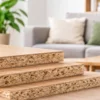

Chipboard, also known as particle board in some markets, is widely used in indoor furniture and interior projects. In fact, it’s one of the most common engineered wood products in the US, Europe, and Australia.
You’ll find it in all kinds of products, from IKEA furniture to ready-to-assemble cabinets sold at home improvement stores like Bunnings. Its popularity comes down to its affordable price, consistent quality, and versatility.
However, that doesn’t mean every particle board is suitable for every indoor application. Its safety depends on factors such as formaldehyde emissions, product quality, and how it’s used. Different markets also have their own emission standards and requirements.
In this guide, we’ll look at whether particle board is safe for indoor use, how much formaldehyde it can release, and which emission standards matter. We’ll also explain what to look for when choosing particle board for furniture, residential interiors, and commercial projects.
Chipboard Use and Emission Standards in Global Markets
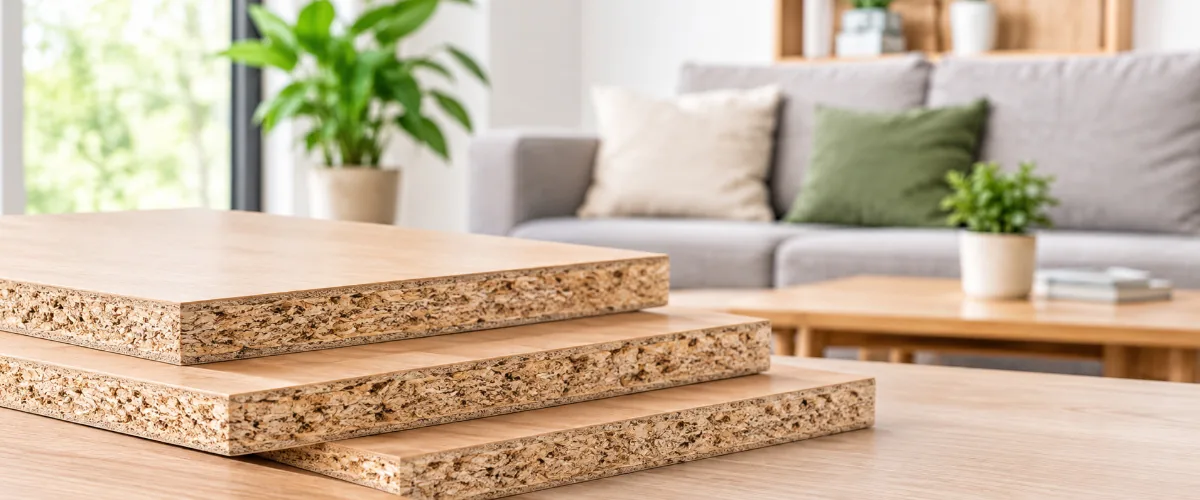
Chipboard is an engineered wood panel made by bonding wood particles with resin under heat and pressure. Manufacturers commonly use it to make furniture components, cabinets, wardrobes, desks, and other interior products.
Strict Formaldehyde Emission Standards
Many countries have strict limits on formaldehyde emissions from wood-based panels used indoors. Common standards and classifications include E1 in Europe, CARB Phase 2 (CARB P2) in the United States, and F★★★★ (F-Star Four) in Japan. You may also come across E0-rated products, although E0 is not a harmonized EU emission class.
These requirements help buyers identify chipboard products with controlled formaldehyde emissions. When chipboard meets the relevant standards and is used correctly, it can be a suitable choice for indoor applications.
The main safety concern with chipboard is not the wood particles themselves. It’s the formaldehyde that some products may release into indoor air. That’s why formaldehyde emission levels are an important factor when choosing chipboard for furniture and interior projects.
What Causes Chipboard to Release Formaldehyde?
Formaldehyde is a chemical used to produce certain adhesives and resins. Traditional chipboard manufacturing often uses urea-formaldehyde (UF) resin to bond wood particles together.
After production, the finished chipboard may release small amounts of formaldehyde into the surrounding air. The emission level depends on several factors, including the resin formulation, manufacturing process, board quality, and environmental conditions.
Urea-Formaldehyde Resin: A Key Source of Formaldehyde
- The adhesive matters: Traditional chipboard often uses urea-formaldehyde (UF) resin as a binder. This adhesive can release formaldehyde over time. Poor-quality resin or inadequate manufacturing control may result in higher emissions.
- Formaldehyde release over time: Some formaldehyde may remain in the resin and gradually escape into the surrounding air. Emissions generally decrease as the board ages, but the rate varies depending on the resin formulation, manufacturing quality, and indoor conditions.
Temperature and Humidity
Indoor conditions can affect formaldehyde emissions from chipboard. Higher temperatures and humidity levels may increase emissions from some engineered wood products. For this reason, it’s important to choose chipboard that meets the appropriate emission requirements, especially for use in warm or humid environments.
Board Age and Ventilation
Formaldehyde emissions from chipboard generally decrease over time, although the rate varies between products. Good ventilation helps reduce indoor pollutant levels by bringing in fresh air. However, it does not remove the source of emissions.
Formaldehyde is a recognized health hazard. Exposure can irritate the eyes, nose, and throat. High levels of exposure or prolonged contact may lead to more serious health risks.
For this reason, always check formaldehyde emission test results and relevant compliance documents before choosing chipboard for indoor furniture or commercial projects.
What Are E0, E1, and Other Chipboard Emission Standards?
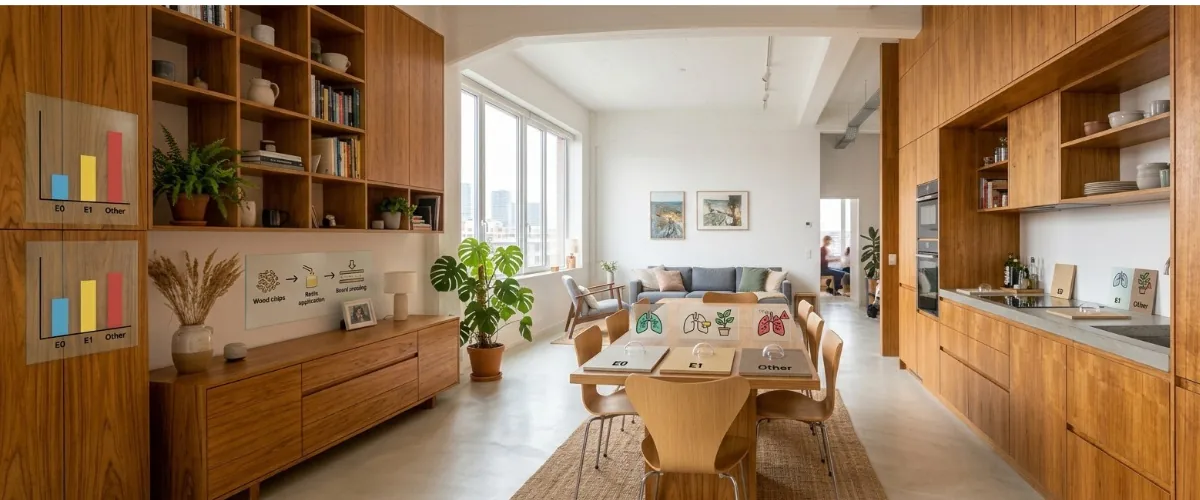
When purchasing chipboard, buyers may encounter labels such as E0, E1, CARB Phase 2, and TSCA Title VI. These terms refer to different emission classifications or regulatory requirements, and they should not be treated as interchangeable.
| Standard or Label | What Buyers Should Know |
|---|---|
| E0 | Formaldehyde emissions ≤ 0.050 mg/m³, a cost-effective entry-level standard suitable for most homes. |
| E1 | Formaldehyde emissions ≤ 0.124 mg/m³, the mandatory entry standard for the EU market. Compliant panels are suitable for indoor use. |
| CARB Phase 2 | Established by the California Air Resources Board (CARB), it is one of the strictest U.S. standards. It limits formaldehyde emissions to ≤ 0.09 ppm (approx. 0.11 mg/m³) for particleboard and ≤ 0.05 ppm for hardwood plywood. |
| TSCA Title VI | A mandatory U.S. federal regulation that largely adopts CARB Phase 2 emission limits. All composite wood products sold in the U.S. must be third-party certified and labeled as compliant. |
| Japan’s F★★★★ Standard | Japan has four grades: F☆, F☆☆, F☆☆☆, and F☆☆☆☆. F★★★★ (≤ 0.3 mg/L) is the highest grade, with strict environmental requirements. Its testing method differs from China’s national standard. |
The US Environmental Protection Agency specifies a formaldehyde emission limit of 0.09 parts per million (ppm) for regulated particleboard under TSCA Title VI. This limit is based on a specified test method and should not be directly compared with results expressed using different methods or units.
For buyers, the best approach is to identify the destination market first and then confirm which standards apply to the product.
Important: An E0 or E1 label alone does not automatically establish compliance with every country’s regulations. Always verify the relevant standard, testing method, certificate validity, and product scope.
Is Chipboard Suitable for Indoor Use?

Yes. Chipboard is suitable for indoor use when it meets the applicable formaldehyde emission standards and is used correctly.
chipboard is one of the most widely used materials in indoor furniture. However, choosing the right emission grade and application is essential.
For homeowners, furniture manufacturers, importers, and distributors, several factors are worth considering:
- Formaldehyde Emissions: Check whether the panels meet the emission limits in your target market.
- Product Certification: Request valid test reports or certification documents when required.
- Surface Finishing: Melamine faced chipboard and other finished panels can help reduce direct exposure from covered surfaces, although performance depends on the product and construction.
- Installation and Ventilation: Good ventilation helps disperse indoor pollutants, especially after installing new furniture.
Choosing panels with verified emission performance is more reliable than judging safety by price, appearance, or smell alone.
Baitwood supplies melamine faced chipboard for furniture manufacturers and international buyers, offering different specifications, surface finishes, and customization options to meet various furniture requirements. We focus on consistent product quality and reliable supply to support your sourcing needs.
Frequently Asked Questions About Chipboard Safety
Does chipboard release formaldehyde?
Some chipboard products release formaldehyde because of the resins used during manufacturing. The amount varies by product and production process. Choose panels with verified emission performance that meets the requirements of your target market.
Is chipboard safe for bedroom furniture?
Chipboard can be suitable for bedroom furniture when the panel and finished product meet applicable emission requirements. For wardrobes, bedside tables, and storage units, prioritize documented low-emission performance and adequate room ventilation.
Does melamine-faced chipboard contain formaldehyde?
Melamine-faced chipboard may contain a particleboard core manufactured with formaldehyde-based adhesives. The decorative surface does not necessarily eliminate emissions. Check the core panel’s test results and the compliance of the finished product. You can also read our guide to melamine faced chipboard to learn more about its structure and common uses.
Is E1 chipboard safe for indoor use?
E1 chipboard is designed to meet a specified low-emission classification under the relevant standard. Its suitability depends on the applicable test method, local regulations, and intended use. E1 should not be assumed to satisfy every market’s requirements automatically.
Conclusion: Choose Chipboard Based on Verified Emissions
So, is chipboard safe for indoor use? It can be, provided the product meets the relevant emission requirements and is suitable for its intended application.
The most important considerations are formaldehyde emissions, adhesive technology, product certification, surface finishing, and the regulations of the destination market.
For furniture manufacturers, importers, and distributors, working with a supplier that can provide clear product specifications and reliable test documentation helps reduce sourcing risks and supports more informed purchasing decisions.
Product Recommendations
Find the Right Products for Your Needs
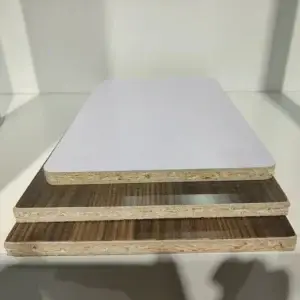 Baitwood ProductMelamine ChipboardMelamine Chipboard is an engineered wood panel made from compressed wood particles bonded with…View Product
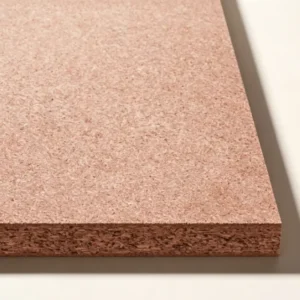 Baitwood ProductFire Retardant ChipboardFire Retardant Chipboard is a high-performance engineered wood panel designed to improve fire safety…View Product
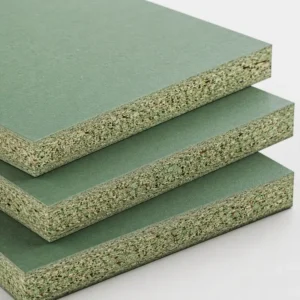 Baitwood ProductMoisture Resistant ChipboardMoisture Resistant Chipboard is a high-quality engineered wood panel specially designed to provide better…View Product
Related Articles
Explore more helpful articles, product guides, and expert tips.
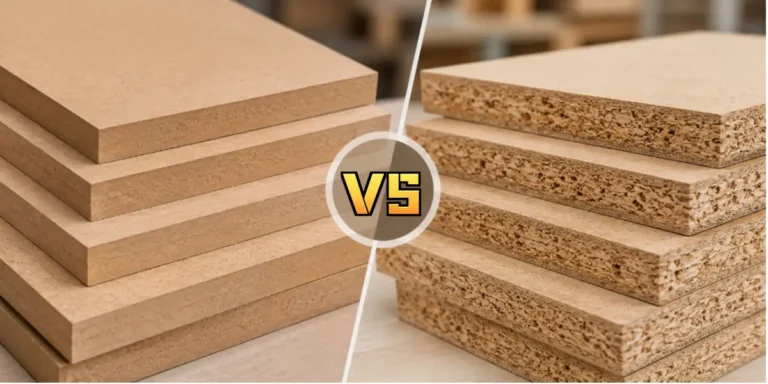 Blog ArticleMDF vs Chipboard: Which Material Is More Reliable?At first glance, MDF and chipboard (particle board) may look almost identical. Both are flat…Read Article
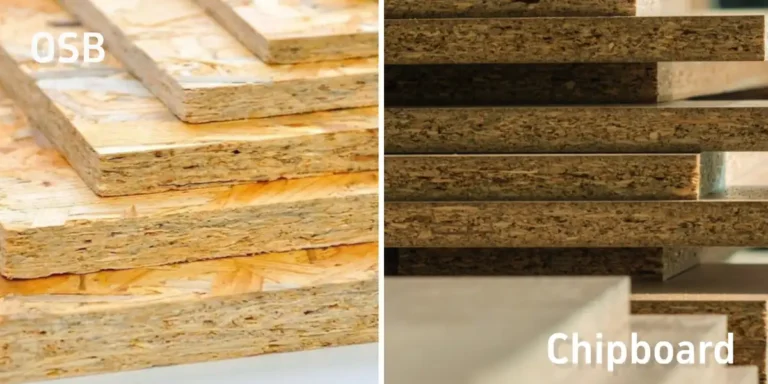 Blog ArticleOSB vs Chipboard: Which Is Better for Your Project?When choosing the right engineered wood material, many people struggle with the question: OSB vs…Read Article
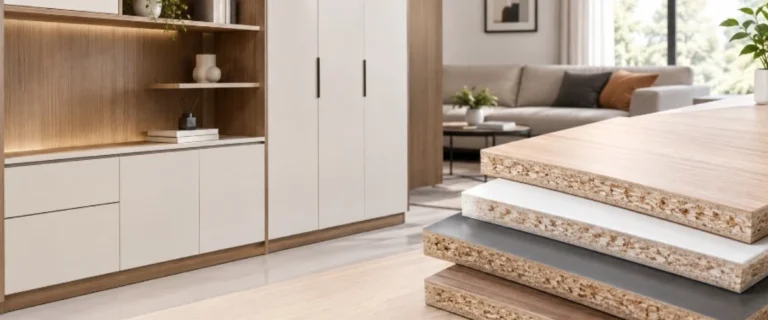 Blog ArticleWhy Is Melamine Faced Chipboard So Popular in Modern FurnitureMelamine faced chipboard, also known as MFC, is a popular engineered wood product used in…Read Article