
What Is a Concrete Formwork System?
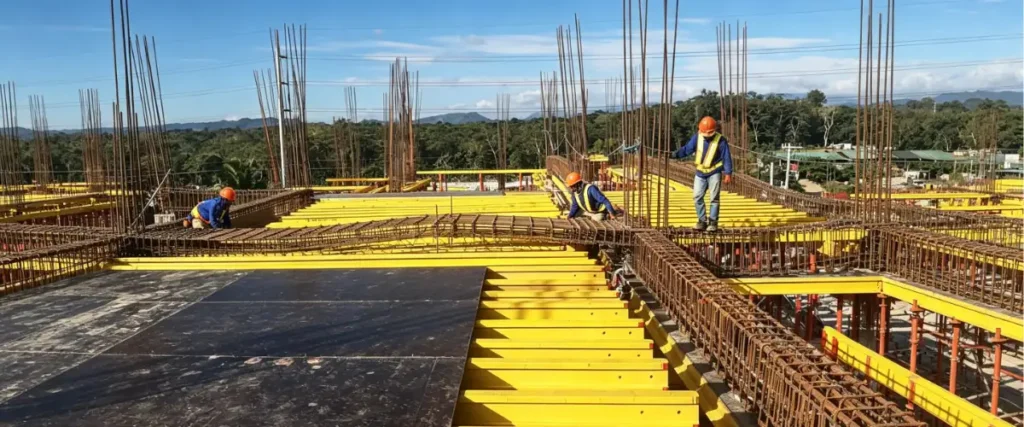
A concrete formwork system is a temporary structure designed to support fresh concrete until it gains sufficient strength. It determines the final shape, dimensions, and surface quality of concrete structures.
A complete formwork system typically consists of:
- Formwork panels
- Support beams
- Vertical supports
- Connection hardware
- Bracing accessories
Modern modular systems improve construction efficiency, reduce labor costs, and allow multiple reuse cycles.
Main Components of a Concrete Formwork System
H20 Timber Beam
H20 timber beams serve as the primary structural support beneath the plywood panels.
Typical features include:
- Standard height: 200 mm
- Lightweight design
- High bending strength
- Excellent load-bearing capacity
- Moisture-resistant protective coating
- Reusable for many construction cycles
They distribute loads evenly from the plywood to the supporting props.
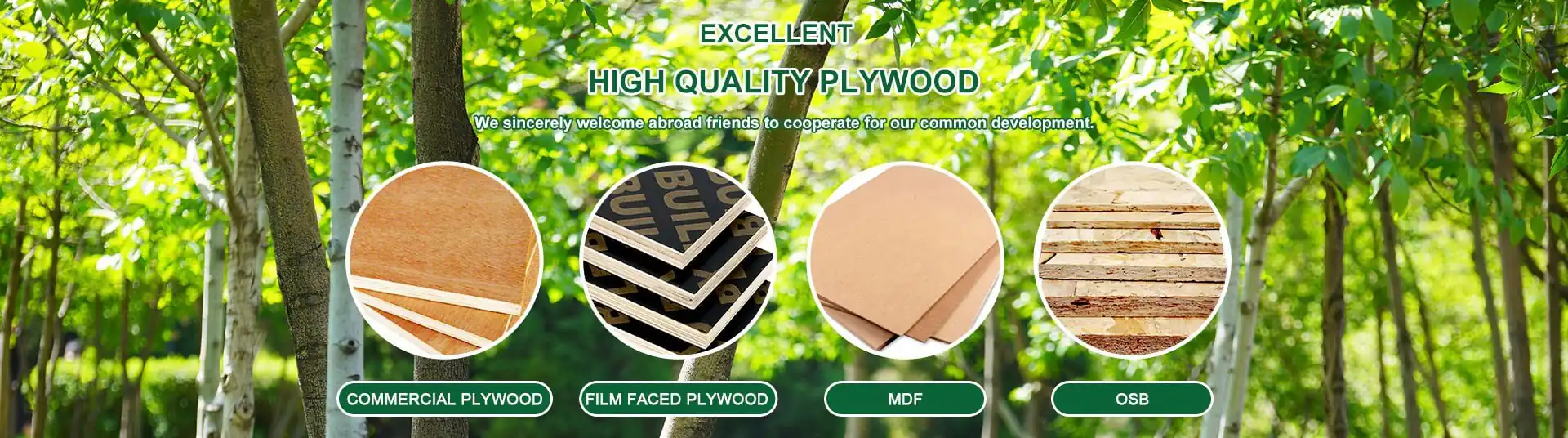
Film Faced Plywood
Film faced plywood forms the contact surface between the concrete and the formwork.
Its phenolic film coating provides:
- Smooth concrete finish
- Water resistance
- Easy demolding
- Wear resistance
- Long service life
Common thicknesses include:
- 12 mm
- 15 mm
- 18 mm
- 21 mm
The thickness selected depends on beam spacing and project load requirements.
Steel Prop
Steel props provide vertical support for the entire formwork.
Functions include:
- Adjustable working height
- High compressive strength
- Stable support
- Easy installation
They transfer the concrete load safely to the ground.
Tripod
Tripods stabilize steel props during installation.
Benefits include:
- Improved worker safety
- Faster assembly
- Reduced movement during concrete pouring
- Better overall stability
Fork Head
Fork heads connect H20 timber beams to the steel props.
They ensure:
- Secure beam positioning
- Accurate alignment
- Even load transfer
Waler
Walers strengthen wall and column formwork.
Their functions include:
- Maintaining panel alignment
- Distributing pressure evenly
- Reducing deformation
- Increasing structural rigidity
Clamp
Formwork clamps connect various system components securely.
They help:
- Lock panels together
- Prevent movement
- Improve installation speed
- Maintain dimensional accuracy
How H20 Timber Beams and Film Faced Plywood Work Together
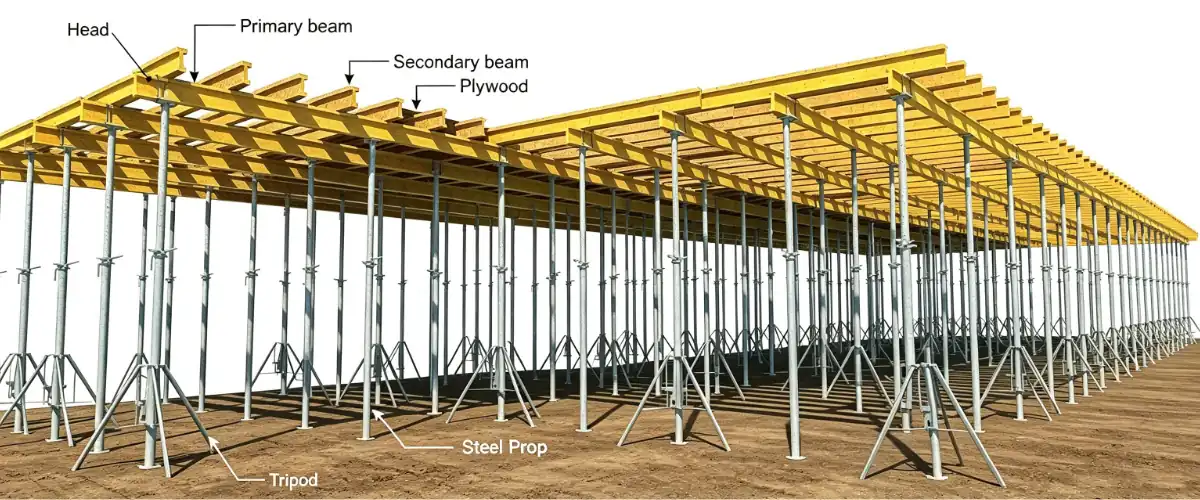
The most important concept is understanding how each component supports the next.
│
▼
Film Faced Plywood
│
▼
H20 Timber Beam
│
▼
Fork Head
│
▼
Steel Prop
│
▼
Ground
Step 1: Film Faced Plywood Supports Fresh Concrete
Fresh concrete is poured directly onto the plywood surface.
The smooth phenolic film:
- Prevents concrete adhesion
- Produces high-quality concrete surfaces
- Protects the plywood from moisture
Step 2: H20 Timber Beams Carry the Load
The plywood transfers its load to the H20 timber beams.
The beams:
- Reduce panel deflection
- Support larger spans
- Distribute loads uniformly
Proper beam spacing helps prevent excessive bending.
Step 3: Steel Props Transfer Loads to the Ground
Steel props receive loads from the beams through fork heads.
The props:
- Support vertical loads
- Maintain structural stability
- Allow height adjustment for different slab elevations
Step 4: Accessories Improve Overall Stability
Tripods, walers, and clamps work together to:
- Keep the system aligned
- Improve safety
- Prevent movement
- Increase construction efficiency
Every component contributes to the performance of the complete formwork system.
Advantages of Using H20 Timber Beam with Film Faced Plywood
Faster Installation
Lightweight timber beams and modular accessories enable rapid assembly and dismantling, reducing project timelines.
Higher Load Capacity
Properly designed H20 beam systems can safely support heavy concrete loads while maintaining structural stability.
Better Concrete Finish
Film faced plywood creates:
- Smooth surfaces
- Uniform appearance
- Fewer surface defects
- Reduced finishing work
More Reuse Cycles
High-quality H20 beams and premium film faced plywood can be reused many times when properly maintained, significantly lowering material costs over multiple projects.
Lower Labor Cost
The standardized system:
- Simplifies installation
- Requires fewer workers
- Reduces construction time
- Improves overall productivity
Applications
Slab Formwork
The most common application.
The combination of H20 beams and film faced plywood provides efficient support for residential, commercial, and industrial concrete slabs.
Wall Formwork
Wall systems require high rigidity to withstand lateral concrete pressure.
H20 beams, walers, and clamps provide excellent structural support.
Column Formwork
Timber beam systems help maintain accurate dimensions and smooth concrete surfaces for columns of various sizes.
Bridge Construction
Bridge decks often require:
- Large spans
- Heavy loads
- Multiple reuse cycles
H20 timber beam systems meet these demanding requirements.
Tunnel Construction
Tunnel formwork benefits from:
- Flexible layouts
- Lightweight components
- High strength
- Easy assembly in confined spaces
How to Choose the Right Combination
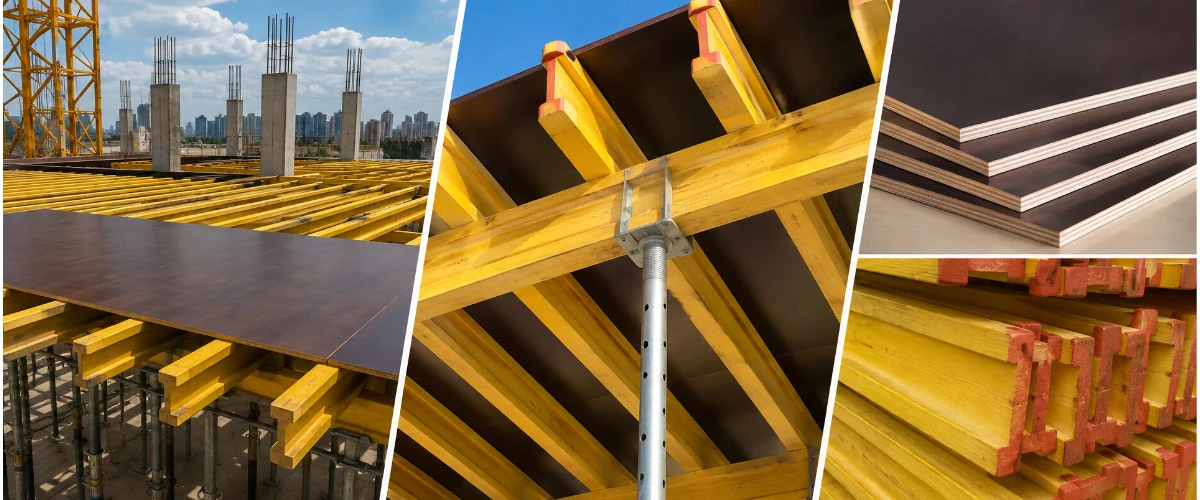
Selecting the right formwork system depends on several factors.
Choose the Right Plywood Thickness
General recommendations include:
| Concrete Application | Recommended Plywood Thickness |
|---|---|
| Light slab work | 12 mm |
| Standard building slabs | 15–18 mm |
| Heavy-duty projects | 18–21 mm |
Select Proper Beam Spacing
Beam spacing should be determined according to:
- Concrete thickness
- Plywood thickness
- Design load
- Engineering requirements
Closer spacing increases load capacity and minimizes deflection.
Consider Reuse Requirements
For projects involving many reuse cycles, choose:
- High-quality H20 timber beams
- Premium phenolic film faced plywood
- Waterproof edge sealing
- Durable protective coatings
Although the initial investment may be higher, long-term costs are significantly reduced.
Source from a Reliable Manufacturer
Working with an experienced manufacturer ensures:
- Consistent product quality
- Stable dimensions
- Reliable load performance
- Professional technical support
- Custom specifications when required
Manufacturers that supply both H20 timber beams and film faced plywood can also provide a complete, compatible formwork solution, simplifying procurement and ensuring all components work efficiently together.
Conclusion
Rather than functioning as individual products, H20 timber beams and film faced plywood form the core of a modern concrete formwork system. Supported by steel props, tripods, fork heads, walers, and clamps, they create a safe, efficient, and reusable solution for a wide range of concrete construction projects.
Understanding how these components work together helps contractors improve installation efficiency, achieve better concrete finishes, reduce labor costs, and maximize material reuse. Whether you’re building residential slabs, commercial structures, bridges, or tunnels, choosing a well-designed H20 timber beam and film faced plywood system is an investment in both construction quality and long-term project performance.
Looking for reliable H20 Timber Beam and Film Faced Plywood solutions?
Baitwood supplies high-quality formwork materials with stable quality and competitive prices. Contact us today for product details and a customized quote.