
What Does “CDX” Mean?
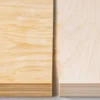
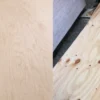
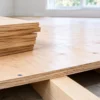
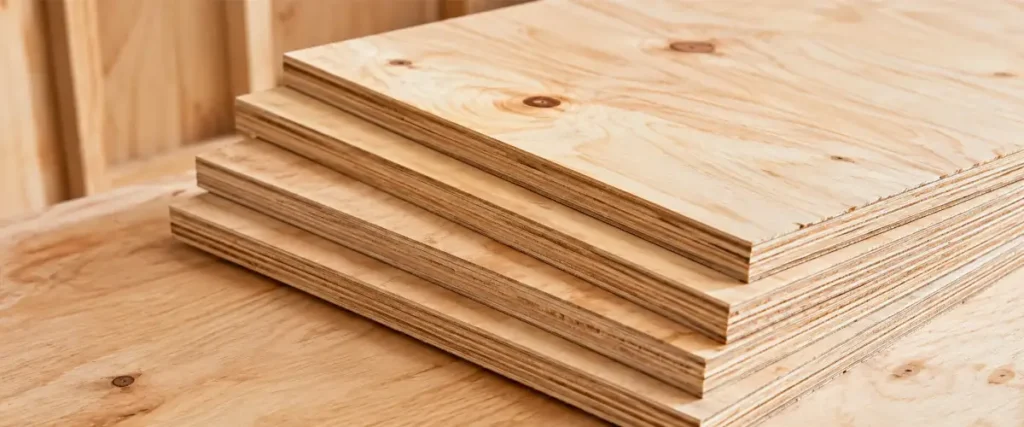
These letters denote the veneer quality of the plywood faces: The letters C and D refer to the grade of the front and back veneer sheets respectively. Both grades allow knots, patched areas and minor imperfections that do not meet the standards of Grade A or Grade B veneer. The letter X indicates this plywood is suitable for exterior applications.
- C: The front face features visible knots and defects.
- D: The back face has relatively prominent flaws and is the lowest grade.
- X: It means exterior-grade adhesive is used, offering only limited weather resistance.
Common wood species include:
- Pine
- Fir
- Spruce
- Poplar (varies by manufacturer)
The letters describe the appearance quality of each face rather than the structural strength.
Because both faces allow visible imperfections, CDX plywood is usually hidden behind roofing materials, siding, or drywall.
Common Sizes of CDX Plywood
The most common panel size is:
- 1220 × 2440 mm (4 × 8 ft)
Popular thicknesses include:
| Thickness | Common Applications |
|---|---|
| 9 mm (3/8″) | Wall sheathing |
| 12 mm (1/2″) | Roof decking |
| 15 mm (5/8″) | Roofing |
| 18 mm (3/4″) | Subflooring |
| 21 mm | Heavy-duty flooring |
BAITWOOD offers premium CDX plywood covering all listed sizes, with bespoke dimension customization to meet your specific project requirements.
Main Features of CDX Plywood
High Structural Strength
Multiple cross-laminated veneer layers provide excellent load-bearing performance.
Good Moisture Resistance
Exterior adhesive helps resist moisture during construction.
However, CDX plywood is not intended for permanent outdoor exposure.
Cost-Effective
Compared with hardwood plywood, CDX plywood offers an excellent balance between strength and price.
Easy to Install
It can be easily cut, nailed, screwed, or fastened using standard woodworking tools.
Excellent Dimensional Stability
Cross-grain construction reduces warping, twisting, and shrinkage.
Common Applications of CDX Plywood
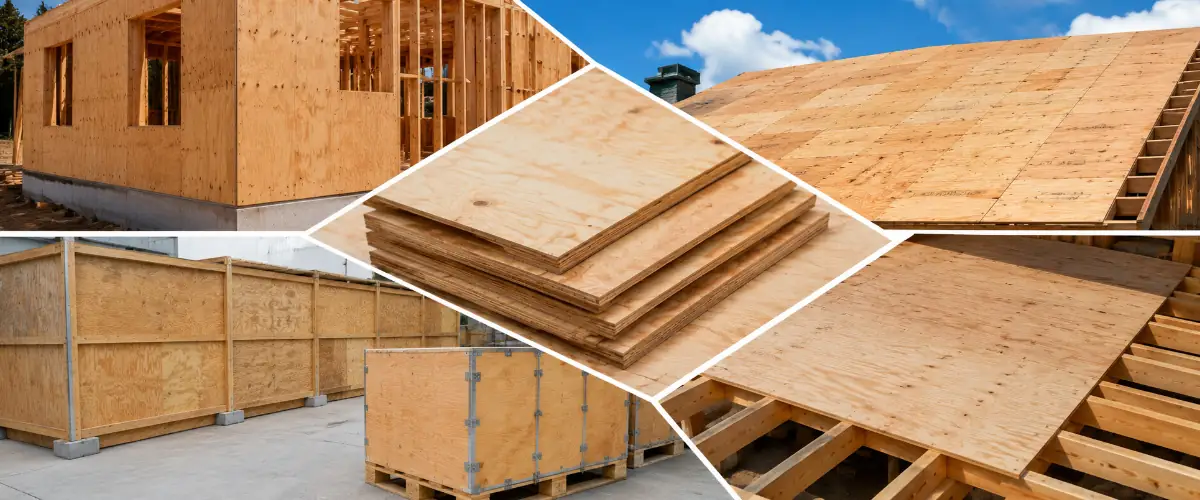
Roof Sheathing
One of the most common uses.
CDX provides a strong base beneath shingles, metal roofing, or roofing membranes.
Wall Sheathing
Widely used beneath siding to improve structural rigidity.
Subflooring
Its great strength and durability make it an ideal choice for underfloor substrates and areas with heavy foot traffic. It distributes heavy loads evenly across the framing structure.
Temporary Construction
While CDX plywood is not designed for prolonged exposure to all weather elements, it is suitable for temporary outdoor applications, such as:
- Construction barriers
- Temporary flooring
- Site hoarding
- Concrete formwork (short-term use)
Packaging
Heavy-duty crates and industrial packaging often use CDX plywood because of its durability.
Advantages of CDX Plywood
- Affordable compared to hardwood plywood
- High strength-to-weight ratio
- Exterior-grade glue
- Widely available
- Easy machining and installation
- Suitable for structural construction
- Good nail and screw holding ability
Disadvantages of CDX Plywood
Although CDX plywood has many advantages, it also has limitations.
- Rough surface appearance
- Visible knots and repairs
- Not suitable for furniture
- Not decorative
- Not waterproof
- Requires sealing for long-term outdoor use
- Surface quality is lower than cabinet-grade plywood
CDX Plywood vs Standard Plywood
| Feature | CDX Plywood | Standard Interior Plywood |
|---|---|---|
| Glue | Exterior waterproof adhesive | Interior adhesive |
| Moisture Resistance | Better | Lower |
| Appearance | Rough | Smoother |
| Structural Use | Yes | Limited |
| Furniture | No | Yes |
| Exterior Projects | Temporary | Not recommended |
| Cost | Lower | Varies |
Both materials are widely used for structural sheathing, and local building codes often determine which is preferred.
Is CDX Plywood Waterproof?
No.
CDX plywood features water-resistant performance thanks to exterior-grade adhesives, generally phenolic or melamine waterproof glue. These adhesives let the plywood withstand dampness and variable weather conditions, yet the material is not fully waterproof.
The waterproof adhesive prevents the glue lines from failing when exposed to moisture during construction.
Nevertheless, prolonged exposure to rain, standing water or high humidity will likely lead to the following issues over time:
- Surface swelling
- Delamination over time
- Mold growth
- Edge deterioration
For permanent outdoor usage, marine plywood or pressure-treated plywood is usually a far better option.
Can CDX Plywood Be Used Outdoors?
Yes, but only under certain conditions.
Suitable outdoor uses include:
- Roof decking
- Exterior wall sheathing
- Temporary structures
- Construction projects before finishing
It should always be protected by roofing, siding, or another weather-resistant covering.
How to Choose the Right CDX Plywood
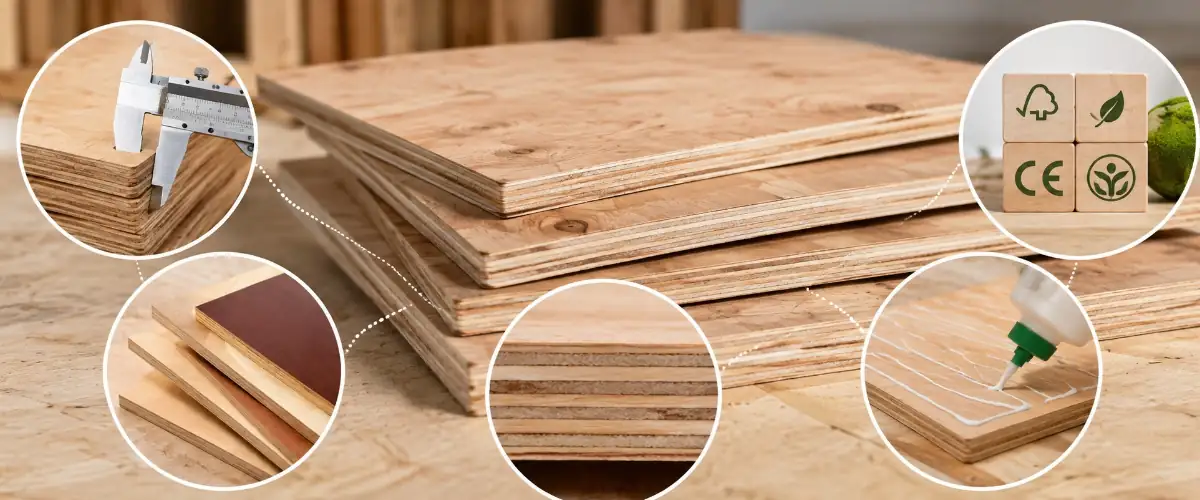
When purchasing CDX plywood, consider the following:
Thickness
Choose based on structural load requirements.
Panel Grade
Verify the face grades meet your project needs.
Core Quality
Look for consistent veneer layers with minimal voids.
Glue Type
Ensure the panel uses exterior-grade adhesive.
Certifications
Choose products certified to recognized standards such as:
- CARB
- FSC
- CE
- EPA TSCA Title VI
Maintenance Tips
Although CDX plywood is usually hidden within a building structure, proper storage improves its performance.
- Store panels flat.
- Keep plywood dry before installation.
- Protect edges from prolonged water exposure.
- Cover unfinished outdoor installations promptly.
- Seal exposed edges if necessary.
Conclusion
CDX plywood is an economical and dependable structural panel widely used in construction. Its combination of strength, moisture-resistant adhesive, and easy installation makes it an excellent choice for roofing, wall sheathing, subflooring, and many other structural applications.
While it is not waterproof or designed for decorative use, CDX plywood performs exceptionally well when installed in protected building assemblies. Understanding its grading system, limitations, and ideal applications will help you select the right plywood for your next project.
Call to Action
Looking for a reliable CDX plywood manufacturer and supplier?
BaitWood Industry supplies high-quality CDX plywood in a variety of sizes, thicknesses, and core options for construction, roofing, flooring, and structural applications. We offer stable quality, competitive factory pricing, and customized OEM solutions to meet the needs of importers, wholesalers, distributors, and building material suppliers worldwide.
Contact us today to request product specifications, pricing, or a free quotation for your next project.