
Why Are Plywood and OSB Commonly Used for Subfloors?
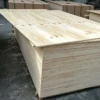
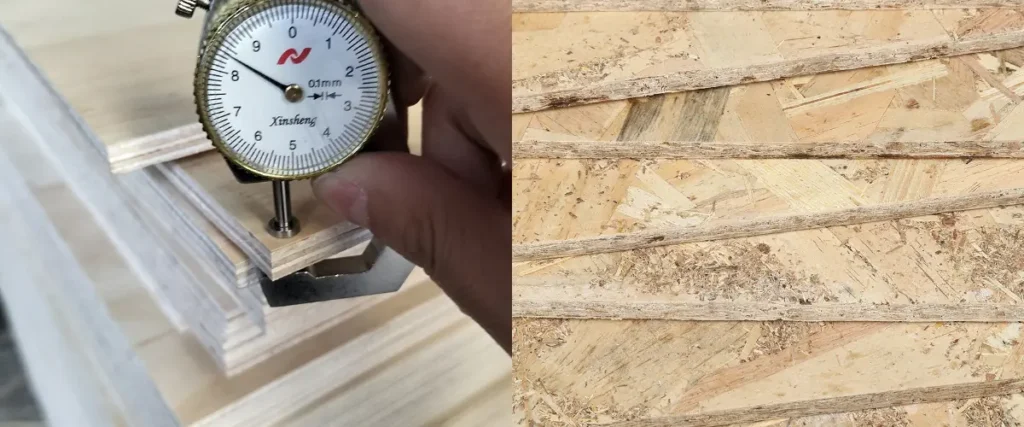
1.Plywood is made by bonding multiple layers of natural wood veneers together under heat and pressure, with each layer arranged in alternating directions. This cross‑laminated structure provides excellent stability, moisture resistance, load‑bearing capacity, and nail‑holding strength, creating a structure similar to a “wafer cookie.”
Disadvantages:
- Relatively higher adhesive content: Lower‑quality panels from small manufacturers may have a higher risk of formaldehyde emissions, so it is important to choose products that meet appropriate environmental standards.
- Higher cost: Plywood is generally more expensive than OSB of the same thickness.
2.OSB, or Oriented Strand Board, is another engineered wood panel widely used in structural construction. Instead of veneer layers, OSB is manufactured from thin wood strands that are oriented in specific directions and bonded with resin under heat and pressure. OSB is commonly available in structural grades such as OSB/3, depending on the applicable standard and market requirements. For subfloor applications, OSB offers several advantages. It provides consistent panel properties, efficient material utilization, and competitive pricing. Its large panels can also provide good coverage during installation. OSB is widely used in residential and commercial construction for flooring, walls, and roofing applications. However, the appropriate OSB grade should always be selected according to the structural requirements and intended service conditions.
Disadvantages:
- Rough surface: Unfinished OSB has a relatively uneven surface. If the flooring requires a very smooth and level base, an additional underlayment may be needed.
- Edges are vulnerable to moisture: Although OSB generally has better moisture resistance than standard particleboard, cut edges can still swell when exposed to water if they are not properly sealed.
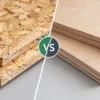
Plywood vs. OSB for Subfloors
Both plywood and OSB can be suitable for subfloor applications, but they have different characteristics.
1. Strength and Structural Performance
Structural plywood provides a strong panel structure because its veneer layers are cross‑laminated. This construction gives plywood good strength and stiffness for many flooring applications. OSB also provides reliable structural performance. The orientation of the wood strands allows manufacturers to engineer the panel for specific structural applications. Rather than choosing only based on the panel name, buyers should check the product’s structural rating, thickness, span requirements, and applicable standards.
2. Moisture Resistance
Moisture performance is another important consideration when selecting a subfloor material. Plywood can perform well when manufactured with suitable adhesives and used within its specified conditions. However, exposure to water can still cause swelling, edge damage, or dimensional changes depending on the plywood grade and construction. OSB products also vary in moisture performance. Structural OSB grades designed for humid conditions can provide suitable performance when installed and maintained according to the manufacturer’s specifications. For either material, proper construction detailing and protection from prolonged water exposure are important.
3. Cost
Cost is one reason OSB is widely used in construction. Its manufacturing process makes efficient use of wood resources and allows manufacturers to produce large structural panels competitively. Plywood can have a higher material cost, particularly when using higher‑grade veneers or hardwood species. However, its strength, workability, and fastening performance can make it attractive for certain projects. For contractors and distributors, the best choice should therefore consider both purchase price and overall project requirements.
Key Comparison Summary
- Moisture Resistance: Plywood > OSB (Plywood’s multi‑layer wood veneer structure generally provides better resistance to moisture).
- Stability and Load‑Bearing Capacity: OSB ≥ Plywood (OSB’s large, oriented wood strands provide strong resistance to deformation).
- Environmental Performance: It depends on the adhesive used. OSB often uses MDI adhesive, which can offer a high level of environmental performance. For plywood, urea‑formaldehyde (UF) resin may result in higher formaldehyde emissions, while phenol‑formaldehyde (PF) resin or MDI adhesive can provide better environmental performance.
- Price: Plywood is generally slightly more expensive than OSB.
Which Is Better for a Subfloor: Plywood or OSB?
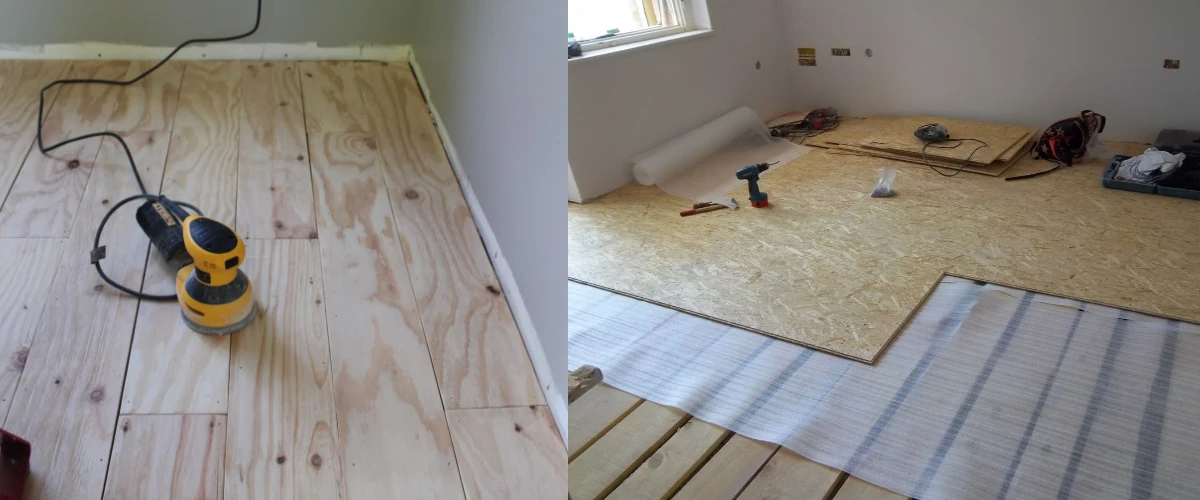
There is no single answer for every project. Plywood may be a good choice when:
- High strength and stiffness are required
- Good fastener holding is important
- The project requires easy cutting and handling
- A specific plywood species or construction is preferred
- Tongue‑and‑groove panels are required
OSB may be a good choice when:
- Cost efficiency is an important consideration
- Consistent structural panels are required
- Large panel coverage is beneficial
- The project uses standardized OSB structural grades
- OSB is readily available in the local market
The final selection should be based on the applicable building codes, structural design, panel grade, thickness, moisture conditions, and installation requirements.
How to Choose the Right Subfloor Material
When selecting plywood or OSB for a flooring project, buyers should consider more than just the material type. First, determine the required panel thickness and structural grade. The correct thickness depends on joist spacing, floor loads, and the flooring system. Second, consider the service environment. Areas exposed to humidity or occasional moisture may require panels designed for those conditions. Third, check the panel dimensions and edge profile. Standard square‑edge panels and tongue‑and‑groove panels serve different installation requirements. Finally, verify the product’s applicable standards, certifications, and quality specifications before placing an order.
Plywood and OSB Subfloor Solutions from Baitwood
Choosing the right subfloor panel requires a balance of structural performance, moisture resistance, dimensional stability, and cost. As an experienced plywood and wood panel supplier, Baitwood provides a range of engineered wood products for construction and industrial applications. Depending on project requirements, buyers can consider different plywood constructions and OSB grades for flooring and other structural uses. Whether you are sourcing subfloor plywood, structural plywood, or OSB panels, working with a reliable manufacturer can help ensure consistent quality, suitable specifications, and stable supply. For distributors, contractors, and construction material importers, Baitwood can provide customized panel specifications according to project requirements, including thickness, dimensions, core materials, surface treatment, and packaging.
Contact Baitwood to discuss your subfloor plywood and OSB requirements and find a suitable solution for your market.