
What Is Melamine Board?
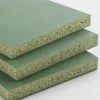
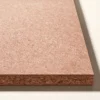
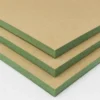
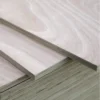
Melamine board is short for melamine-faced board. Manufacturers bond decorative paper impregnated with melamine resin to a core material, such as particleboard or medium-density fiberboard (MDF). This creates a smooth, ready-to-use surface.
Since the board already has a finished surface, you don’t need to paint it before use. That’s why people often call it pre-finished board or no-paint board.
Popular options include black melamine board, white melamine board, wood-grain melamine board, and other solid colors.
Black vs. White Melamine Board: Table Overview
Black and white melamine boards can share the same substrate and technical specifications. Their main differences relate to appearance, visible marks, design compatibility, and the atmosphere they create.
| Feature | Black Melamine Board | White Melamine Board |
|---|---|---|
| Appearance | Bold, modern, and elegant | Bright, clean, and timeless |
| Best design styles | Contemporary, industrial, minimalist | Scandinavian, modern, traditional |
| Visual effect | Adds contrast and visual depth | Makes spaces feel brighter |
| Dust visibility | Often more noticeable on smooth surfaces | Dark dust and some stains may stand out |
| Fingerprints | Can be visible on dark, smooth finishes | Usually less obvious for many common marks |
| Typical applications | Feature cabinets, desks, retail displays | Kitchen cabinets, wardrobes, shelving |
| Design flexibility | Strong accent color | Easy to coordinate with other finishes |
Actual performance depends on the surface texture, finish, lighting, and cleaning habits. Neither color is automatically more durable than the other.
Black vs. White Melamine Board: Key Differences
Appearance and Interior Design
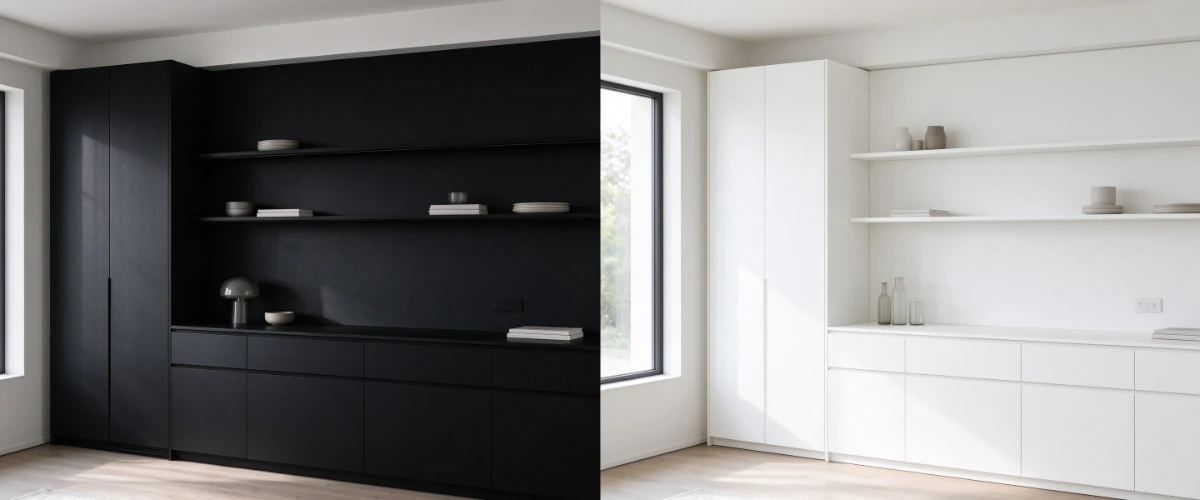
- White melamine board: White reflects light well and helps a room feel brighter and more spacious. It also creates a clean, fresh look. White works with almost any interior style, including minimalist, Scandinavian, and natural wood designs. It’s a versatile choice for many furniture projects.
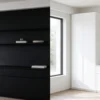
- Black melamine board: Black creates a bold, refined look. It works especially well in modern, industrial, and minimalist interiors. However, using too much black can make a room feel dark or cramped. Good lighting helps balance the look.
Everyday Use and Maintenance
- Dirt, scratches, and fingerprints: White melamine board can hide light dust and minor scratches better than black, depending on the finish. Black surfaces tend to show fingerprints, smudges, and scratches more clearly. Glossy and soft-touch finishes can make these marks even more noticeable under direct light.
- Resistance to yellowing: Quality white melamine board can resist discoloration, but prolonged exposure to strong sunlight may still cause yellowing over time. Black board does not show yellowing as easily, although its color can still fade or change with prolonged UV exposure.
- Light reflection and glare: Glossy white board reflects light and can help brighten a room. Glossy black board may create stronger, more noticeable reflections under direct lighting, which can cause glare.
Price and Customization
- Price differences: Black and white melamine boards usually have similar base prices when they use the same core material, thickness, and finish. However, special finishes, such as black wood grain or high-gloss white, may cost more depending on the design and manufacturing process.
- Edge banding: Black melamine board needs careful edge matching. A poorly matched edge band or an uneven finish can stand out against the dark surface. White board is generally easier to pair with different edge band colors, although a close match still gives the best result.
Black or White Melamine Board: Which Is Better for Different Projects?
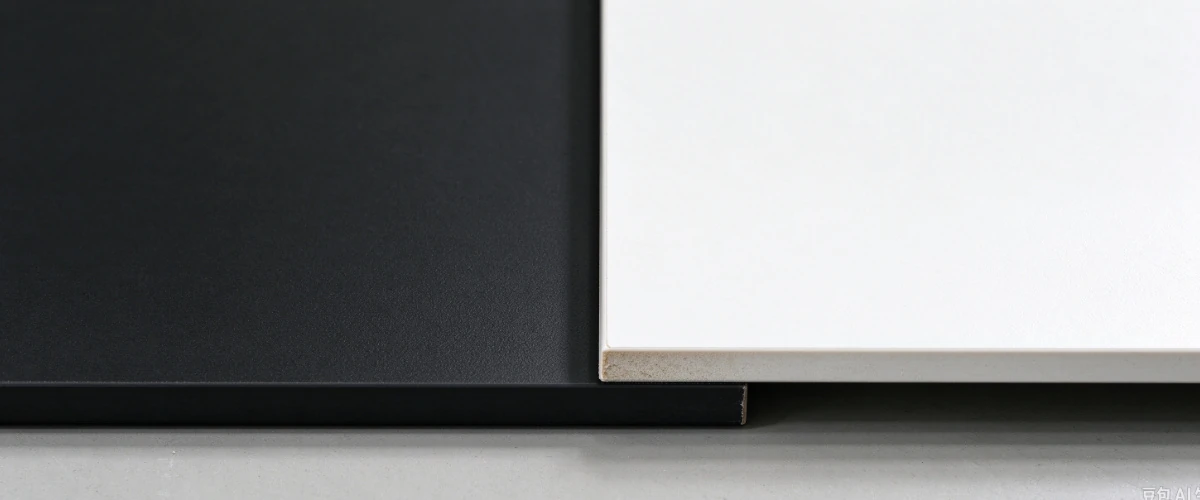
White melamine board: White helps reflect light and works with almost any interior style. It’s a great choice if you want a space to feel brighter, more open, and more inviting.
Black melamine board: Black adds a sleek, sophisticated look and a sense of structure. It works well in modern, minimalist, upscale, and industrial-style interiors, but choosing the right space and lighting makes all the difference.
For Kitchen Cabinets
White melamine board is a strong choice for bright, timeless kitchen designs. It works well with light countertops, natural wood accents, and compact spaces.
Black melamine board suits contemporary kitchens, especially when paired with lighter countertops, metallic hardware, or woodgrain cabinets.
For kitchens, remember that the melamine surface and exposed edges are not automatically waterproof. Choose a suitable substrate, protect cut edges, and prevent prolonged water exposure.
For Wardrobes and Closets
White melamine board is often preferred for wardrobe interiors because it provides a bright background and makes clothing easier to see.
Black melamine board can create a premium appearance for walk-in closets, luxury wardrobes, and display-style storage systems.
For large wardrobe projects, compare panel availability, thickness, edge-banding compatibility, and total material cost before selecting a color.
For Office Furniture
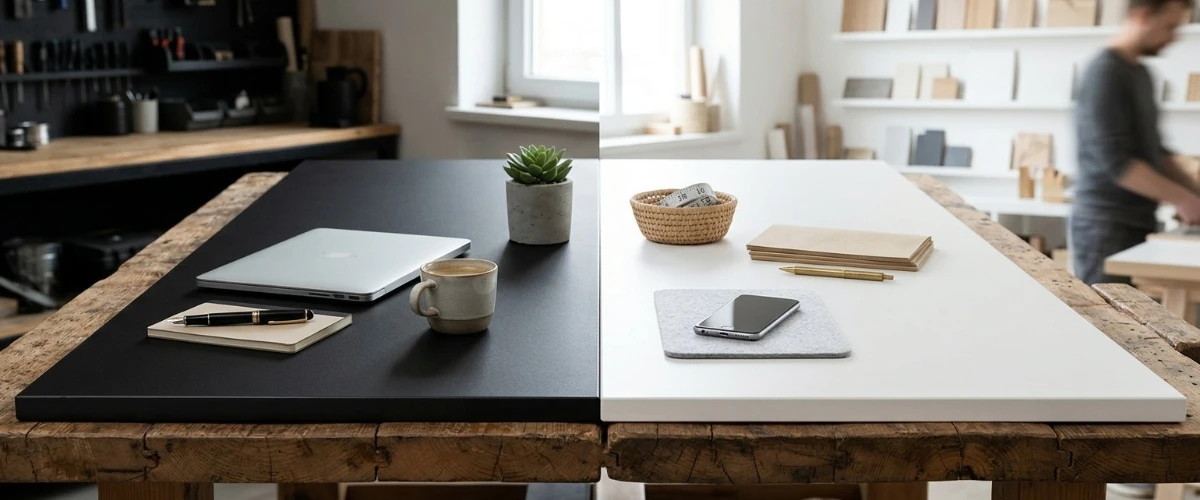
Black melamine board is suitable for executive desks, conference tables, and contemporary workstations. It creates a strong visual statement and pairs well with metal frames.
White melamine board is useful for shared workspaces, compact offices, and modular furniture systems. It provides a neutral finish that fits many office layouts.
For Retail Displays
Black melamine board can create contrast around products, making it a useful choice for boutiques, electronics displays, and premium retail fixtures.
White melamine board works well in supermarkets, pharmacies, showrooms, and stores that need a bright, clean display environment.
For Budget Furniture Production
Both colors can be economical options. The final price depends on the substrate, thickness, surface finish, panel size, order quantity, and supplier.
Standard white melamine boards may be readily available in many markets, while some black finishes or special textures may require a larger minimum order. However, availability varies by manufacturer, so request current quotations rather than assuming one color is always cheaper.
How to Choose the Right Melamine Board
Color is only one factor when selecting melamine boards. Buyers should also evaluate the following specifications.
Substrate: MDF or Particleboard
Particleboard is commonly used for cost-effective furniture panels, cabinets, and shelving. MDF offers a more uniform fiber-based structure and may be preferred for certain machining and furniture applications.
Choose the substrate according to the required strength, screw-holding performance, machining method, moisture exposure, and budget.
Quick tip: Check the board’s cut edge for any unusual odor. Quality melamine board may have a mild wood or resin smell. A strong, sharp chemical odor can be a warning sign, but smell alone cannot tell you whether formaldehyde levels are too high. For peace of mind, check the product’s emissions test results or certification.
Thickness
Common furniture panel thicknesses include 12 mm, 15 mm, 18 mm, and 25 mm, although availability varies by supplier and market.
- 12 mm: Suitable for some lightweight furniture components and decorative applications.
- 15 mm: Common for cabinet components and general furniture production.
- 18 mm: Widely used for cabinets, wardrobes, and shelving.
- 25 mm: Useful for thicker shelves, desktops, and selected structural furniture components.
The appropriate thickness depends on the span, expected load, fixing method, and substrate properties. Check the manufacturer’s specifications before finalizing your design.
Panel Size
A melamine board 4×8 is a common purchasing format in markets that use imperial dimensions. A nominal 4 × 8 ft sheet measures approximately 1220 × 2440 mm, although actual dimensions may vary slightly by product and manufacturer.
Other sizes may be available for different production lines and regional requirements. Confirm the actual dimensions, thickness tolerance, and packing details before placing a bulk order.
Surface Finish
Black and white melamine boards may be offered in matte, glossy, smooth, textured, or other decorative finishes.
Choose a finish based on the furniture design, lighting, cleaning requirements, and expected contact with the surface. If scratch resistance or stain resistance is important, request relevant test data rather than relying on color alone.
Watch out for color differences: Black and white come in many shades. White options include warm white, cool white, and pearl white. Black options range from charcoal black to matte black and glossy black. Before placing a custom order, ask your supplier for a physical sample. Check it under both natural light and your home’s indoor lighting. Photos and online color charts can look different from the finished board, so checking a sample helps you avoid surprises.
Edge Banding
Cut edges expose the substrate and usually require suitable edge banding for a finished appearance and better protection against everyday moisture.
Check that the selected edge banding matches the panel color, texture, thickness, and adhesive system.
Moisture Resistance
Standard melamine board should not be treated as waterproof. For kitchens, bathrooms, laundry rooms, or humid environments, ask about moisture-resistant substrates and follow the supplier’s installation and maintenance guidance.
Even moisture-resistant panels require proper edge sealing and protection from standing water.
Final Thoughts: Black or White Melamine Board?
Black and white melamine boards both offer practical solutions for furniture manufacturing and interior applications.
Choose black melamine board if you want a bold, modern finish for feature cabinets, office furniture, retail displays, or contemporary interiors.
Choose white melamine board if you prefer a bright, neutral appearance for kitchen cabinets, wardrobes, shelving, and versatile furniture designs.
Before purchasing, compare the substrate, thickness, panel size, surface finish, moisture requirements, and supplier quality. The right combination of color and technical specifications will help you achieve the appearance and performance your project requires.
Product Recommendations
Find the Right Products for Your Needs
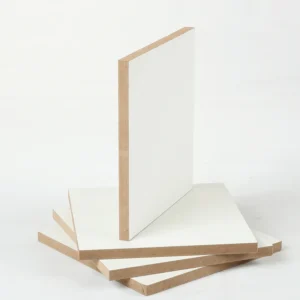 Baitwood ProductMelamine MDFMDF (Medium Density Fiberboard) is an engineered wood panel made from refined wood fibers…View Product
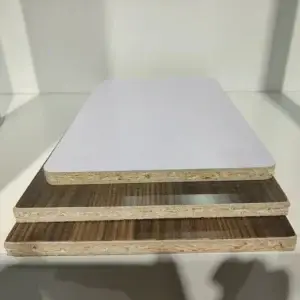 Baitwood ProductMelamine ChipboardMelamine Chipboard is an engineered wood panel made from compressed wood particles bonded with…View Product
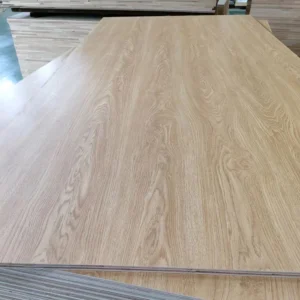 Baitwood ProductMelamine PlywoodMelamine Plywood is made from high-quality plywood laminated with durable melamine resin paper. This…View Product
Related Articles
Explore more helpful articles, product guides, and expert tips.
 Blog ArticleMelamine vs Plywood: Key Differences You Must Know Before BuyingWhen selecting materials for furniture, cabinets, or interior design projects, one common question is melamine…Read Article
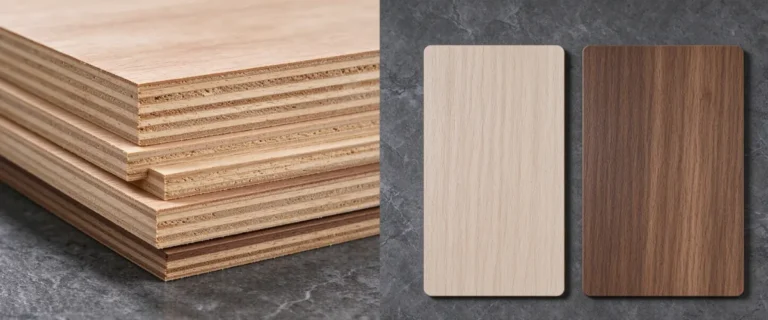 Blog ArticleWhat Is Melamine Plywood? How It’s Made, Benefits, and UsesMelamine plywood is a widely used engineered wood for interior renovation and custom whole‑home furniture.…Read Article
 Blog ArticleWhy Choose Melamine Particle Board for FurnitureFor furniture manufacturers sourcing materials for cabinetry and custom furniture—whether for kitchen cabinets, bedroom wardrobes,…Read Article