
What Is Baltic Birch Plywood?
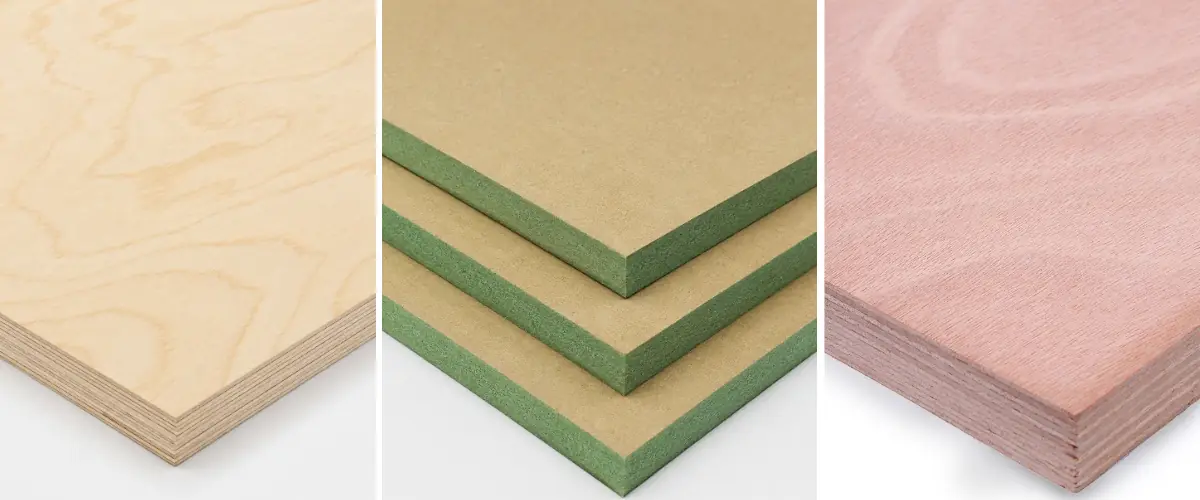
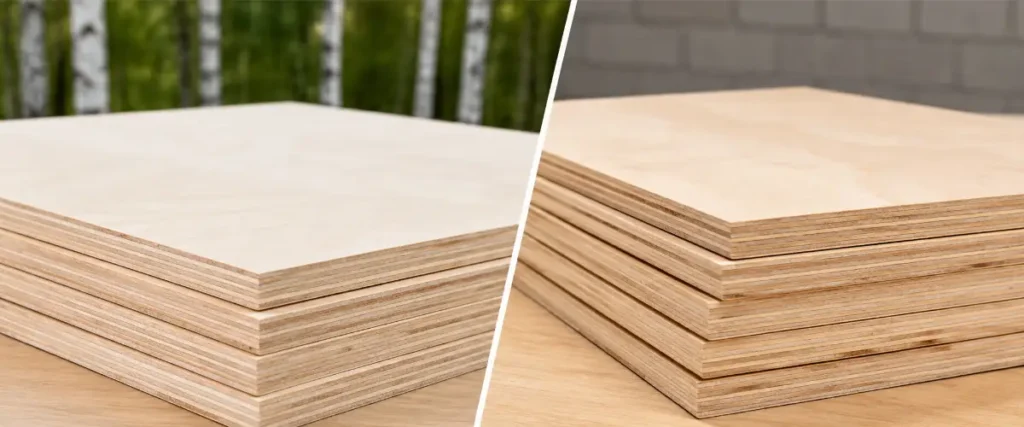
Baltic birch plywood is a high‑grade plywood traditionally sourced from the Baltic Sea and Northern Europe. Made primarily of birch veneers, it is well‑known for its void‑free core and fairly consistent surface appearance.
One of its most defining features is the all‑birch construction. Every single ply is crafted from solid birch wood.
Many standard Baltic birch panels use twice as many thin birch veneer layers as conventional plywood. This build produces a dense, dimensionally stable board.
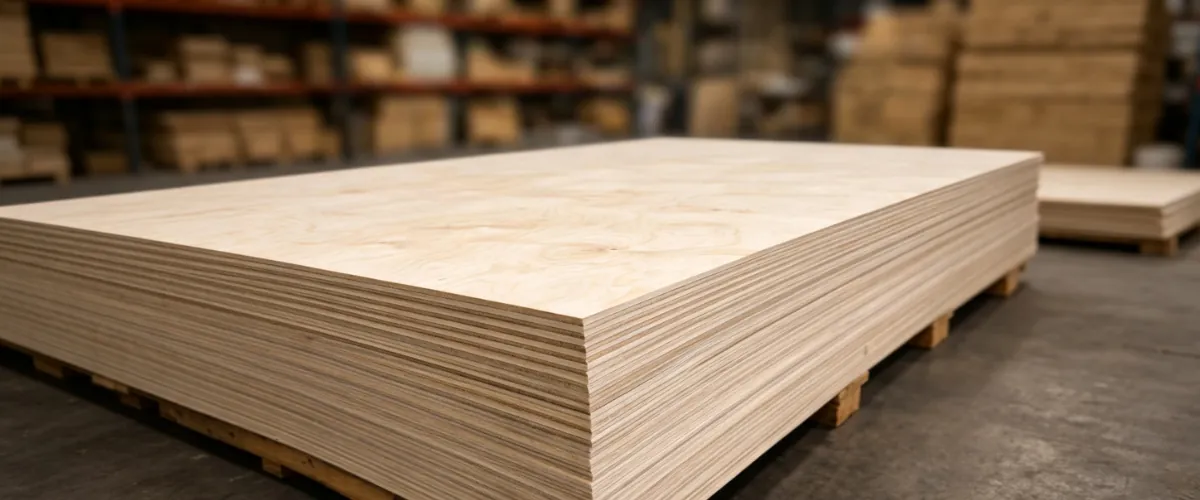
Those multiple birch layers create a clean, uniform grain pattern. Its exposed edges are widely admired for their attractive look.
What Is Chinese Birch Plywood?
Chinese Birch Plywood refers to birch plywood manufactured in China. China has a large plywood manufacturing industry, and Chinese factories produce birch plywood in a wide range of constructions, grades, thicknesses, and specifications.
Unlike the term Baltic Birch, Chinese Birch Plywood does not describe one single standardized product construction. The quality can vary significantly depending on the manufacturer, veneer grade, core material, adhesive, production process, and required specification.
Chinese birch plywood may be manufactured with:
- Full birch veneer construction
- Birch face and back with other hardwood core veneers
- Combi or mixed hardwood core
- Different veneer thicknesses
- Different adhesive systems
- Different surface grades
This flexibility is one of the major advantages of sourcing birch plywood from China. Buyers can often customize the product according to their application and budget.
Learn More About → Birch Plywood Core Materials
Baltic Birch Plywood vs Chinese Birch Plywood: Key Differences
The most important differences can be summarized as follows:
| Feature | Baltic Birch Plywood | Chinese Birch Plywood |
|---|---|---|
| Main wood species | Birch | Birch or birch‑faced construction |
| Core construction | Commonly all‑birch | Full birch, combi, hardwood, or customized |
| Number of plies | Usually many thin layers | Depends on thickness and construction |
| Core uniformity | Generally very consistent | Depends on manufacturer and specification |
| Surface quality | Usually high and uniform | Available from commercial to premium grades |
| Thickness options | Standard specifications | Wide range of standard and custom options |
| Adhesive options | Depends on manufacturer/grade | MR, WBP and other options available |
| Customization | Relatively limited | High |
| Price | Generally higher | Wide range, often more competitive |
| Supply flexibility | More limited | Large production capacity |
| Applications | Furniture, CNC, interiors | Furniture, cabinets, packaging, construction, industrial uses |
The table provides a general comparison. Actual performance depends on the technical specifications of the individual plywood product.
1. Core Construction
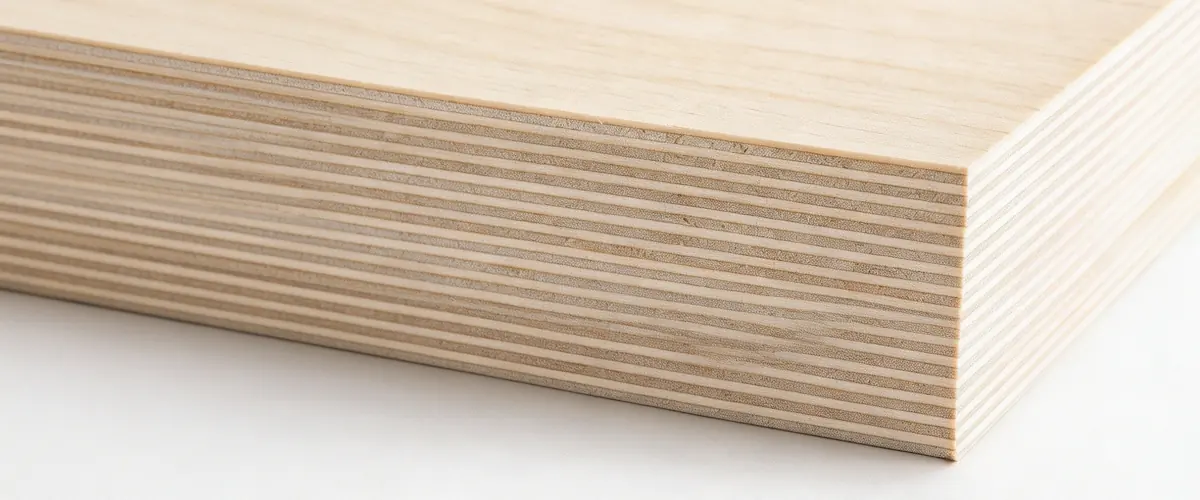
One of the biggest differences between Baltic Birch Plywood and Chinese Birch Plywood is core construction.
Traditional Baltic Birch Plywood is typically made using multiple layers of birch veneer. Thin veneers are cross‑laminated to create a strong and stable panel.
Chinese birch plywood, however, can be produced using different core structures.
For example, a buyer may specify:
- 100% birch core
- Birch face + hardwood core
- Combi core
- Finger‑jointed core
- Other customized constructions
For applications where the plywood edge will remain visible, an all‑birch core may be preferred because it provides a more consistent appearance.
For applications where the edge is covered or painted, a customized core construction can provide a more cost‑effective solution.
2. Number of Veneer Layers
Baltic birch plywood is well‑known for its multi‑ply veneer construction. The more veneer layers it has, the better stability it delivers.
For example, a relatively thick panel may contain many thin birch veneer plies. This construction helps provide good dimensional stability and a consistent edge appearance.
Chinese birch plywood can also be manufactured with multiple birch veneer layers, but the number of plies is not necessarily the same.
The number of layers depends on:
- Panel thickness
- Veneer thickness
- Core construction
- Factory specifications
- Intended application
Therefore, buyers should not judge plywood quality only by its country of origin. Instead, ask the supplier for the actual ply structure and core construction.
3. Surface Quality
Surface quality is another important factor when comparing Baltic Birch Plywood vs Chinese Birch Plywood.
High‑grade Baltic Birch Plywood generally has a clean and uniform face, making it suitable for applications where the plywood surface will be visible.
Chinese birch plywood is available in a broader range of face grades. Depending on the product specification, the surface may have:
- Natural birch appearance
- Small knots
- Patches
- Color variation
- Sanded surface
- Veneer repairs
This does not automatically mean Chinese birch plywood is lower quality.
Chinese manufacturers can produce high‑grade birch plywood for furniture and decorative applications when the buyer specifies the required face grade and quality standard.
4. Thickness and Thickness Tolerance
Thickness accuracy is especially important for CNC machining, furniture manufacturing, cabinets, drawers, and precision components.
Baltic Birch Plywood is often selected for applications where consistent thickness and panel stability are important.
Chinese plywood manufacturers can also produce panels with controlled thickness tolerances. However, the actual tolerance depends on the factory’s production equipment and quality‑control requirements.
When purchasing Chinese birch plywood, buyers should confirm:
- Nominal thickness
- Actual thickness
- Thickness tolerance
- Sanding allowance
- Panel flatness
For example, instead of simply ordering “18 mm birch plywood,” a professional buyer should provide a complete technical specification.
5. Adhesive and Moisture Resistance
The adhesive used in plywood production has a significant effect on bonding performance and moisture resistance.
Different Chinese birch plywood products can use different adhesive systems, including:
- MR glue
- WBP glue
- Phenolic resin
- Other specified adhesives
For furniture and interior applications in relatively dry conditions, an MR adhesive system may be sufficient.
For applications exposed to moisture or demanding environmental conditions, buyers may specify WBP or another suitable waterproof bonding system.
Therefore, when comparing Baltic Birch Plywood and Chinese Birch Plywood, it is better to compare the actual glue specification rather than simply comparing the country of manufacture.
6. Strength and Stability
Both Baltic birch plywood and well‑manufactured Chinese birch plywood can provide excellent strength and dimensional stability.
The performance of a plywood panel depends on several factors:
- Birch veneer quality
- Veneer thickness
- Number of plies
- Grain direction
- Core construction
- Adhesive quality
- Manufacturing accuracy
- Moisture content
An all‑birch plywood panel with multiple thin plies can provide a strong and stable structure.
However, a Chinese birch plywood panel with a different core construction may be more appropriate when the application does not require a premium all‑birch structure.
For this reason, buyers should compare technical data and test results instead of assuming that one origin is always stronger.
Which Is Better: Baltic Birch Plywood or Chinese Birch Plywood?
There is no universal answer.
Baltic Birch Plywood may be a better choice when:
- You need a premium all‑birch panel
- Edge appearance is important
- You need consistent multi‑ply construction
- The project requires high‑quality machining
- You are producing premium furniture or cabinets
Chinese Birch Plywood may be a better choice when:
- You need competitive pricing
- You require large quantities
- You need customized specifications
- You need different core constructions
- You are sourcing for furniture, cabinets, packaging, or industrial applications
- You want to balance quality and cost
The most important point is that “Chinese Birch Plywood” does not automatically mean low quality. Chinese manufacturers produce many different grades of plywood, from economical commercial panels to high‑quality all‑birch plywood.
Baltic Birch Plywood vs Chinese Birch Plywood: Which Should You Buy?
For premium furniture, visible edges, CNC machining, and projects where a consistent all‑birch structure is important, high‑grade Baltic Birch Plywood can be an excellent option.
However, if your project requires competitive pricing, customized specifications, large‑volume supply, or different core constructions, Chinese Birch Plywood can provide excellent value.
The best approach is not simply to compare the country of origin. Instead, compare the plywood specification, veneer quality, core construction, adhesive, thickness tolerance, certifications, and price.
A properly specified Chinese birch plywood product can meet demanding furniture, cabinet, industrial, and interior applications while offering greater flexibility in customization and supply.
Final Thoughts
The difference between Baltic Birch Plywood and Chinese Birch Plywood is not simply about where the plywood is manufactured.
Baltic birch is typically recognized for its consistent multi‑ply birch construction and premium positioning, while Chinese birch plywood offers a much wider range of constructions, grades, prices, and customization options.
For buyers, the best choice depends on the application and purchasing requirements.
If you are looking for reliable Chinese birch plywood for furniture, cabinets, industrial applications, or wholesale projects, compare suppliers based on specifications, quality control, certifications, and long‑term supply capability—not price alone.
Get a Birch Plywood Quote from Baitwood
Looking for reliable Chinese Birch Plywood? Baitwood offers quality plywood with flexible specifications and competitive prices.
Contact us today for a quote!