
What Is an H20 Timber Beam?
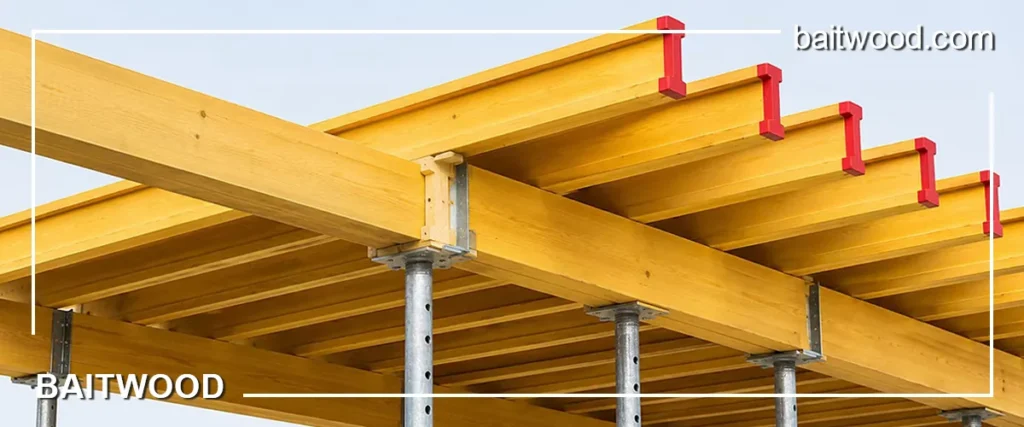
An H20 timber beam is a precision-engineered structural component purpose-built for heavy-duty concrete formwork systems, manufactured to comply with the European standard EN 13377 (the governing specification for timber formwork components). Its iconic “H” cross-section is optimized to deliver maximum bending stiffness and load-bearing capacity with minimal self-weight, making it ideal for repetitive use in demanding construction environments.
Standard H20 formwork timber beams feature the following technical specifications:
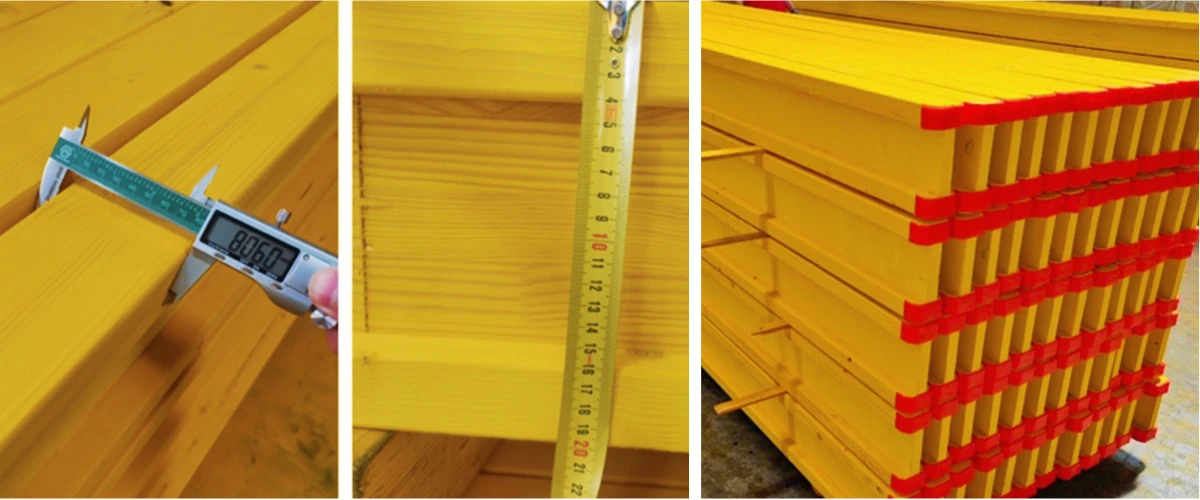
- Flanges: 80 mm (W) × 40 mm (T) solid wood flanges, manufactured from high-grade spruce, pine, or larch for consistent structural performance
- Web: High-strength waterproof plywood web (poplar or birch core, optional), with standard thicknesses of 27 mm or 30 mm to suit different load requirements
- Adhesives: WBP (Boiling Water Proof) waterproof glue, ensuring permanent bond integrity even in wet concrete pouring and outdoor exposure conditions
- Surface Treatment: Waterproof yellow coating for enhanced weather resistance and extended service life
- Core Dimensions: Standard beam height of 200 mm, with customizable lengths ranging from 1.8 m to 6.0 m to fit project-specific formwork designs
- Material Properties: Controlled moisture content of 8% – 12% to minimize dimensional instability, with an average density of 450–550 kg/m³ and a linear weight of just 4.5 – 5.0 kg/m
- End Protection: Reinforced plastic end caps to prevent moisture ingress, impact damage, and prolong service life
This engineered design ensures that H20 beams outperform traditional solid timber beams in every critical performance metric, while remaining compatible with all major formwork systems and accessories.
1. Lighter Weight, Easier Handling
Traditional timber beams are often heavy and difficult to move around construction sites. H20 timber beams are engineered to be lightweight without sacrificing strength.
Benefits:
- Faster installation
- Reduced labor costs
- Easier transportation
- Improved worker safety
Because workers can handle the beams more efficiently, projects can move forward more quickly.
2. Higher Strength and Better Stability
Unlike ordinary timber, H20 beams are manufactured under strict quality control standards. Their engineered structure provides consistent strength and dimensional stability.
Compared with traditional wood, H20 beams are less likely to:
- Bend
- Twist
- Crack
- Warp due to moisture
This makes them highly reliable for repeated formwork applications.
3. Longer Service Life
Durability is one of the biggest reasons builders prefer H20 timber beams.
Most quality H20 beams feature:
- Waterproof coating
- UV-resistant paint
- Protective end caps
- High-quality bonded components
With proper maintenance, H20 beams can be reused many times, significantly reducing replacement costs.
4. Cost-Effective for Large Projects
Although the initial purchase price of H20 timber beams may be higher than ordinary timber, their long lifespan and multiple reuse cycles make them a more economical option.
Builders can save money through:
- Lower maintenance costs
- Reduced material waste
- Fewer replacements
- Higher construction efficiency
For contractors handling large-scale projects, these savings can be substantial.
5. Excellent Compatibility with Formwork Systems
H20 beams are widely used in modern concrete formwork systems because they are compatible with various accessories and support structures.
They can be used for:
- Wall formwork
- Slab formwork
- Column formwork
- Bridge construction
- Tunnel engineering
Their standardized dimensions make assembly simple and efficient.
6. Environmentally Friendly Choice
Sustainability has become an important consideration in the construction industry.
Because H20 timber beams are reusable and manufactured from engineered wood materials, they help reduce timber waste and improve resource efficiency.
Many construction companies choose H20 beams as part of their sustainable building strategies.
7. Lower Manufacturing Costs for Construction Projects
One of the major reasons contractors are choosing H20 timber beams is their excellent cost-performance ratio. Although the unit price may be higher than ordinary timber, the overall manufacturing and project costs are often much lower over the long term.
Because H20 beams are engineered for durability and repeated use, builders can reduce the need for frequent replacements. Their standardized dimensions also minimize material waste and simplify inventory management.
Cost advantages include:
- Longer service life and higher reuse rates
- Reduced material waste
- Lower maintenance and replacement costs
- More predictable project budgeting
- Better return on investment for large-scale construction projects
For construction companies managing multiple projects, investing in H20 timber beams can significantly reduce total operating costs.
8. Higher Production and Construction Efficiency
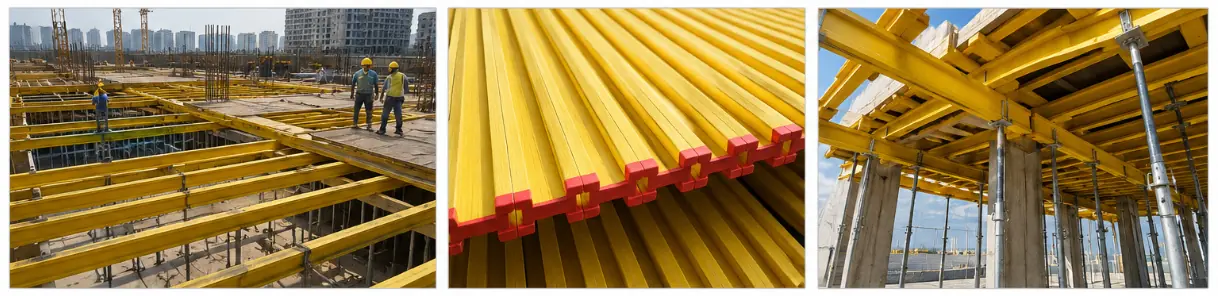
Efficiency is essential in modern construction, and H20 timber beams are designed to help contractors complete projects faster.
Their lightweight structure allows workers to transport and install the beams quickly, while their consistent dimensions ensure easy integration with various formwork systems. This reduces assembly time and helps maintain smooth construction workflows.
Efficiency benefits include:
- Faster formwork installation and dismantling
- Reduced labor requirements
- Easy handling and transportation
- Standardized sizes for quick assembly
- Improved workflow on construction sites
- Shorter project completion times
By improving both productivity and operational efficiency, H20 timber beams help builders save time while maintaining high construction quality.
Traditional Timber vs. H20 Timber Beams
| Performance Feature | Traditional Solid Timber Beam | Engineered H20 Timber Beam |
|---|---|---|
| Typical Weight (Linear) | 7.5–9.0 kg/m (heavy, requires multiple workers to lift) | 4.5–5.0 kg/m (ultra-lightweight, single worker can handle safely) |
| Structural Strength | Inconsistent, dependent on natural timber quality and defects | High, consistent, and predictable, engineered to EN 13377 standards |
| Dimensional Stability | Poor; prone to twisting, warping, and splitting with moisture changes | Excellent; controlled moisture content (8–12%) and engineered design eliminate deformation |
| Service Life & Reusability | Limited; typically 3–8 pours, requires frequent replacement | Long service life; 10+ pours with basic maintenance, multiple project reuse |
| Installation Speed | Slow; heavy weight requires more labor and time for positioning | Fast; lightweight design and standardized dimensions cut installation time by 30% |
| Maintenance Requirements | High; frequent repairs, replacement of damaged sections, and treatment for moisture damage | Low; only basic cleaning and minor coating touch-ups required |
| Long-Term Cost Efficiency | Low; high replacement and labor costs drive up total lifecycle expenses | High; minimal replacement costs and efficiency gains deliver 40–50% total cost savings |
| Environmental Impact | High; frequent replacement increases virgin timber demand and waste generation | Low; high reusability reduces waste and supports sustainable forestry practices |
How to Choose a Reliable H20 Timber Beam Supplier
When sourcing H20 beams, buyers should look for manufacturers that offer:
- Strict quality control
- High-quality raw materials
- Waterproof protective coating
- Standard dimensions
- Export experience
- Stable production capacity
- Reliable delivery schedules
Working directly with an experienced manufacturer can help ensure consistent product quality and competitive pricing.
Why Choose Baitwood?
BAITWOOD is a professional wood panel manufacturer and exporter with extensive experience in supplying high-performance construction materials to global markets. We specialize in the production of premium H20 timber beams, engineered to meet the highest international standards and the demanding requirements of modern construction projects.
Our core advantages as your H20 timber beam supplier include:
- Advanced Production Equipment: We operate state-of-the-art manufacturing machinery, ensuring precise dimensional control and consistent product quality across every beam we produce
- Strict Quality Inspection System: Every H20 beam undergoes multiple stages of quality inspection, from raw material selection to finished product testing, ensuring compliance with EN 13377 and our own rigorous performance standards
- Custom Specifications Available: We offer fully customizable H20 beams, with lengths ranging from 1.8 m to 6.0 m, optional web thicknesses, and custom surface treatments to suit your project’s unique requirements
- Stable Supply Capacity: Our large-scale production facility enables us to handle both small-batch custom orders and large-volume project orders, with consistent lead times and reliable supply
- Professional Export Services: With decades of experience exporting to global markets, we handle all aspects of international shipping, documentation, and logistics, ensuring a seamless procurement process for our international clients
- Fast & Reliable Delivery: We maintain a large inventory of standard H20 beams for immediate dispatch, with a track record of on-time delivery to construction projects worldwide
We are committed to providing durable, high-performance H20 timber beams that help our clients improve construction efficiency, reduce project costs, and deliver exceptional results on every project. Whether you are working on a small residential development or a large-scale infrastructure project, BAITWOOD has the expertise and capacity to meet your H20 timber beam requirements.
Final Thoughts
The shift from traditional timber to H20 timber beams is driven by the need for greater efficiency, durability, and cost savings. Their lightweight design, high strength, long service life, and excellent compatibility with formwork systems make them an ideal solution for builders worldwide.
As construction projects become more demanding, H20 timber beams continue to prove that they are a smart investment for contractors, developers, and formwork companies looking to improve productivity and reduce long-term costs.