
What Is the Average Plywood Price?
There is no universal global price for plywood. Market rates vary depending on specifications, raw‑material costs, production location and order volume.
Retail buyers are generally charged per sheet (standard size 1220×2440 mm), while manufacturers and international buyers may purchase plywood by cubic meter (CBM) or full container load.
As a general guide, plywood prices can be grouped into several levels:
| Plywood Type | Typical Price Level | Common Applications |
|---|---|---|
| Construction Plywood | Low to Medium | Construction, packaging, general use |
| Commercial Plywood | Low to Medium | Furniture, interiors, general applications |
| Film Faced Plywood | Medium | Concrete formwork |
| Furniture Plywood | Medium | Cabinets, furniture |
| Birch Plywood | Medium to High | Furniture, CNC, interiors |
| Marine Plywood | High | Boats, marine applications, outdoor projects |
| Decorative Plywood | Medium to High | Wall panels, furniture, interior design |
These are relative price ranges rather than fixed market quotations. Actual plywood prices can vary substantially depending on specifications and purchasing volume.
For B2B buyers, comparing the price per sheet alone can also be misleading. A lower‑priced plywood sheet may have a different thickness, density, core structure, grade, or adhesive system.
How Much Does a Sheet of Plywood Cost?
The price of a plywood sheet depends mainly on its size, thickness, wood species, grade, and intended application.
Common plywood sheet sizes include:
- 1220 × 2440 mm
- 1250 × 2500 mm
- 1220 × 2500 mm
- 1200 × 2400 mm
- Custom sizes
Thickness is another major factor. A 6 mm plywood panel will normally cost less than an 18 mm panel of the same type because it contains less wood material.
For example, buyers may commonly compare:
- 6 mm plywood price
- 9 mm plywood price
- 12 mm plywood price
- 15 mm plywood price
- 18 mm plywood price
- 21 mm plywood price
- 25 mm plywood price
However, thicker does not always mean proportionally more expensive. Manufacturing efficiency, veneer quality, core structure, and market demand can all influence the final price.
Key Factors That Influence Plywood Prices
Several factors determine the final cost of plywood.
1. Wood Species
This forms the foundation of cost determination. Prices vary significantly across different wood types.
Common plywood species include:
- Poplar
- Birch
- Eucalyptus
- Okoume
- Pine
- Hardwood
- Mixed hardwood
For example, birch plywood is generally more expensive than many basic commercial plywood products due to its appearance, strength, uniform structure and stricter requirements for veneer quality. By contrast, poplar, pine and other soft‑wood cores come with lower costs and offer more budget‑friendly pricing.
2. Plywood Thickness
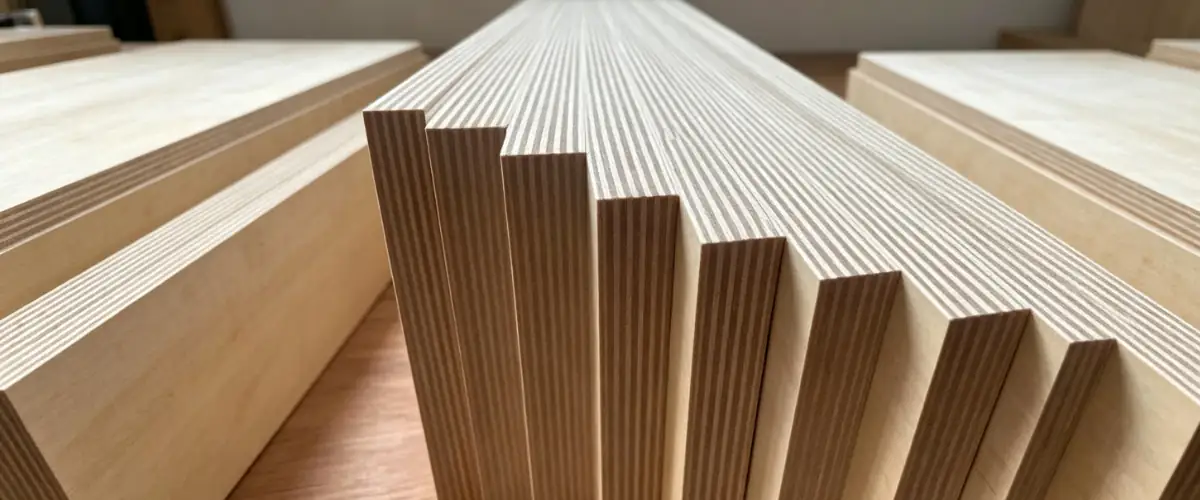
Thickness has a direct impact on material consumption. Thicker panels (e.g. 18 mm versus 12 mm) consume more raw materials and naturally come with higher prices.
Common available thicknesses:
6 mm, 9 mm, 12 mm, 15 mm, 18 mm, 21 mm and 25 mm.
Generally speaking, more veneer layers (for instance, 18 mm plywood normally has 9 layers) deliver better structural stability but also raise manufacturing costs.
Note: Thickness alone does not dictate price. An 18 mm low‑grade plywood and an 18 mm high‑grade birch plywood can have completely different price points.
3. Plywood Grade
Plywood grade is another important price factor.
Different grades may have different requirements for:
- Knots
- Cracks
- Veneer repairs
- Color consistency
- Surface smoothness
- Core gaps
- Structural performance
Higher‑grade plywood usually requires better raw materials and more quality control.
For furniture and decorative applications, buyers may be willing to pay more for cleaner and more attractive faces.
For packaging or temporary construction applications, appearance may be less important, making lower‑cost plywood a better choice.
4. Core Construction
The plywood core can significantly affect both price and performance.
Common core constructions include:
- Poplar core
- Eucalyptus core
- Birch core
- Hardwood core
- Combi core
- Finger‑jointed core
A full birch plywood panel generally costs more than plywood using a lower‑cost mixed hardwood or poplar core.
Core quality also affects screw holding, strength, flatness, machining performance, and durability.
5. Glue Type
The adhesive system is another factor that affects plywood cost.
Common plywood adhesives include:
- MR glue
- Melamine glue
- Phenolic resin
- WBP glue
For interior applications, MR or other interior‑grade adhesives may be sufficient.
For humid environments or demanding construction applications, buyers may require WBP or phenolic adhesive, which can increase production costs.
6. Certification
Certifications represent not only the baseline of product quality but also act as a “passport” for entering specific markets. Panels with high‑value certifications usually command a price premium.
Depending on the market and application, buyers may request:
- FSC certification
- CE marking
- E1 or E0 emission levels
- CARB compliance
- EN standards
- Other local certifications
Certified products may have higher costs because of certification, testing, traceability, and production‑control requirements.
7. Order Quantity
Wholesale plywood prices are usually lower than retail prices.
A buyer ordering several sheets may pay a much higher unit price than an importer purchasing one or more containers.
Large orders can reduce:
- Production setup costs
- Packaging costs per unit
- Handling costs
- Freight costs per sheet
- Supplier margins
For project‑based purchases, freight costs and payment terms can be negotiated for large‑size orders. Therefore, you should always take minimum order quantity and order volume into account when comparing plywood quotations.
Why Does Plywood Cost More in Some Markets?
The price paid by an end customer is not only the factory price.
For imported plywood, the total cost can include:
Factory price + packaging + inland transportation + port charges + ocean freight + customs duties + taxes + local transportation
This means a plywood product with a low factory quotation may not necessarily have the lowest landed cost.
For importers, it is better to compare landed cost rather than FOB price alone.
Tip: Plywood is closely linked to real‑estate, furniture manufacturing, interior renovation and other industries. Prices tend to rise during economic upturns, peak renovation seasons or strong real‑estate demand; conversely, prices may drop under opposite market conditions.
FOB Plywood Price vs. Landed Cost
Suppose Supplier A offers plywood at a lower FOB price but has higher packaging and freight costs.
Supplier B offers a slightly higher FOB price but provides better container utilization and lower shipping costs.
Supplier B could ultimately have a lower landed cost.
Therefore, buyers should compare:
- FOB price
- CBM per container
- Sheets per container
- Container loading quantity
- Packaging
- Freight
- Insurance
- Import duties
- Local delivery
This approach provides a more accurate picture of the real plywood cost.
Is Cheap Plywood Worth Buying?
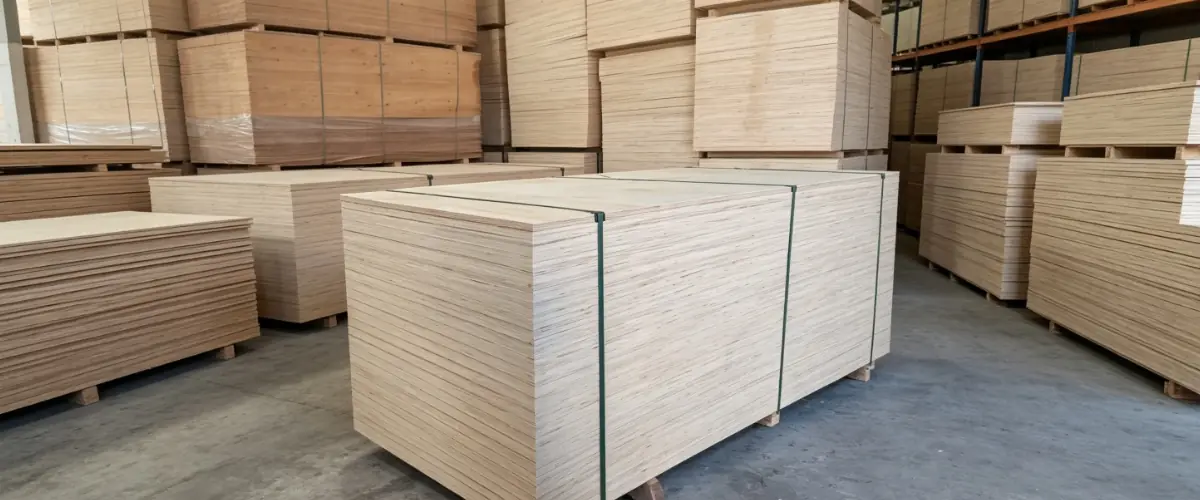
The cheapest plywood is not always the most economical option.
Low‑priced plywood may have:
- Lower‑density core material
- More internal gaps
- Poorer bonding
- Greater thickness tolerance
- More surface defects
- Lower moisture resistance
For applications where strength and durability are important, buying very cheap plywood can increase the total project cost because of breakage, replacement, or poor performance.
The better question is:
What is the lowest total cost for the required performance?
For example, a slightly more expensive plywood panel that has better strength and fewer defects may provide significantly better value over its service life.
Plywood Price FAQs
How much does a sheet of plywood cost?
The price of a plywood sheet varies depending on size, thickness, wood species, grade, core construction, adhesive, and market. Standard construction and commercial plywood are generally less expensive than birch, marine, or specialty plywood.
Is plywood cheaper than solid wood?
For many applications, plywood is more cost‑effective than high‑quality solid wood. As a highly practical panel material, plywood features a cross‑grain structure that delivers excellent resistance to warping. It is a worthwhile option when you select the right grade for your project.
Why is birch plywood expensive?
Birch plywood (especially full‑birch marine plywood) comes with a high price tag. This is driven by raw‑material costs, specialized manufacturing processes, high‑performance properties and import premiums. Compared with ordinary poplar or eucalyptus multi‑layer boards, it incurs higher costs across every production stage.
What is the cheapest type of plywood?
Basic commercial or construction plywood made from economical wood species is generally among the lower‑cost plywood options. The cheapest suitable product depends on the required thickness, grade, core, and application.
Final Thoughts: Understanding Plywood Cost
So, how much does plywood cost?
There is no single plywood price that applies to every product. The final cost depends on the plywood’s species, thickness, grade, core, glue, surface quality, certification, order quantity, and shipping conditions.
For buyers, the best approach is to define the required specifications first and then compare suppliers based on both unit price and total cost.
If you are sourcing plywood for furniture, construction, packaging, concrete formwork, or wholesale distribution, choosing the right specification can help you avoid overpaying while still achieving the required performance.
Looking for a reliable plywood supplier?
Looking for a reliable plywood supplier for your next project or bulk order? Baitwood supplies a wide range of plywood products for construction, furniture, packaging, and other applications.
Contact Baitwood for plywood specifications, wholesale prices, customized sizes, and bulk‑order solutions. Our team can help you choose the right plywood based on your application, quality requirements, and budget.
Contact Baitwood today for a plywood quotation.